


If our viral video made you nervous about visiting a Ryokan, take a deep breath. While the unique customs can feel mysterious, they are not meant to be a test.
Mastering the etiquette is actually quite simple once you know the “why” behind the rules.
Let’s turn that anxiety into excitement. Consider this your invitation to slow down, relax, and immerse yourself in Japanese hospitality with confidence.
The 5 Rules from Our Viral Video
We often see travellers worrying about the specific “rules” of staying at a Japanese inn.
While ryokan etiquette might seem complex, it mostly comes down to knowing where to wear your shoes and how to wear your robe.
Here are the main points to keep in mind for a smooth experience.
Slippers in the Hallway
You will likely need to take off your shoes at the entrance, known as the genkan, before you even reach the front desk.
There is no need to worry about storing your footwear yourself. Staff members will usually put them away for you or provide a tag so you can retrieve them later. Once your outdoor shoes are off, you can slip into the slippers provided for walking through the hallways.
No Slippers on Tatami
Most accommodations are washitsu, which are traditional Japanese-style rooms fitted with straw mats. This flooring is central to the experience and feels surprisingly soft underfoot.
Because the mats are made of natural materials, they are quite delicate. You must never wear your hallway slippers onto the tatami. Simply leave them at the doorway of your room and walk on the mats in your socks or bare feet.
Tattoos in the Onsen
If you have tattoos, covering them (with a sticker or skin-colored tape) before entering a communal bath is seen as a gesture of deep respect toward the traditional culture.
Also, please never forget the golden rule: wash and rinse your body thoroughly at the shower station before stepping into the water.
Unsure if a specific Ryokan is tattoo-friendly? don’t guess from photos alone.
Yukata, Left over Right
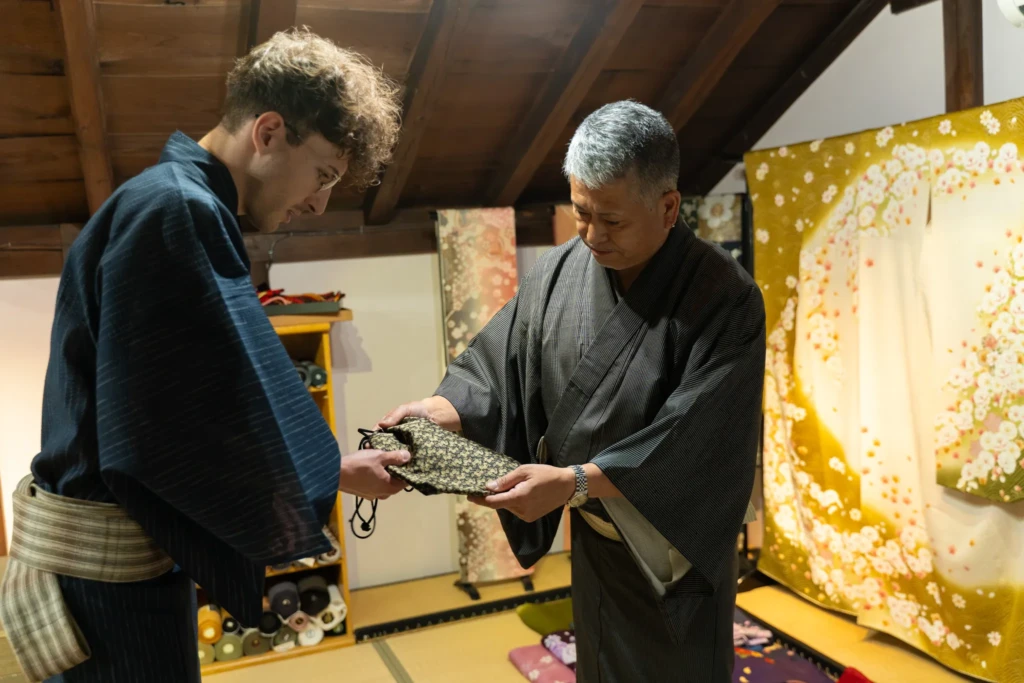
Inside your room, you will find a cotton kimono known as a yukata. These light robes are perfect for lounging or strolling to the hot springs.
There is one golden rule for wearing a yukata: you must wrap the left side over the right. This is crucial because wrapping the right side over the left is reserved for the deceased at funerals. You can then secure the robe with the provided sash, which women generally tie at the waist and men tie lower on the hips.
Toilet Slippers
You will notice a separate pair of slippers waiting for you inside the restroom. It is considered unclean to wear the same footwear in the toilet as you do in the rest of the building.
Leave your hallway slippers outside the restroom door and step into the designated toilet slippers. The most common mistake travellers make is forgetting to swap them back, so try to be mindful when you leave the washroom.
3 More Hidden Rules about Ryokan
Beyond the basics of shoes and robes, there are a few subtle nuances that can catch travellers off guard.
Understanding these finer points of ryokan etiquette helps ensure your stay remains relaxing for both you and the staff.
Being on Time for Dinner
Dinner at a traditional inn is often a carefully orchestrated event.
If your booking includes a multi-course meal, you should plan to arrive no later than 5:00 pm or 5:30 pm at the absolute latest.
The chefs and staff prepare fresh, seasonal ingredients specifically for your arrival to ensure every dish is served at its absolute peak.
Luggage Wheels on Tatami
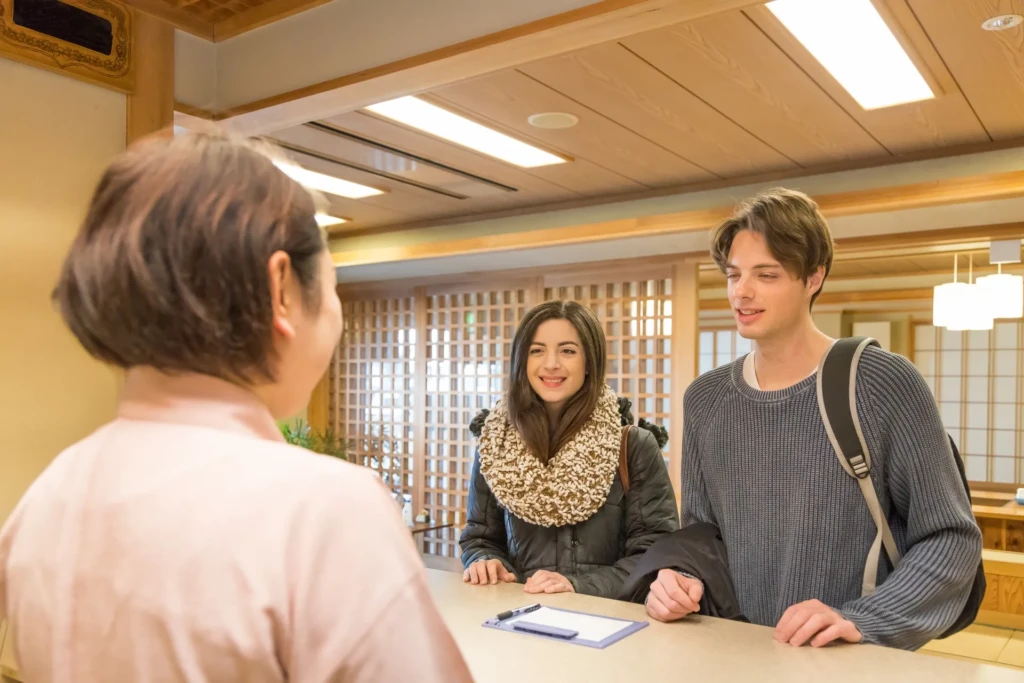
Once checked in, a staff member will usually guide you to your room.
When entering, please be sure to lift your suitcase instead of rolling it across the delicate tatami mats.
These mats are made of soft, natural rushes that can easily be scratched or dented by heavy wheels. It is a small gesture that goes a long way in preserving the beautiful flooring for future guests.
No Tipping Required
In Japan, there is generally no custom of tipping, and this applies to traditional inns as well. You might feel the urge to tip after receiving such exceptional service, but a service charge is typically included in your bill.
Staff members do not expect tips and will often politely refuse any extra gratuity offered. You can simply enjoy the hospitality without worrying about math or carrying loose change.
Made a Mistake? Here is How to Recover
Even with the best preparation, you might accidentally slip up during your stay.
Ryokan etiquette is about respect rather than rigid perfection, so there is no need to panic if you get something wrong.
“Gomennasai” is a Magic Word
The Japanese word for “I am sorry” is gomennasai.
If you realise you have worn your slippers onto the tatami or walked into the wrong area, a simple apology goes a long way.
Using this phrase shows you respect the culture and are trying your best.
The staff will almost always appreciate your effort and help you correct the mistake with a smile.
Don’t Hide It, Just Ask for Help
Accidents can happen, especially with delicate traditional furnishings. For instance, the thin paper on sliding doors, known as shoji, can tear or stain quite easily .
If you damage something, it is much better to inform the staff immediately rather than trying to hide it.
They are there to ensure you have a comfortable stay and will appreciate your honesty.
Understanding the Ryokan Culture
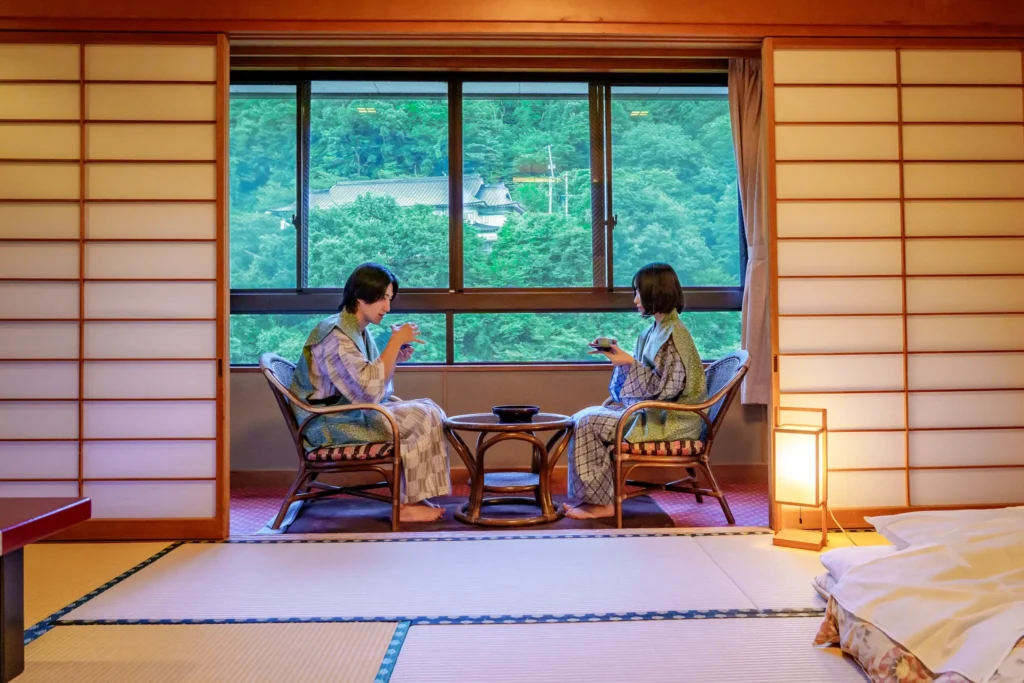
The list of dos and don’ts might seem long, but they all stem from a few core Japanese values.
Once you grasp the spirit behind the rules, navigating ryokan etiquette becomes second nature.
Cleanliness & Purity
In Japan, removing your shoes at the entrance is a universal rule—whether at a Ryokan, a private home, or a temple.
The logic behind this is simple but essential for hygiene: In traditional Japanese culture, the floor is not just for walking; it is a living space.
Because we sit directly on tatami mats to eat and lay out futons on the floor to sleep, the floor is treated with the same hygiene standards as a bed or a sofa in the West. Just as you wouldn’t walk on your bed with outdoor shoes, we keep the “outside” dirt away from our living sanctuary.
Harmony
A stay at a traditional inn is a communal experience designed to be peaceful. The paper screens and wooden structures are beautiful, but they do not block sound as well as modern concrete walls .
Being mindful of your noise levels and respecting the property helps maintain the calm atmosphere for other guests . Actions like arriving on time for dinner show that you value the collective effort of the staff who have prepared your meal .
Photos Don’t Tell the Whole Story
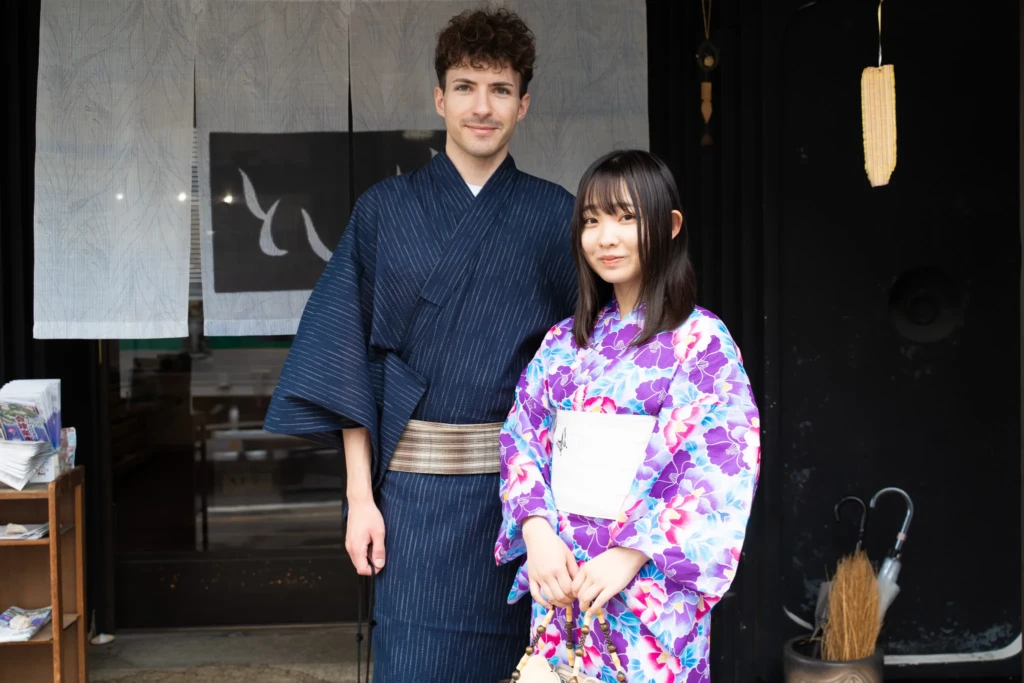
Online photos show you the dinner and the bath, but they miss the magic. They can’t capture the scent of fresh tatami, the feel of a cotton yukata, or the quiet atmosphere of a traditional room.
They also leave out the practical details: the manners you need to know and the tricky travel routes to get there smoothly.
Booking sites can leave you guessing about the local “vibe” or how to navigate the area. If you want a travel experience that goes far beyond what you see on a screen, we’re here to help.