


Arriving at a traditional Japanese inn is nothing like walking into a standard hotel lobby.
The ryokan check in sets the pace for your entire stay, often starting with a warm greeting right at the door. You will likely need to leave your shoes at the entrance before you even reach the front desk.
Arriving at the Ryokan
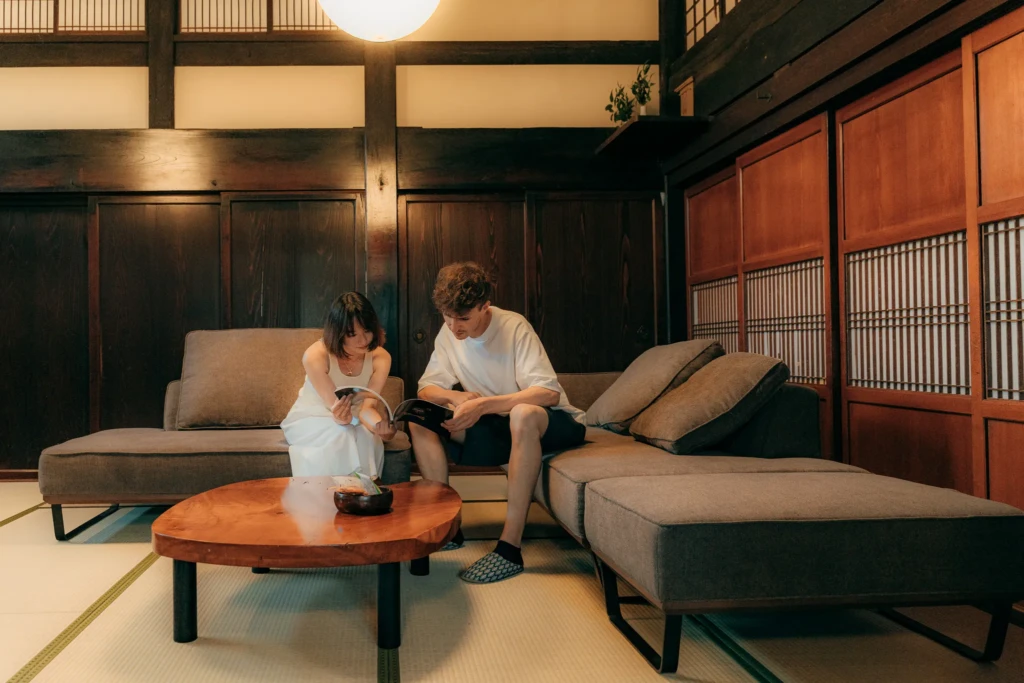
From the deep bows at the entrance to the welcoming cup of tea, the arrival experience is designed to help you leave the stress of travel behind.
Stepping into a ryokan is about more than just finding a place to sleep; it is an invitation to slow down and immerse yourself in Japanese hospitality.
The Genkan
You will need to take off your shoes here before stepping up onto the main floor. There is no need to worry about storing them yourself, as staff members will usually put them away for you or provide a tag so you can retrieve them later.
Once your shoes are off, you can slip into the slippers provided for walking through the hallways.
Check-in
The actual registration process is often more relaxed than what you might be used to. Instead of standing at a high counter, you might be led to a lobby lounge or sometimes directly to your guest room to complete the paperwork.
You will fill out a standard form with your name and address, and if you are not a resident of Japan, staff will need to make a copy of your passport.
Staff will also use this time to explain the facility, including bath hours and where the emergency exits are located.
Scheduling Your Dinner and Breakfast
You will usually be asked to choose a slot for dinner that evening and breakfast the following morning. It is best to stick to these times closely, as the staff coordinate serving fresh dishes based on that schedule.
If you arrive late, you might find that your preferred dining time is already taken, so checking in early has its advantages.
Settling Into Your Room
Once the initial registration is complete, a staff member will guide you to your guest room.
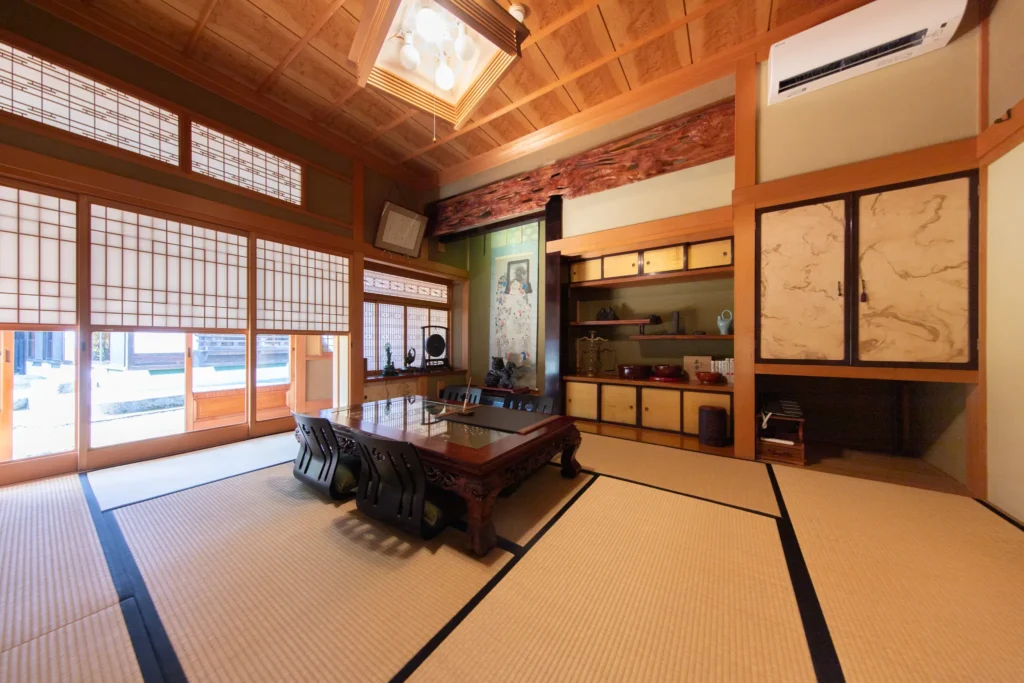
When you reach your door, you will notice another small entryway. You must step out of your slippers here before walking onto the tatami mats. Walking on these delicate straw mats with slippers or shoes is considered bad manners, so socks or bare feet are the rule.
Relaxing on the Tatami Floor
The centre of a traditional Japanese room features a low table, known as a zataku, which is surrounded by floor cushions or legless chairs. Sitting on the floor at this table is the standard way to relax in a ryokan.
Welcome Tea and Traditional Sweets
A tea set and sweets are often waiting on the table when you arrive.
These snacks are complimentary and are usually local specialities worth trying. Enjoying them serves a practical purpose too, as the sugar helps prevent lightheadedness before you enter the hot springs.
For a quiet moment, you can move to the hiroen, a small sunroom-like area by the window. This space typically has Western-style chairs and offers a nice view of the outside scenery.
Ryokan Check-in FAQ
-
Can I store my luggage at the ryokan before check-in?
-
Yes, most ryokans are happy to store your luggage before check-in. Simply go to the front desk, provide your reservation name, and tell them the number of bags you wish to leave. They will keep your belongings safe so you can explore the area freely until your room is ready.
-
When should I pay for my stay? At check-in or check-out?
-
Payment is typically handled at check-out. While most modern ryokans accept credit cards, some traditional or rural inns may still be cash-only. It is smart to confirm whether they accept cards when you first check in to avoid any surprises later.
-
How does ryokan check-in differ from a standard hotel?
-
The main difference is that you must commit to a specific dinner time (e.g., 6:00 PM or 7:00 PM) the moment you check in. Unlike Western hotels where dining is flexible, ryokans require strict scheduling to serve the elaborate multi-course meals at the perfect temperature.