


Stepping into a traditional ryokan room feels miles away from a standard hotel stay.
The calming scent of tatami mats and soft light filtering through shoji screens create a total sensory reset. It is more than just a room, it is a peaceful sanctuary.
This guide explains the unique features of a Japanese room so you can settle in with confidence.
Inside a Ryokan Room

Most accommodations you will encounter are washitsu, which are traditional Japanese-style rooms.
Unlike Western hotels that rely on heavy drapes and carpeting, a typical ryokan room uses natural materials to create a calm atmosphere.
You will see plenty of wood in the pillars and ceilings, along with paper sliding doors that soften the sunlight pouring in from outside.
About Tatami
The first thing you might notice when sliding open the door is the scent.
Fresh tatami mats give off a gentle, grassy aroma unique to the raw rushes used to weave them. This flooring is central to the experience and feels surprisingly soft underfoot.
Because these mats are delicate, you must never wear slippers inside the guest room.
It is also important to pick up your bags rather than rolling them. Dragging heavy luggage across the floor can easily damage the woven surface, so take care when moving your things.
Low Tables and Floor Seating
The room usually centres around a low table called a zataku. To sit comfortably, you use zabuton cushions placed directly on the floor.
One important feature to look out for is the tokonoma, a raised alcove decorated with a hanging scroll, pottery, or fresh flowers. This area is purely decorative and meant to be admired.
It is not a storage space, so please avoid placing your luggage there or sitting inside it.
Typical Amenities in a Ryokan Room

A traditional Japanese inn provides quite a few distinct items to make your stay comfortable.
Unlike a standard hotel where you might just find a kettle and a robe, the amenities here are designed to help you fully immerse yourself in the local lifestyle.
Yukata
You will usually find these light cotton robes kept in the closet for you to use.
The yukata is much more versatile than a western bathrobe. You can wear it throughout your entire stay, including for meals, trips to the bath, and even as pyjamas when you sleep.
Just keep in mind that these are loaned items. You should not take them home with you, and it is polite to fold them lightly and bundle them together before you check out.
Japanese Tea Sets and Welcome Sweets
Hospitality is a huge part of the experience, so you will almost always find a tea set waiting for you on the low table.
The room usually comes with complimentary green tea and local snacks. These treats are free of charge and offer a perfect way to sit down and relax immediately after you arrive.
Toiletries and Towels
Your room will be stocked with standard essentials like toothbrushes and small washcloths for the hot spring baths. You will also have larger bath towels provided for your use, though these are not meant to be taken home.
One specific rule to remember concerns drying your things. You should avoid hanging wet towels on the tops of the wooden door frames or sliding doors. Doing so can damage the wood and cause the frames to go mouldy, so please use the towel racks provided instead.
Ryokan Room Etiquette and Manners

Staying in a ryokan room comes with a unique set of unwritten rules.
These customs might seem specific at first, but they are generally in place to protect the delicate traditional materials and ensure everyone has a peaceful stay. You are expected to treat the space with a gentle touch.
No Shoes or Slippers on Tatami Mats
You will almost always take your outdoor shoes off before stepping into the guest room, or sometimes even at the main entrance hall of the building. While you are encouraged to wear slippers in the corridors, you must leave them at the doorway before stepping onto the tatami. The woven straw mats are delicate and meant only for socks or bare feet.
Handling Your Luggage with Care
It is best to be mindful of how you move your suitcases around. The tatami flooring gets damaged easily if you drag heavy wheels across the surface. Please try to lift your bags when moving them rather than rolling them.
You should also be careful about where you store your things. The raised alcove, known as the tokonoma, is a special space decorated with flowers or art to enhance your stay. It is not a luggage rack, so please avoid placing your bags there or sitting in it.
Understanding the Futon Service
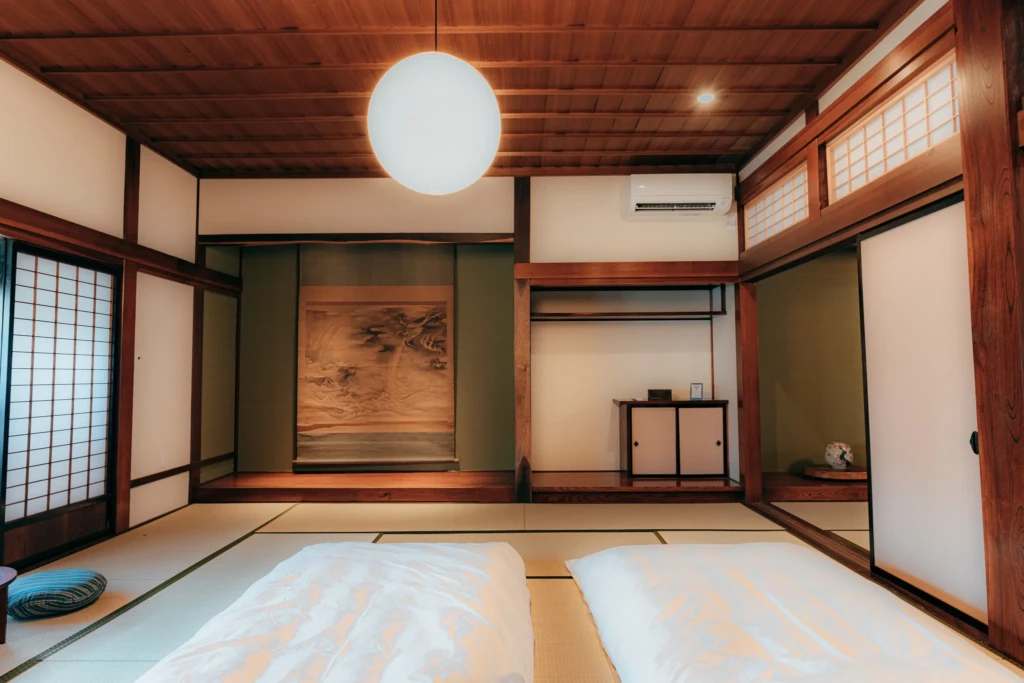
Sleeping on the floor is one of the most memorable parts of staying in a traditional ryokan room. If you are used to Western hotels, you might be confused to find no bed in sight when you first check in. The space is kept open during the day to let you relax, with the sleeping mats stored out of sight until the evening.
When and How Your Bedding is Prepared
You do not need to worry about making your own bed here. The heavy cotton mattresses, called futons, are kept in a dedicated closet to maximise your living space during the day.
A member of the ryokan staff will generally come to your room in the evening to handle everything for you. They lay the futons directly on the tatami mats, usually while you are enjoying dinner.
Why the Staff Enters Your Room
Since your room serves as a living area, dining room, and bedroom, the staff need occasional access to change the layout. They will enter in the evening to prepare the beds, and they will return the following morning to fold them up and put them away.
This high level of service is standard, and depending on the inn, they may also enter to serve tea or bring your meals directly to your table. It is all part of the hospitality, so there is no need to feel uncomfortable about the staff popping in to ensure your stay is seamless.
Ryokan Room FAQ
If you are new to this style of travel, you likely have a few specific questions about the facilities. Here are some common things travellers ask before booking a ryokan room.
- Do ryokan rooms have private toilets and showers?
-
Most modern rooms are equipped with their own sink, bathroom, and a Western-style toilet. However, this depends on the age and price range of the inn. Older or more budget-friendly ryokans might only provide shared toilets and sinks in the common areas outside your room. It is always a good idea to check the specific room details when you book.
- Can I bring my own food and drinks?
-
You will typically find a mini-fridge in your room, along with a safe and television. You are also provided with Japanese tea and snacks, which are free of charge. While having a fridge suggests some flexibility, rules can vary between establishments. It is best to check with the staff regarding their specific policy on bringing outside food or drink into the guest rooms.
- How is a ryokan room different from a standard hotel room?
-
The biggest difference is the flooring. Guest rooms are almost always covered in tatami mats rather than carpet. You also won’t find a permanent bed taking up space. Instead, bedding consists of futons laid directly on the floor in the evening. The layout is flexible, often featuring sliding doors (fusuma) that can separate the main room from a smaller sitting area or closet.
Final thoughts
Staying in a ryokan is about slowing down and appreciating the thoughtful details of Japanese hospitality. From the scent of the tatami to the comfort of a yukata, these rooms offer a genuine connection to local culture that you just can’t get in a standard hotel. Enjoy the quiet atmosphere and the unique experience of sleeping on the floor.