


Travel in Aizu isn’t focused on a single attraction. Instead, its charm unfolds gradually—streets that still carry the atmosphere of a former castle town, quiet waters hidden deep in the mountains, and an Edo-period post town preserved just as it once was. Here, the journey gains depth when these places are connected into a single line.
This itinerary follows: Aizuwakamatsu Station → Nanokamachi → Okawaso (dinner) → Mugen Gorge (morning) → Okawaso (breakfast) → Ouchi-juku. History, culture, scenery, and onsen are enjoyed at an unhurried pace—selecting only the best moments while keeping the rhythm of the journey intact.
Highlights of This Journey
Nanokamachi: Less about sightseeing and more about greeting everyday life in Aizu. Warehouses and historic buildings line the street, where local crafts and cafés blend naturally into the scene.
Ookawaso:A ryokan embraced by a deep gorge. In the evening, the iconic floating stage and live shamisen performance transform the atmosphere, marking a memorable shift in the journey.
Mugen Gorge: Cross the Tadami River by small boat, often wrapped in morning mist. The silence feels immersive—less something you see, more something you sink into.
Ouchi-juku: Walking beneath thatched roofs slows the sense of time itself. From the historic streetscape to the famous negi soba, it’s the perfect way to bring the journey to a close.
Traveling by Private Hire Elevates the Journey
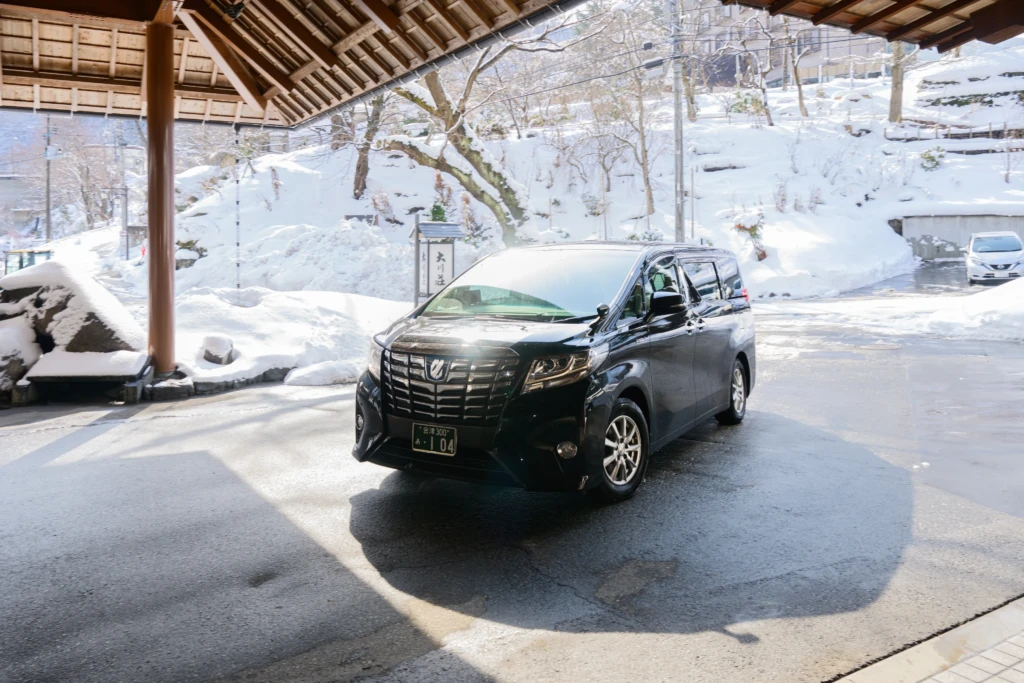
To be honest, it’s difficult to experience this route with the same depth using public transportation alone. Aizu’s highlights are spread out, and Mugen Gorge, in particular, is best visited in the early morning.
This is where a reservation-only, chartered private hire truly makes a difference.
- Your vehicle is waiting the moment you arrive at the station—no confusion, no worries about luggage.
- Available by the hour, it allows flexibility to adjust the route based on conditions and your pace that day.
- Remote mountain spots and areas difficult to reach by public transport are accessed smoothly.
- An experienced local driver provides peace of mind—especially valuable in winter or changing weather.
Here, travel becomes more than just getting from place to place. It becomes time to settle into the journey itself. Aizu is a region where the value of private hire is genuinely felt.
With Ryokanbook, travelers can receive personalized itinerary suggestions and assistance with private hire reservations.
Day1|Aizuwakamatsu Station → Nanokamachi (stroll) → Ookawaso (dinner)
Aizuwakamatsu Station to Nanokamachi
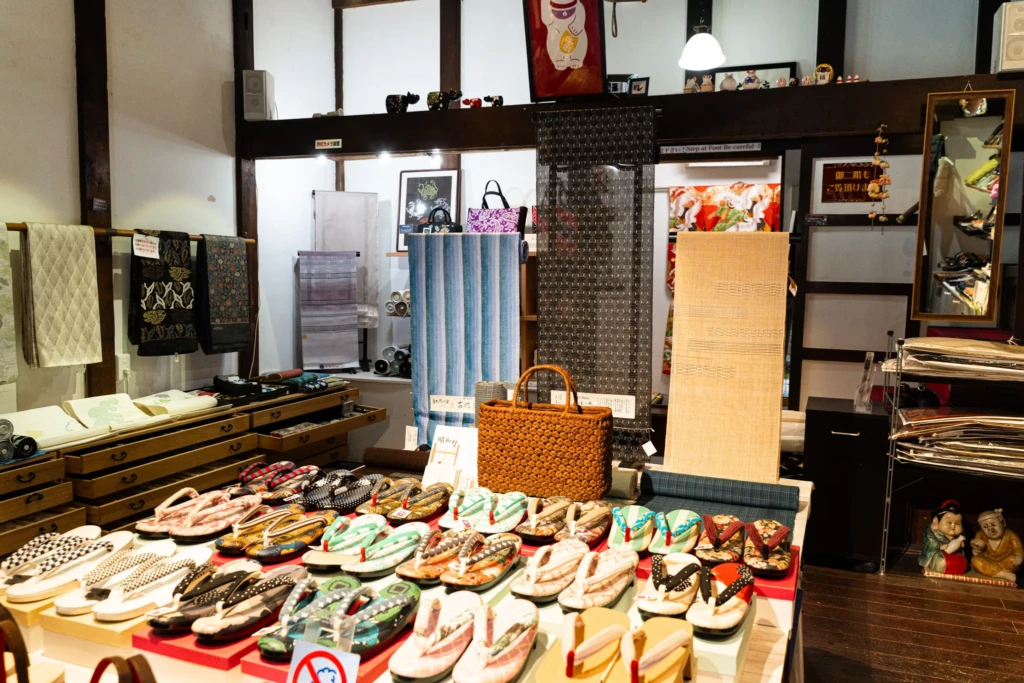
As soon as you step off the train, the air feels different. It’s quieter than the city, and the cold—or a clean, crisp moisture—comes through clearly.
Nanokamachi is the first stop, and it gently sets the pace for the journey. Storehouse-style buildings line the streets, the rhythm is calm, and the atmosphere makes you want to walk before reaching for your camera.
What makes Nanokamachi appealing is that it never feels overly touristy. Crafts, local shops, and small cafés blend naturally into everyday life.
Spending a few hours here shapes the rest of the trip, giving deeper meaning to the scenery and onsen that follow. Aizu is the kind of place best experienced without rushing.
Arrive at Ookawaso—as shamisen melodies rise from the floating stage,
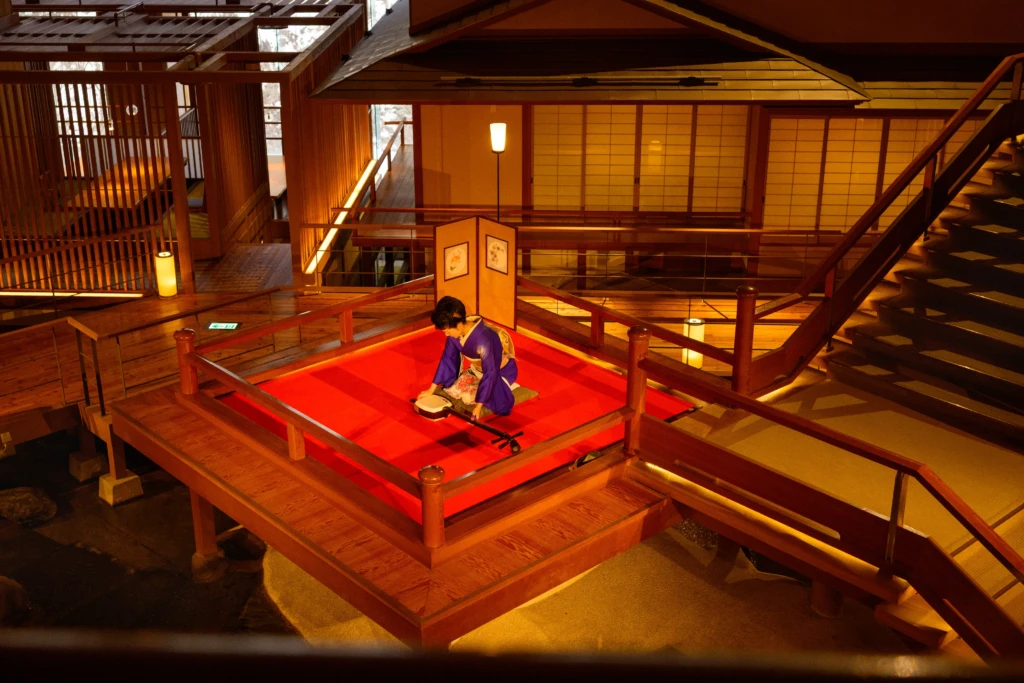
The moment you arrive at Ookawaso, the scale of the gorge takes your breath away.
The lobby opens into a vast atrium, drawing your gaze upward. At its center stands the ryokan’s symbolic floating stage. The live shamisen performed here doesn’t linger through volume, but through resonance—and before you realize it, your breathing begins to slow.
Beautiful views can be found all across Japan. What sets Okawaso apart is sound.
Even though photographs can never capture it, the memory of the lobby’s atmosphere remains—clear enough to recall the space itself. It’s a quietly unforgettable experience.
Dinner: A Kaiseki Layered with Aizu’s Seasons
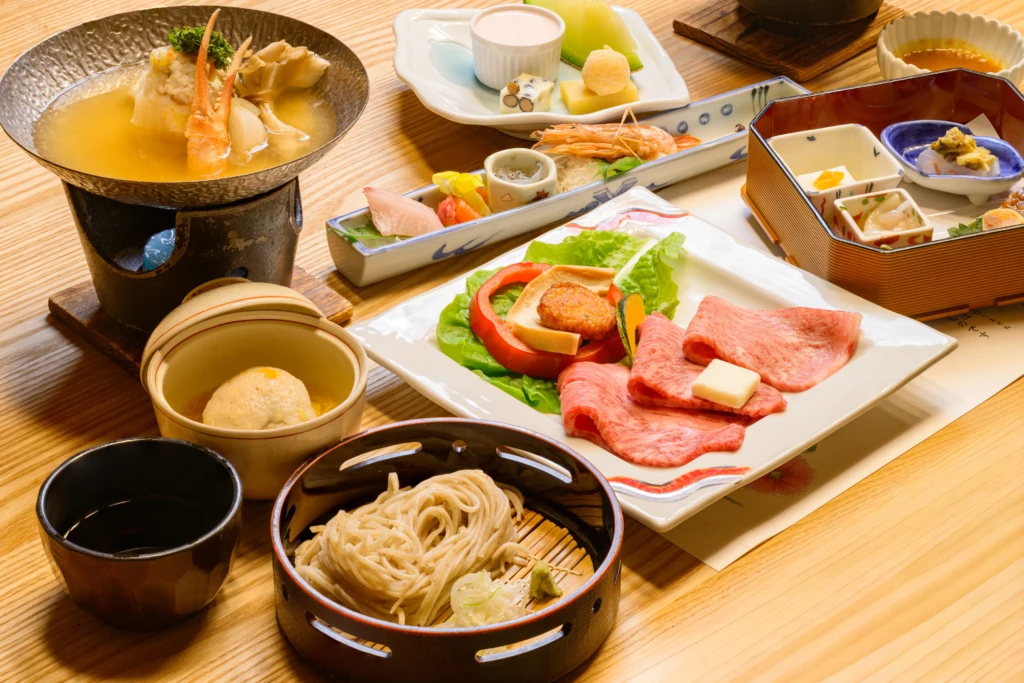
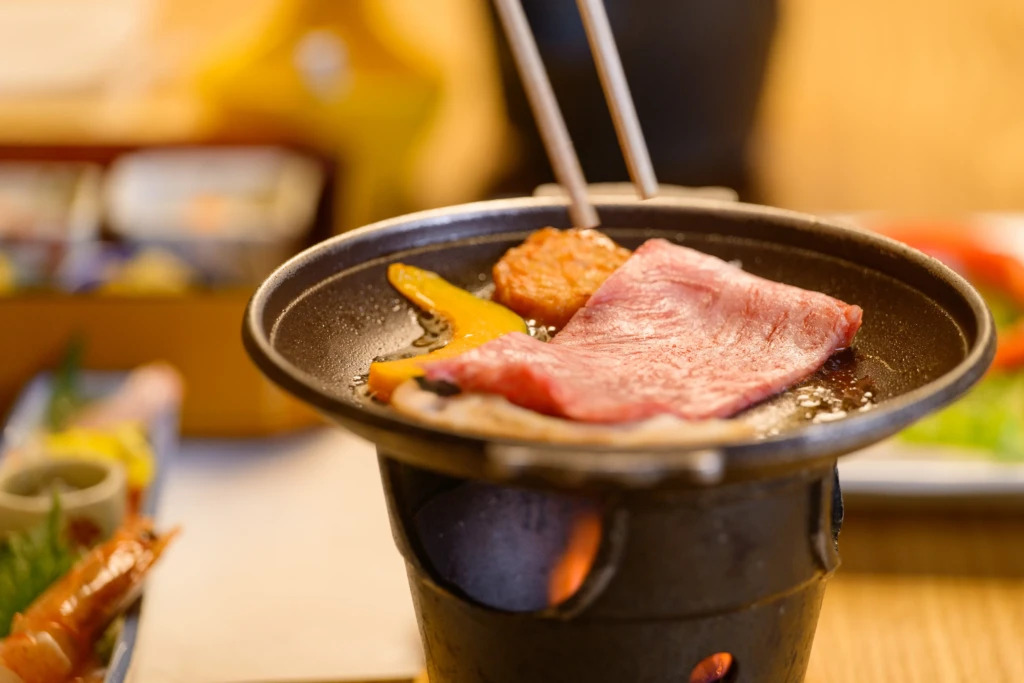
Dinner features a traditional kaiseki made with local Aizu ingredients. Classic recipes are carefully prepared with light modern touches, creating a meal defined by balance and attention to detail rather than extravagance. Local flavors, including sakura meat (horse meat), and dishes made with regional produce enhance the sense of place. A selection of Aizu sake pairs naturally with the meal, allowing food and drink to express the character of the region.
Onsen: Immersed in the Gorge
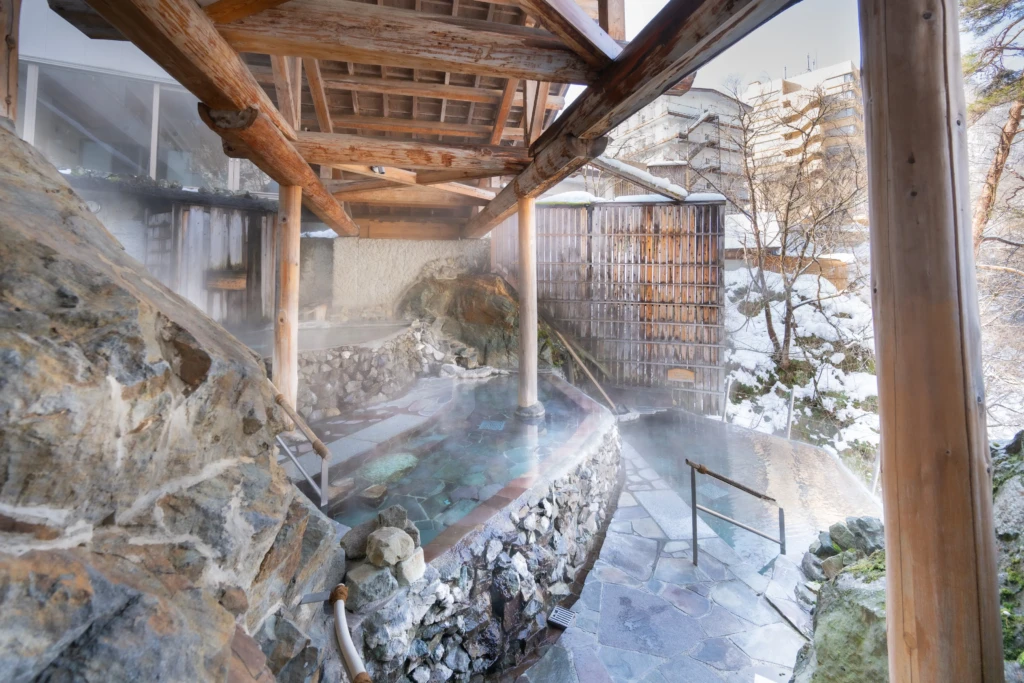
At night, head to the baths overlooking the gorge—Ookawaso’s signature terraced open-air onsen, Shikibutai Tanada. As you soak, the gorge unfolds directly in front of you, accompanied by the sound of the river below. Rather than simply viewing the scenery, it feels as if you are placed within it.
Both the men’s and women’s areas feature tiered baths, where water flows from the upper levels to the lower ones, helping keep the onsen fresh. There is also a dramatic “floating” open-air bath inspired by Kyoto’s Kiyomizu Stage. Reaching it requires climbing a short set of stairs—a small ritual that makes the sense of openness even stronger once you enter the water.
The spring water is rich in calcium, sodium, sulfates, and chlorides, and the temperature is relatively high, making it easy to feel the cold and fatigue melt away.
The sauna is another highlight. Men can enjoy a pink salt sauna, while women have a unique laid-back infrared sauna. Both are gently heated, allowing you to relax slowly and comfortably—adding an extra layer of ease to the evening at the ryokan.
Day2| Mugen Gorge (Morning) → Ookawaso (Breakfast) → Ouchi-juku
Head to Mugen Gorge—crossing by small boat into another world.
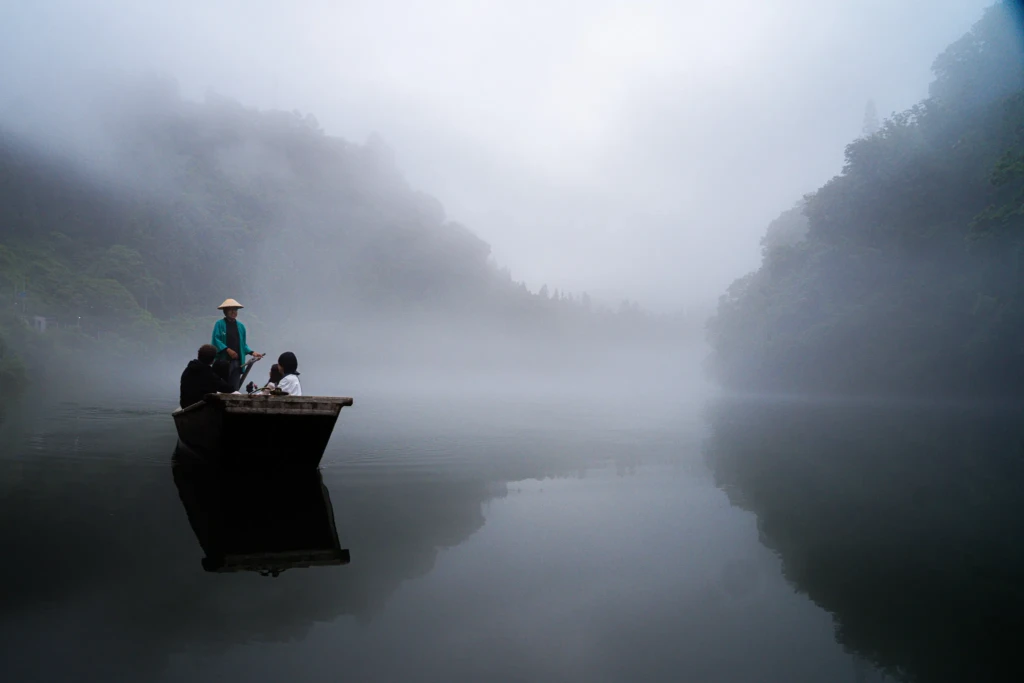
Depart before the town is fully awake and make your way to Mugen Gorge.
Located in Kaneyama Town, this is a place where a small boat carries you across the Tadami River, often wrapped in morning mist. When conditions are right, the river surface becomes perfectly still, like a mirror. Sound seems to dissolve into the water, and even conversation naturally softens. Rather than simply being “beautiful,” the overwhelming impression is the density of silence itself—that is the first thing Mugen Gorge leaves with you.
Behind this landscape lies the history of the former Mifuke Village, once a lived-in settlement that endured for nearly 300 years before earthquakes and landslides eventually led to its abandonment. The boat crossing conveys this past not through explanation, but through sensation—the presence along the shoreline, the thickness of the trees, the color of the water. It feels as though faint traces of everyday life still linger, creating a quietly haunting experience.
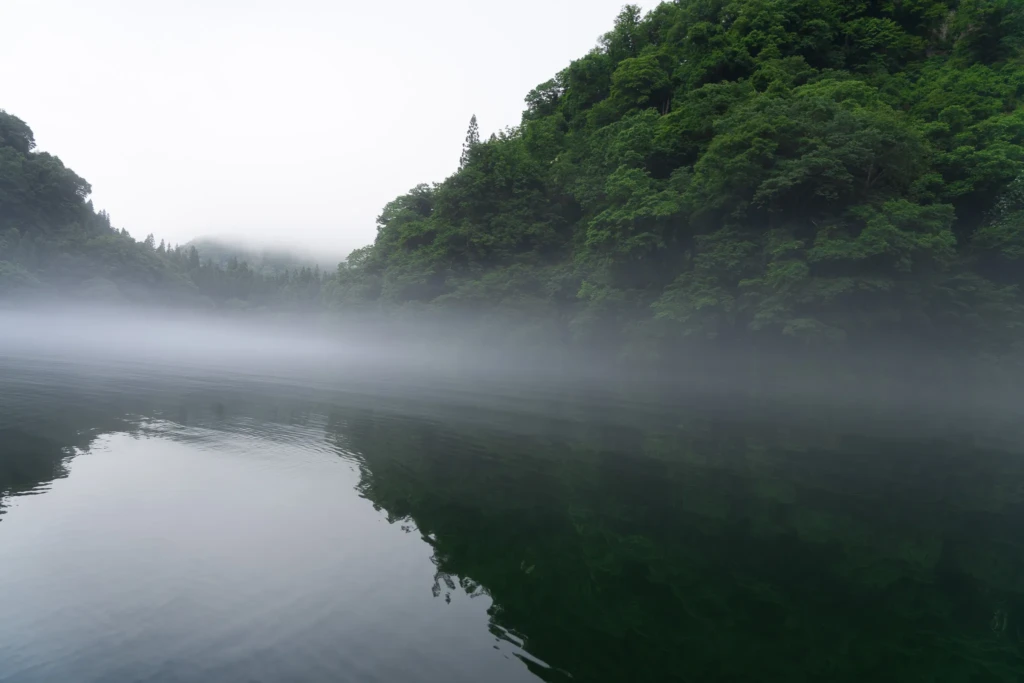
Boat operations generally run from 7:00 a.m. until sunset. Available plans include a scenic cruise (approx. 45 minutes) and a cruise with a short walk (approx. 90 minutes). As a guide, prices start at ¥6,000 for up to two people for the cruise, and ¥12,000 for up to two people for the cruise with a walk, with additional fees for extra passengers.
Please note that prices, reservation methods, and operating conditions may change, so we recommend confirming the latest details when booking.
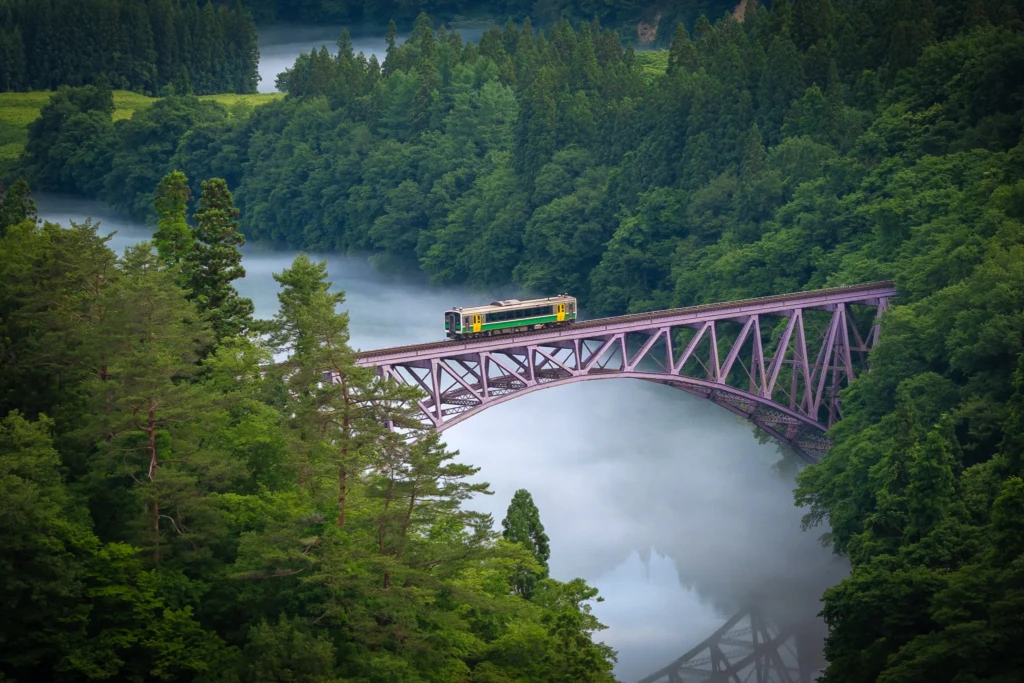
If time allows, adding a stop at the First Tadami River Bridge Viewpoint, a scenic spot along the Tadami Line, pairs beautifully with this experience. Timing your visit with the train schedule turns even the wait itself into part of the scenery.
Back to Okawaso for breakfast—a satisfying return.
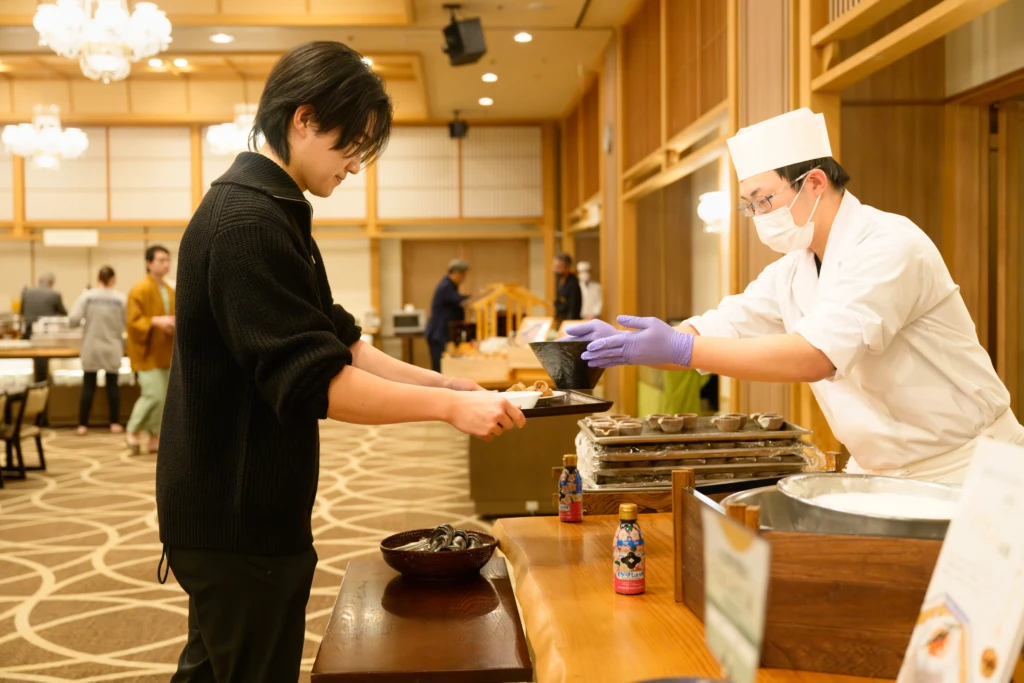
Returning from the mist-filled world to Ookawaso, the same place somehow feels different. After such a powerful experience, the morning at the ryokan feels especially warm and comforting.
Breakfast is served in an open dining space overlooking the gorge, with a Japanese–Western buffet featuring dishes made from local ingredients—an energizing start to the day that genuinely leaves you feeling refreshed.
One standout is the live-kitchen fluffy egg rice. Whipped egg whites topped with a rich yolk from Aizu-raised chicken and a touch of seaweed create a dish that’s light yet deeply satisfying.
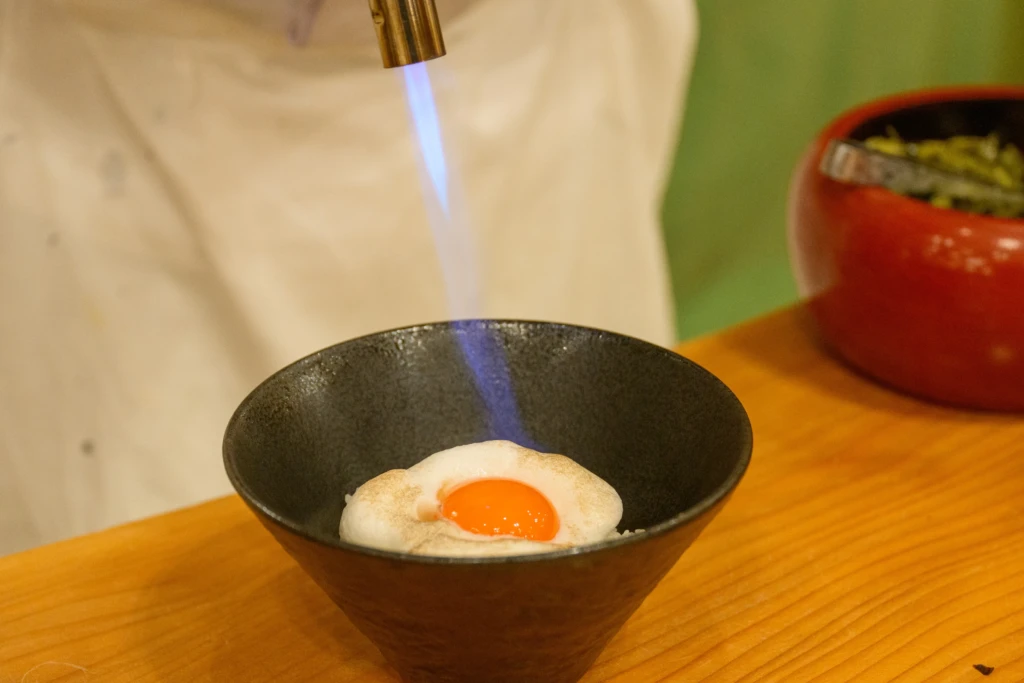
The stillness of Mugen Gorge sharpens the senses, and the warmth of breakfast gently brings them back. This transition quietly elevates the overall satisfaction of the journey.
The journey ends at Ouchi-juku—where simply walking slows time itself
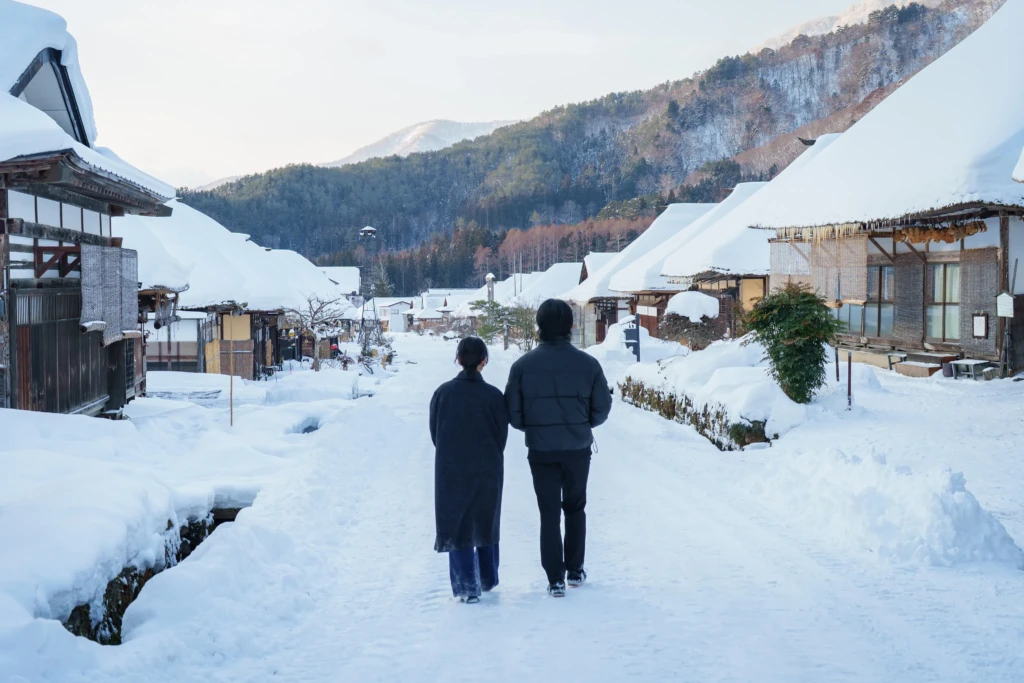
The final stop, Ouchi-juku, is a place best understood by walking rather than explanation.
As you step onto the street lined with thatched roofs, the scenery feels rooted in the past—yet the air is unmistakably present. It doesn’t feel like a recreated setting, but a place that has endured as living land.
A water channel running down the center of the street, the faint scent of hearth smoke drifting from the roofs, the texture of wood in the shops—there are countless moments that invite a photo. And yet, you may find yourself spending more time looking with your own eyes than through a lens.
With its famous negi soba as well, Ouchi-juku leaves the perfect closing note to the journey. Rather than feeling exhilarated, you leave feeling quietly settled—and that, perhaps, is its greatest charm.
Travel Tips (for International Travelers)
- Mugen Gorge is best in the morning: The mist is shaped by timing. Early mornings offer the most atmospheric views—early rising is strongly recommended.
- Private hire is highly recommended: Aizu’s highlights are spread out, and private hire connects them smoothly into a single route—especially helpful with luggage or during snowy seasons.
- What to wear: Mornings and evenings can be cold. Light layers and comfortable walking shoes are recommended.
- Booking strategy: Conditions at Mugen Gorge vary depending on weather, season, and operations. Booking it together with your itinerary helps reduce uncertainty and stress.
- Experience over photos: The sound at the floating stage, the stillness of the river, the scent of thatched roofs—Aizu is a journey best enjoyed with all five senses.