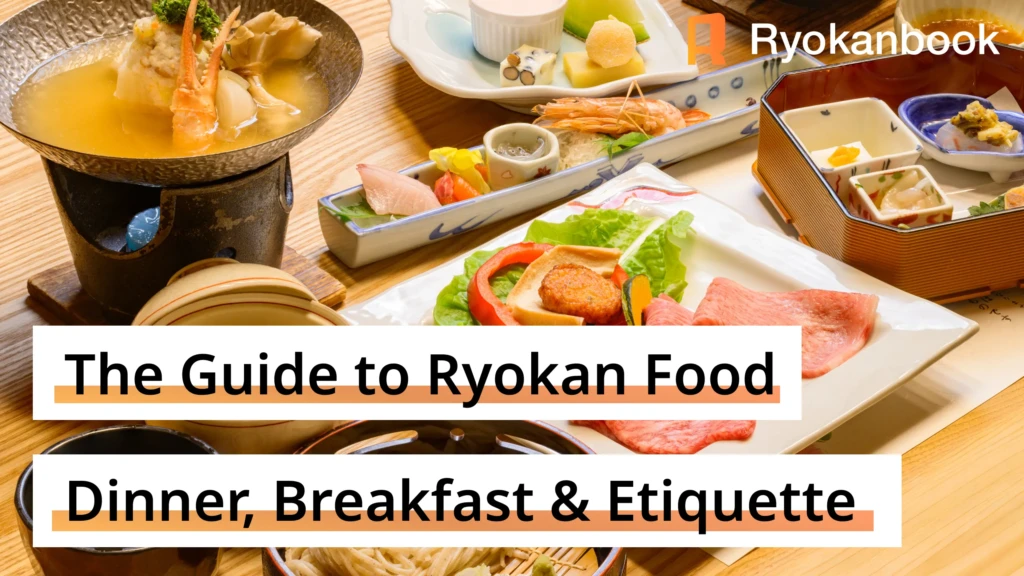
Alongside the hot springs, the highlight of staying at a traditional inn is undoubtedly the incredible ryokan food.
These meals are elaborate, multi-course affairs artfully arranged to reflect the local seasons. It really is a feast for the eyes as much as the stomach.
Ryokan Dinner Experience – What is Kaiseki?
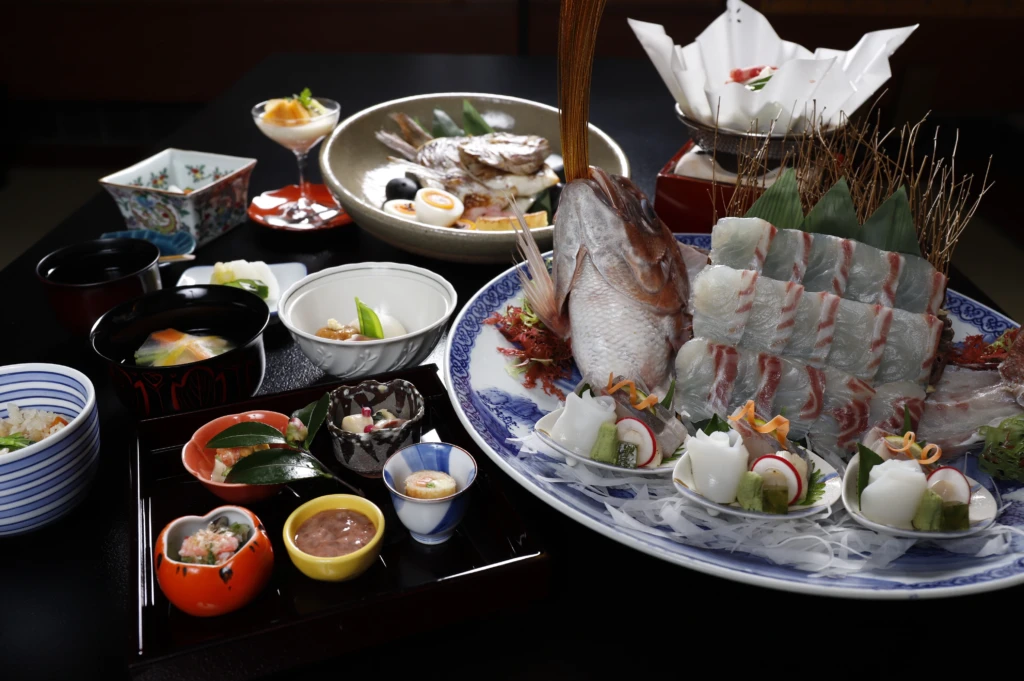
Most ryokan dinners feature kaiseki ryori, a traditional style of Japanese haute cuisine. These meals are elaborate affairs, with multiple courses served one after another. The presentation is just as important as the taste, with ingredients artfully arranged to reflect the season and local specialties.
Dining locations vary by property. You might dine in the privacy of your own guest room a classic ryokan experience or in a private dining booth or a communal hall.
Ryokan Breakfasts
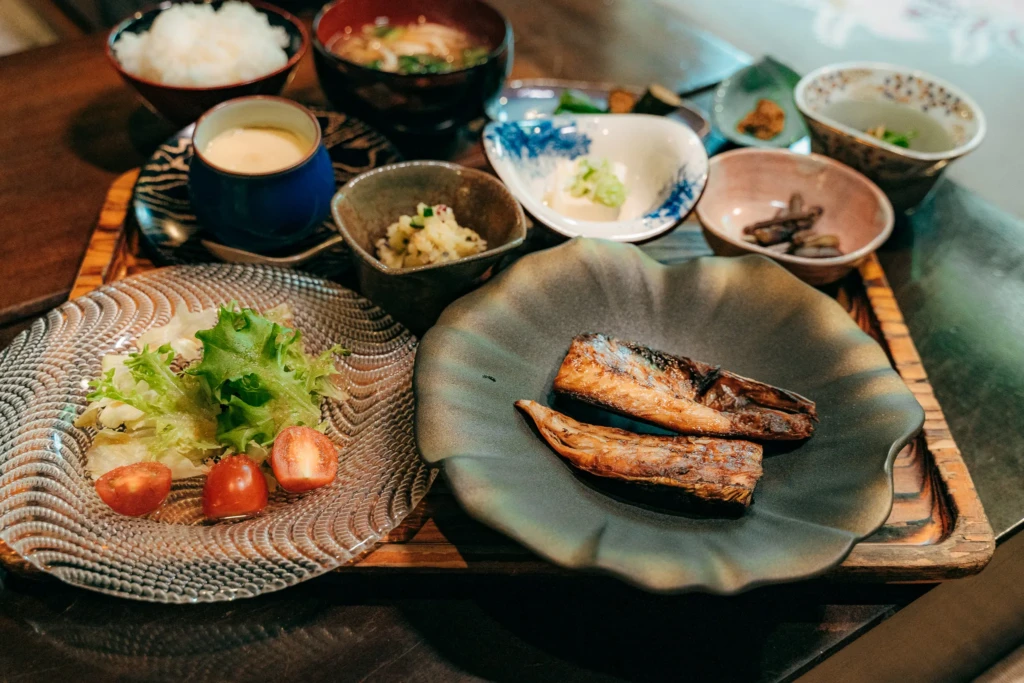
While dinner often steals the spotlight, the breakfast at a ryokan is a cultural experience in its own right. It is traditionally a healthy, balanced set meal designed to fuel you for a day of exploring.
The meal is anchored by steaming white rice and hot miso soup. Served alongside these staples are grilled fish often salmon or mackerel plus rolled egg omelette (tamagoyaki), pickles, and dried seaweed (nori). Depending on the region, you might also encounter natto (fermented soybeans) or local tofu.
FAQ About Ryokan Dining
-
Can I request vegetarian or vegan meals?
-
You certainly can, but timing is everything. Because ryokan meals are meticulously planned multi-course affairs, the kitchen needs significant notice to adjust the menu.
You should consult the ryokan in advance if you have specific dietary requests. It is best to mention this at the time of booking rather than upon arrival.
-
How do ryokans handle food allergies?
-
The staff are usually very accommodating, but they need to know ahead of time to keep you safe. Just as with vegetarian requests, the ryokan should be consulted in advance regarding any allergies you might have.
-
Is it okay to wear a yukata to the dining area?
-
Absolutely.
In fact, wearing a yukata adds to the atmosphere. Regardless of whether you are eating in your own room or a communal dining hall, most people choose to wear their yukata to dinner.
If you feel self-conscious or chilly, wearing your own clothes is also completely acceptable.
-
Are drinks included in the meal price?
-
While green tea is standard, alcohol is generally not included in the price of your stay.
You typically order beverages like beer or sake separately, and these charges are added to your final bill.