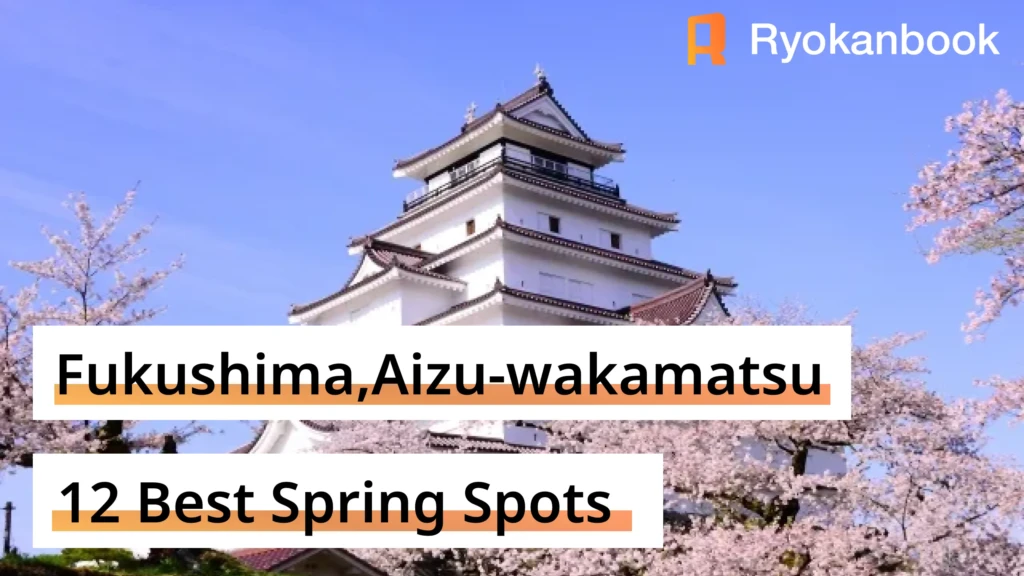
Aizu is a town surrounded by the mountains of Fukushima, where time seems to pass quietly. It has a long history as a castle town, and in the surrounding valleys, landscapes that feel like the original scenery of Japan still remain. Here, traditional culture and daily life are not preserved as something from the past. They continue naturally as part of everyday life.
In recent years, more international visitors have started to visit Aizu. However, compared to famous tourist destinations, the number of visitors is still small. Aizu is far from the overtourism seen in places like Kyoto. For now, Aizu can be described as a place known mainly by those who look for it.
While this feels somewhat lucky, I also felt it was a little unfortunate. With so much charm, Aizu is still not widely known. The reason, however, is easy to understand. The appeal of Aizu is not concentrated in one single sightseeing area. The castle town, mountain villages, and old roadside scenery are quietly spread across the region. For travelers unfamiliar with the area, visiting these places smoothly is honestly not easy. As I thought about this, a question came to mind. Is there a way to explore Aizu at your own pace, without struggling with local trains and buses? If only there were a charter-style way to get around.Surely such a convenient option wouldn’t exist in a rural area like Aizu…
But it does.
That option is called the High-Grade Taxi service by Aizu Kotsu.
1.The High-Grade Taxi by Aizu Kotsu
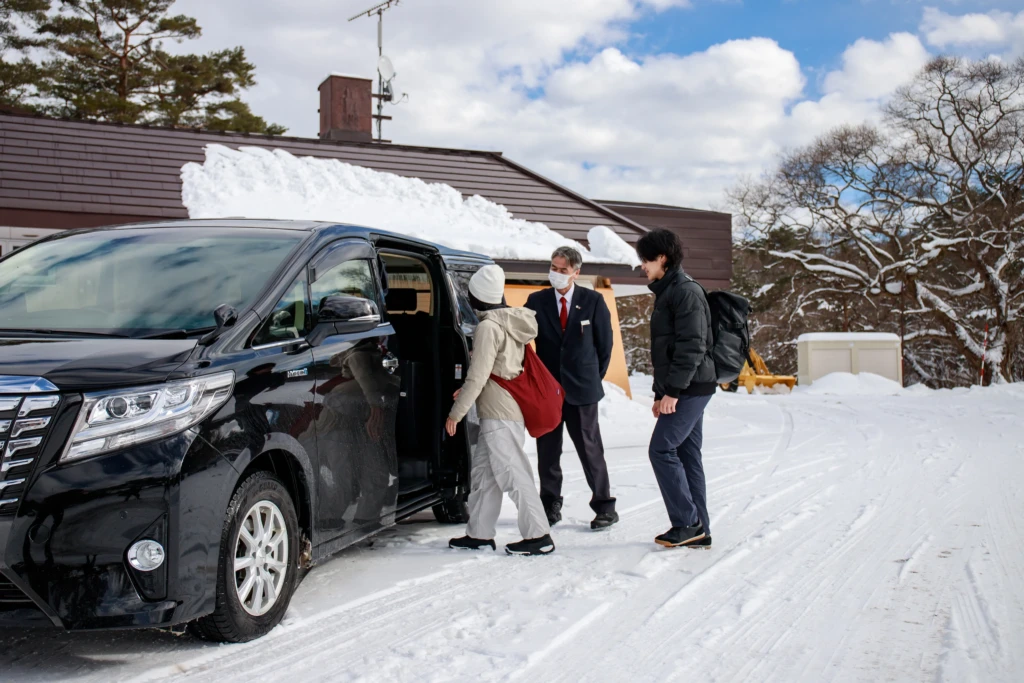
The High-Grade Taxi by Aizu Kotsu is a reservation-based taxi service available throughout the Aizu region. Unlike regular street taxis, it is mainly used as a pre-booked, charter-style service for sightseeing and business purposes.

The vehicles are higher-class models with more space than standard taxis. They are suitable for group travel and long-distance journeys. The service can be used not only within Aizuwakamatsu City, but also to reach nearby mountain areas and sightseeing spots. It is often chosen as a convenient way to access places that are difficult to reach by public transportation.
Using the service is simple.You first discuss your travel time and destinations in advance, then make a reservation. Because the service is available by the hour, you are not tied to fixed routes or schedules. This allows for flexible travel that matches your own itinerary.
Local drivers who know the area well are in charge of the service. They operate with an understanding of road conditions and seasonal considerations. While this is not a guided tour service, it is trusted by travelers as a safe and reliable way to get around Aizu.
For this trip, I used the High-Grade Taxi to travel around Aizu over two days and one night. Rather than writing this as a guide, I would like to share the experience from the perspective of a traveler.
This journey may be helpful for those who want to experience everyday life in Japan. It is also intended for travelers interested in rural areas, but who feel uncertain about transportation or convenience. I hope this trip can serve as a useful reference.
2.Stepping Away from Everyday Life
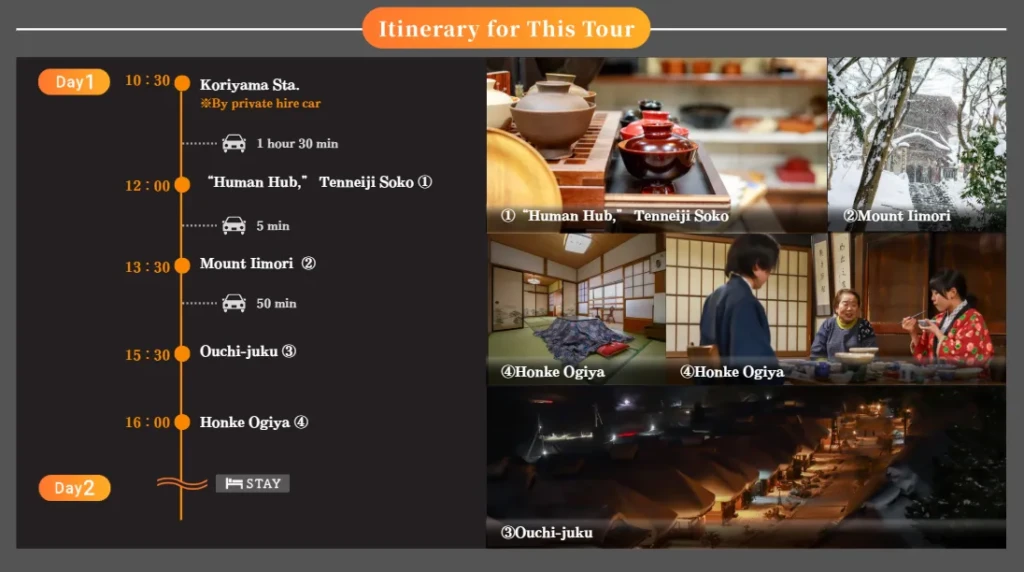
We leave Tokyo and take the Tohoku Shinkansen to Koriyama Station. Because we shared our arrival time in advance, the hired car is already waiting when we step outside the station. We walk straight to the car, load all our luggage into the trunk, and that’s it. With no need to worry about our bags, we can focus fully on sightseeing for the rest of the day. The journey begins.
The hired car we used has a spacious body, but only two seats in the back, creating a relaxed and comfortable space. From the moment we sit down, the ride itself feels like part of the travel experience. As unfamiliar scenery passes by through the large windows, our excitement continues to grow.
3.Reaching Out to Aizu’s Culture | The True “Human Hub,” Tenneiji Soko
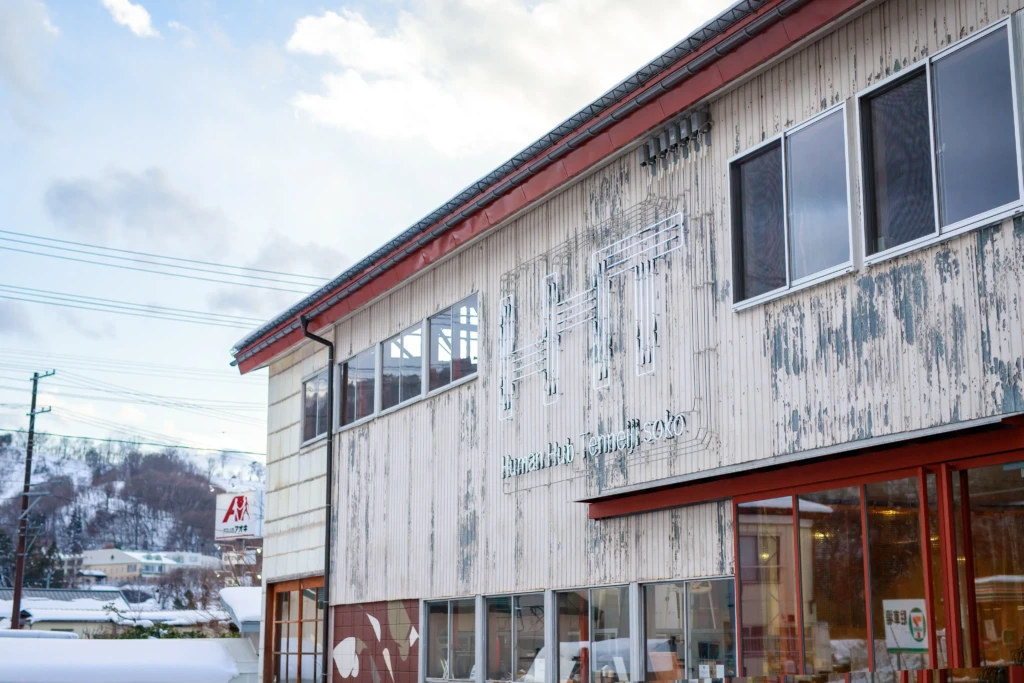
Where Daily Life and Culture Meet
The first place we visited was Human Hub Tenningji Soko, located in Aizuwakamatsu City. This space was renovated from a former warehouse. While the beams and pillars still retain the atmosphere of the past, the interior now includes a gallery, shop, and a café. It is a place where visitors can naturally encounter Aizu’s craftsmanship and creative expression.
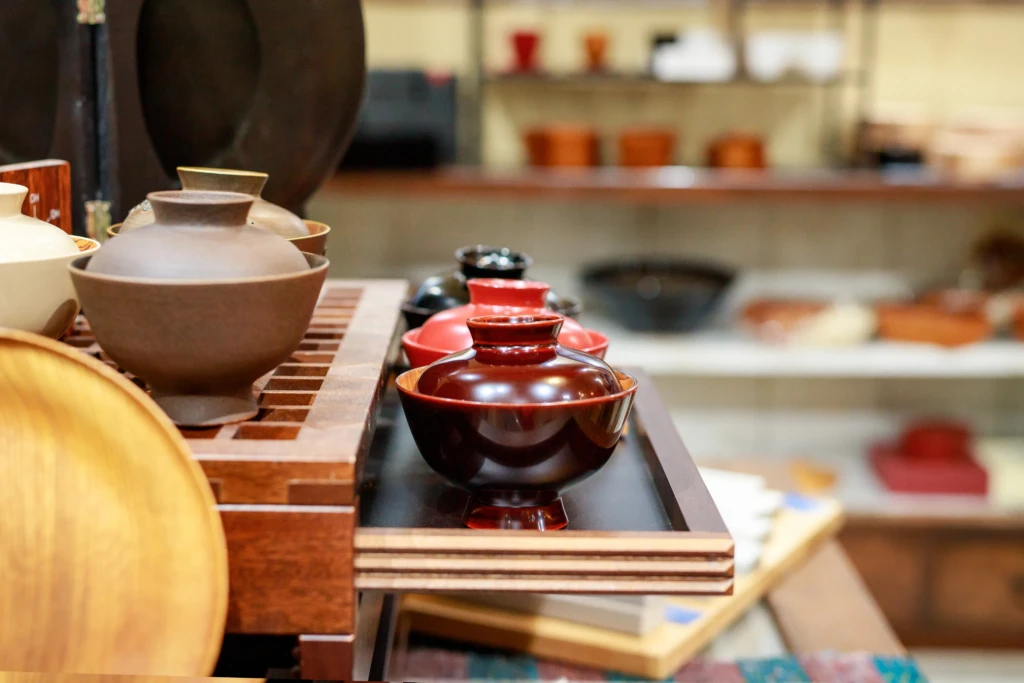
In addition to shopping, the space also includes a coworking area and a shared workshop.It functions as a local hub where makers, people who work there, and visitors naturally come together in everyday life.
Stopping by during a trip allows you to feel the living presence of Aizu’s traditional crafts and craftsmanship up close.
In the shared workshop located at the back of the gallery shop, we were shown tools used to shape kiji, the wooden base used for lacquerware. All of the tools were completely unfamiliar to me, and some were so unique that I couldn’t even imagine how they were used.
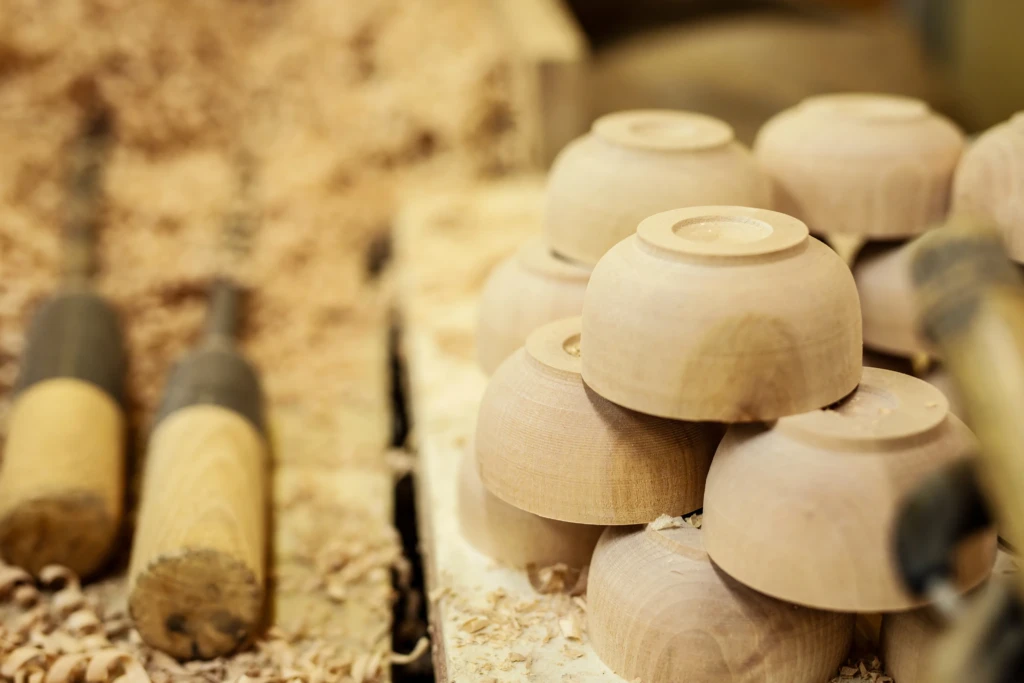
To create kiji, a block of wood is spun at high speed on a lathe and shaped into vessels using a long, rod-like plane. Artisans who perform this process are called kijishi. This profession has deep historical roots in Aizu. Embarrassingly, this was the first time I had ever learned such a craft even existed.
The kiji, carved from a single piece of wood without any joints, feels almost weightless when held in the hand. I was amazed by how delicate this craftsmanship is. And this is only the beginning—after this, layers of lacquer are applied, meaning that many careful steps are required before a single piece of lacquerware is completed.
Feeling Aizu’s Culture with Your Own Hands
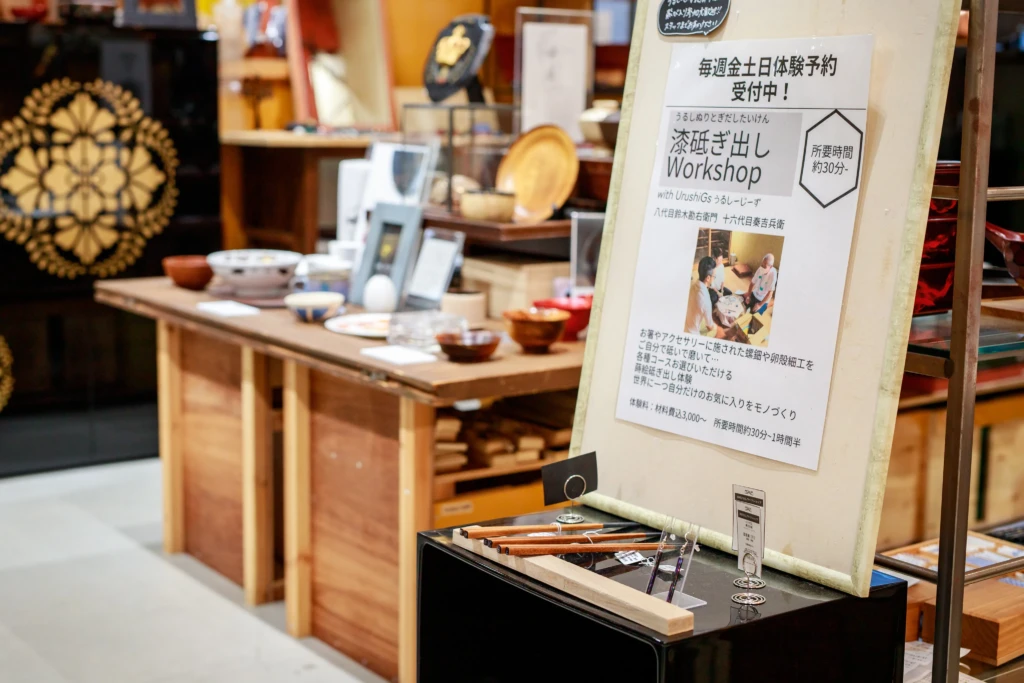
Various workshops are held here that allow visitors to experience Aizu’s culture firsthand. This time, we took part in “Hashiten Togidashi,” one of the experiences involved in making lacquered chopsticks. The workshop begins by sitting on floor cushions around a small, simple chabudai table together with the artisan instructor.
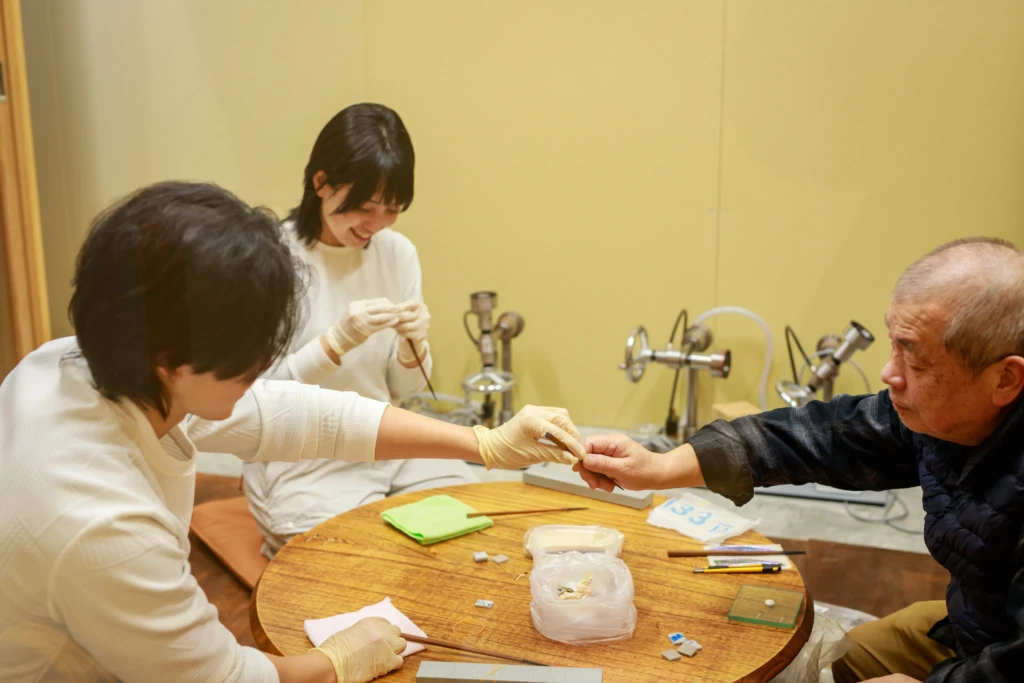
Working while sitting on the floor is a traditional Japanese style that is still naturally preserved in the world of craftsmanship today. Toolboxes and worktables are also designed to be used on the floor, reflecting this way of working.
We begin by slowly polishing the lacquer from the tip of the chopsticks, known as the hashiten.
The process requires patience, and at times it was challenging. But as the shell inlays carefully set in lacquer appeared one by one, I felt my mind becoming sharper and more focused with each movement.
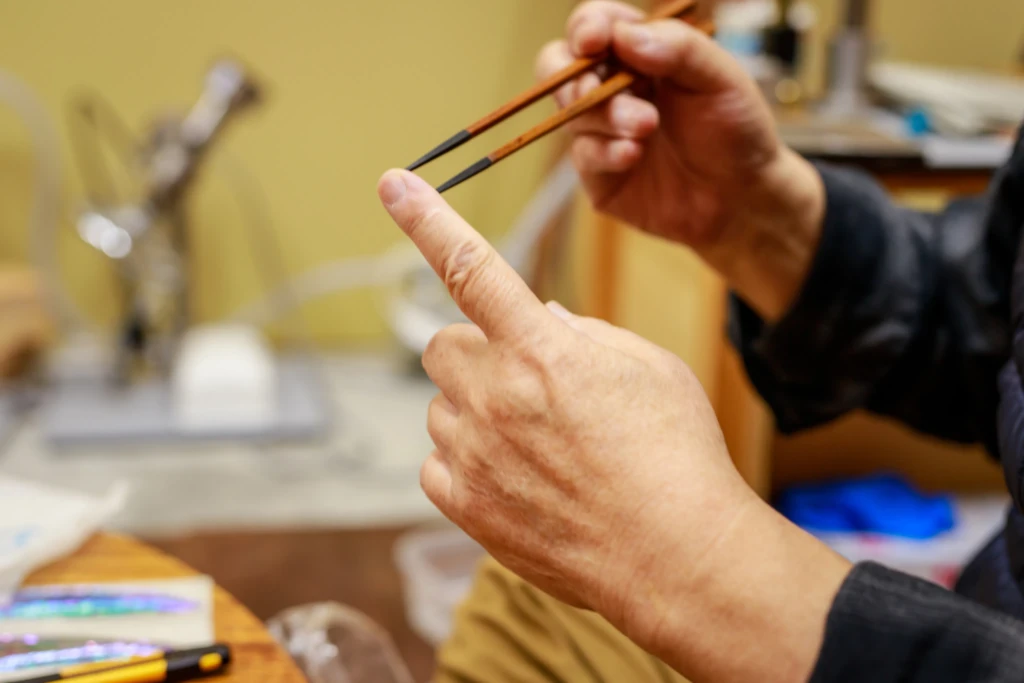
Once the pattern on the hashiten is clearly revealed, we move on to applying lacquer to the body of the chopsticks. Taking an appropriate amount of lacquer, we apply it gently from top to bottom. As we slowly brush it on, a natural sheen begins to appear.
Because lacquer is a very delicate material, careful attention is needed to avoid touching the areas that have already been coated. When finished, the chopsticks are placed in a box together with damp gauze.
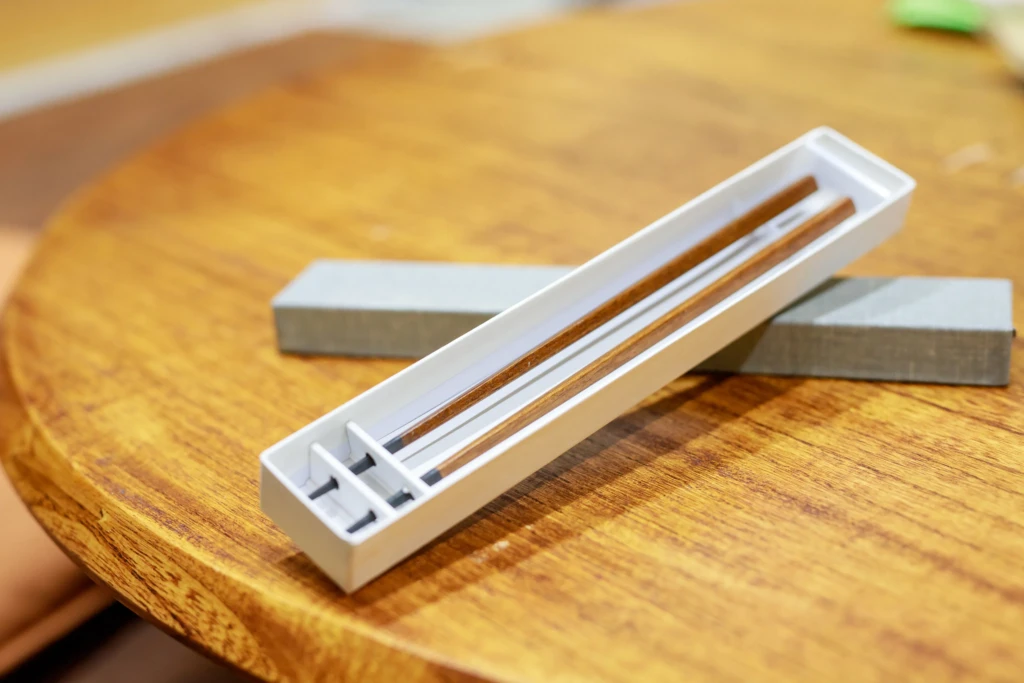
I had always assumed that freshly applied lacquer should be dried in a dry environment. To my surprise, however, lacquer actually dries better in high humidity.
Realizing that my own assumptions are not always correct—and spending time wondering “why” and “how”—is part of what makes a workshop experience special.
What you experience by working with your own hands stays vividly in your memory.
After completing all the steps, I thanked the artisan and stood up. But I couldn’t stand as expected and ended up falling back down. After sitting in the traditional kneeling position for so long, my legs were completely numb and had lost all strength. Perhaps that, too, is one of the most Japanese parts of the experience.
4.Quiet Moments in Time | Heading to Snowy Mount Iimori
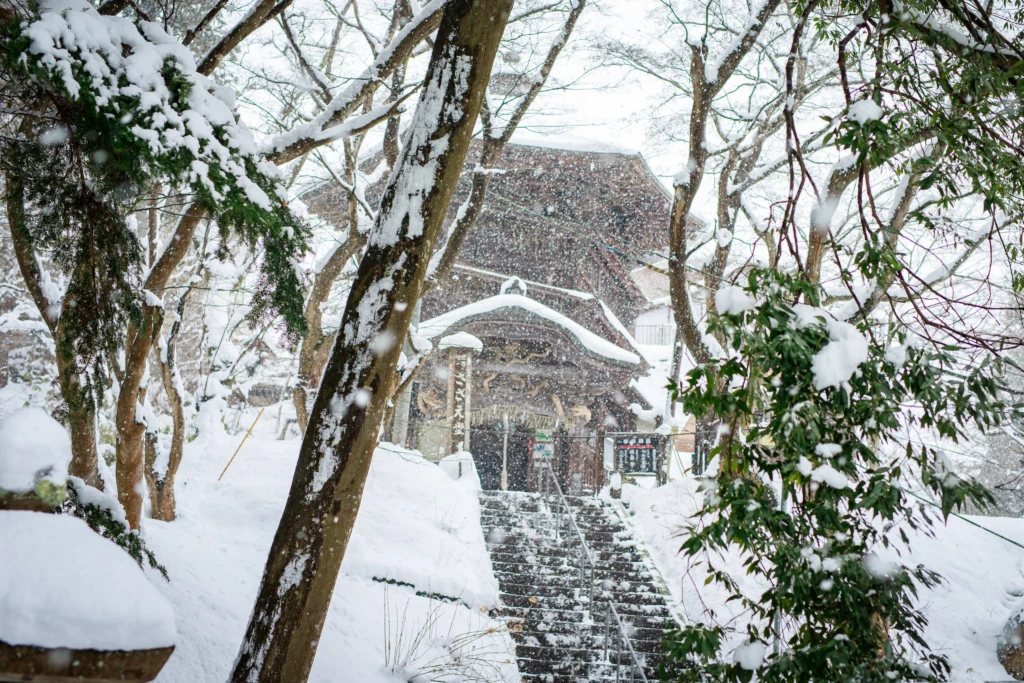
We get back into the hired car and head toward Mount Iimori. By the time we reach the foot of the mountain, the snowfall has grown heavier. Even in weather like this, being able to be dropped off right in front of our destination is incredibly reassuring. Once again, the hired car proves to be a reliable companion on this journey.
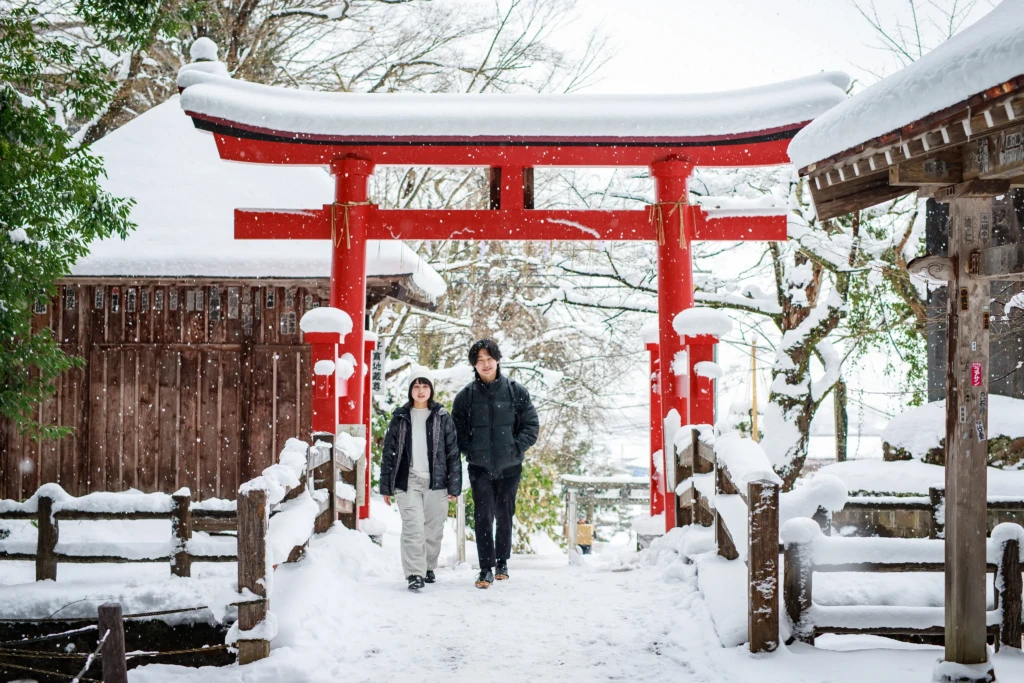
We climb the stone steps, carefully taking one step at a time, each stair covered in pure white snow.
Guided by our footing, we continue upward.
Guided by my footsteps
Sazaedo, located halfway up the slope, is a wooden building with a rare and unique interior structure.
It was built as a symbol of popular faith, allowing visitors to complete the Saigoku 33 Kannon pilgrimage within a single hall.
Inside the cylindrical hall of Sazaedo, a double-helix passageway spirals upward and downward. The paths for ascending and descending never cross, allowing visitors to worship in a one-way flow. This unique design, both inside and out, resembles the shape of a spiral shell.
As you step inside, the floor continues with a gentle slope rather than clearly defined stairs. There are no sharp steps—your movement is naturally guided forward. This one-way structure was carefully designed so that worshippers never pass one another, allowing each person to face their time of prayer in quiet solitude.
Countless wooden prayer plaques hang silently from the walls and pillars inside the hall. The scene feels unusual, yet it clearly speaks to the long history of faith that has accumulated here over time. Faith, practicality, and advanced wooden construction techniques come together in this building, making it a rare structure even by global standards. Today, Sazaedo is designated as an Important Cultural Property of Japan.
Memories That Linger in the Silence
On this mountain, there remains a cave said to have been passed through by the young warriors of the Byakkotai as they fled long ago. That cave is known as Tonokuchi Seki Cave, located in Aizuwakamatsu City.
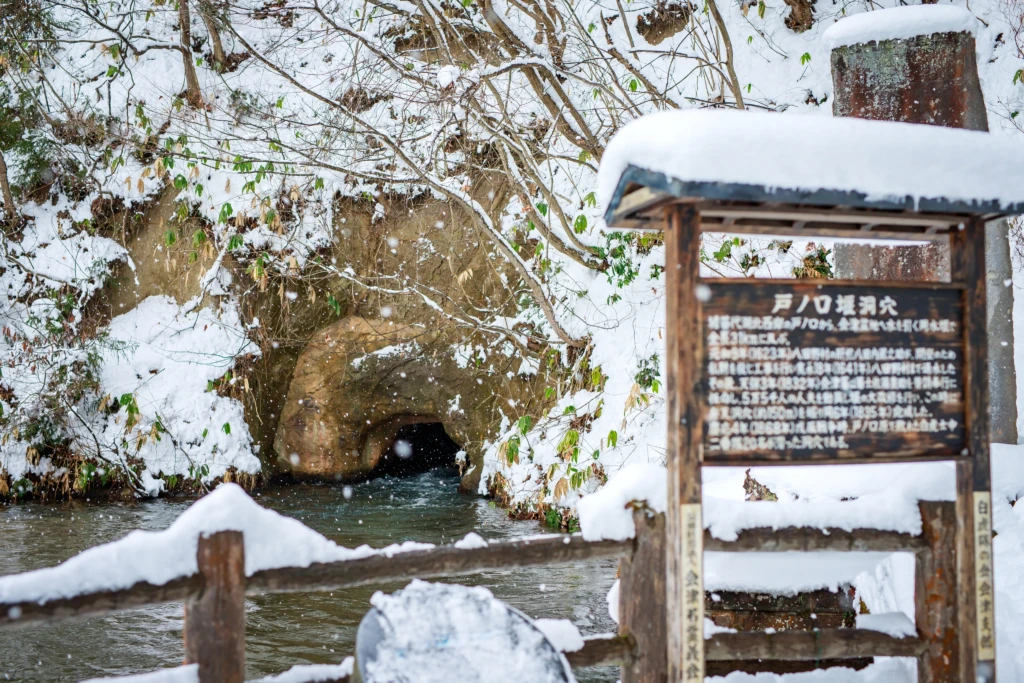
This cave was originally part of the Tonokuchi Seki, an irrigation channel built to draw water from Lake Inawashiro to the Aizu Basin. During the Boshin War, after being defeated in the Battle of Tonokuchihara, the young Byakkotai warriors are said to have passed through this cave to confirm the fate of Tsuruga Castle before making their way to Mount Iimori. They moved through the dark, cold tunnel—about 150 meters long—immersed in icy water.
What they saw beyond was black smoke rising from the castle town, a sight that would eventually lead to the tragic mass suicide of the Byakkotai. An event I had known only as historical fact now rises here as a memory felt through the body. The quietness I had sensed earlier gradually takes on a different weight.
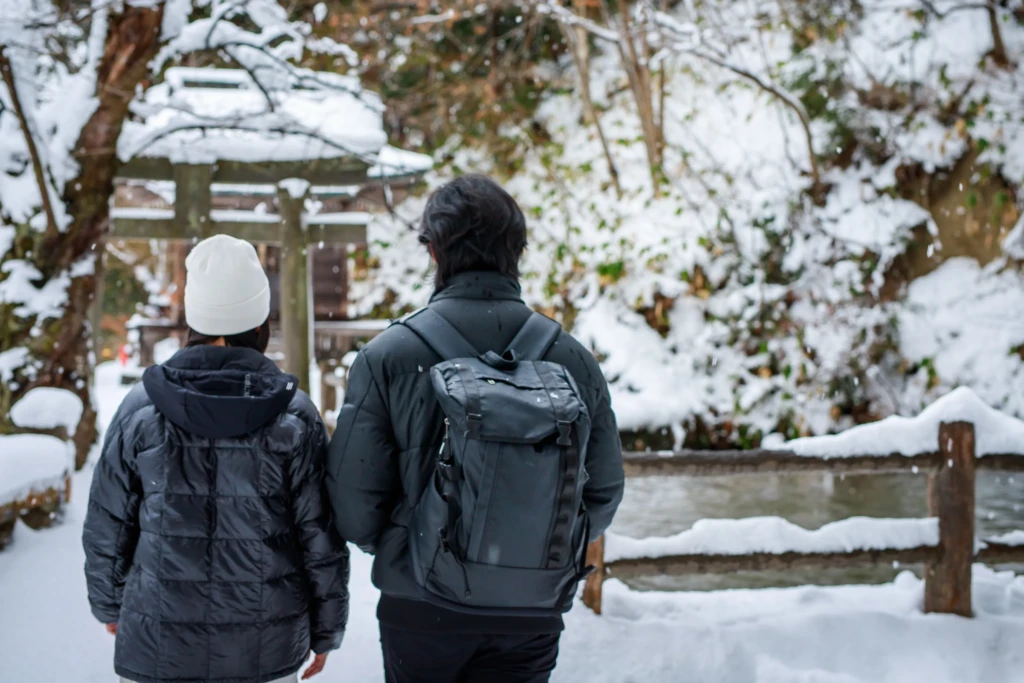
Below, the city of Aizuwakamatsu spreads out, blanketed in snow, silent as far as the eye can see. Standing before this view, what did they see? What did they feel? There is no way to know the answers. But by standing here, I can clearly sense the depth of time they once lived through.
5. Traveling Back in Time | Snow-Covered Ouchi-juku
Leaving Mount Iimori, we head toward Ouchi-juku by hired car.

Before long, the scenery changes to open fields and farmland, and the distant mountains begin to form gentle outlines. Watching the landscape pass by through the window, I realize that even though it is the same winter, time seems to flow differently from place to place.
Inside the hired car, there is a quiet sense of space. You can talk, or you can simply look outside in silence. Without having to focus on the act of traveling itself, a natural pause emerges—a moment to prepare your mind for the next destination. And then, we arrive at Ouchi-juku, wrapped in snow.
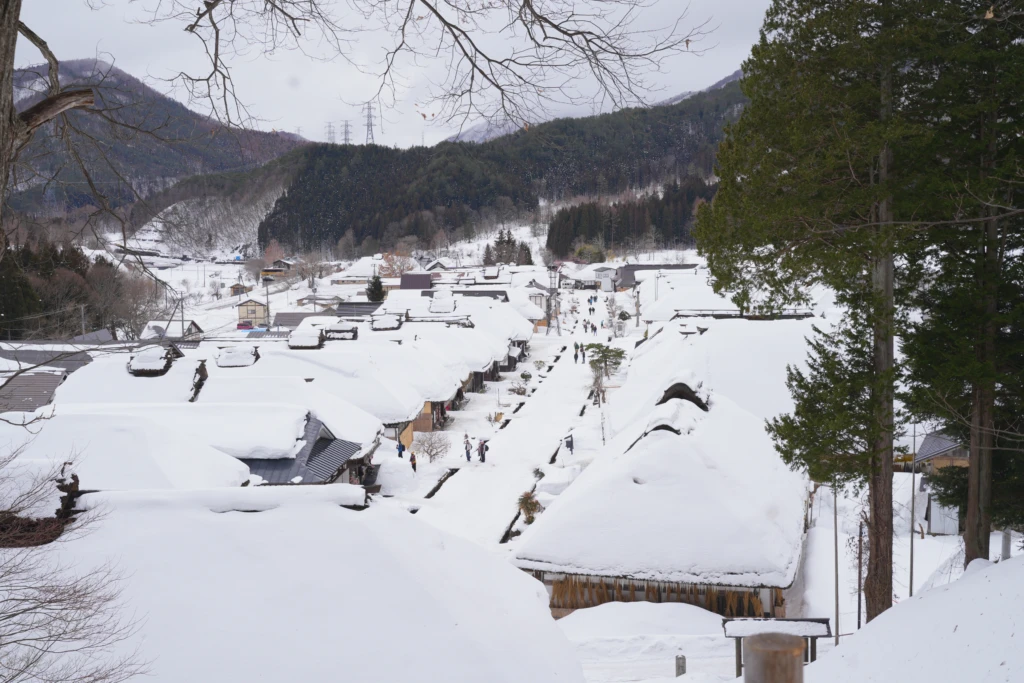
The street lined with thatched-roof houses looks completely different from the scenery we had just left behind. Stepping into this place feels as though time has gently moved backward. Ouchi-juku once flourished as a post town during the Edo period, serving travelers on the sankin-kōtai routes. Even today, the townscape and traces of daily life from that era remain carefully preserved.
As evening approaches and the number of visitors begins to thin, the street grows noticeably quieter. With fewer people around, it feels as though time begins to belong only to those who are staying here. Our accommodation for the night is Honke Ogiya, one of the few remaining places to stay in Ouchi-juku.
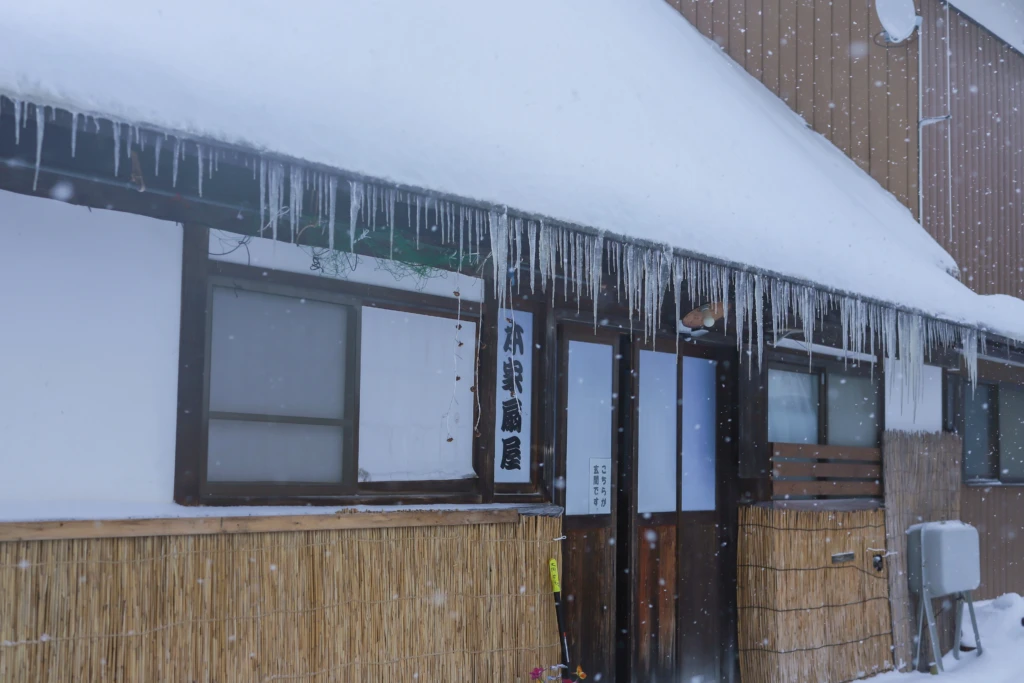
Once the daytime bustle fades and the hearth fire is lit inside the thatched-roof house, this former post town slowly transforms—from a place to visit into a place to truly spend time.
6. A Place That Feels Like Home|Minshuku Honke Ogiya, Welcomed by the Beloved Obaya
A Place That Makes You Want to Say “I’m Home”
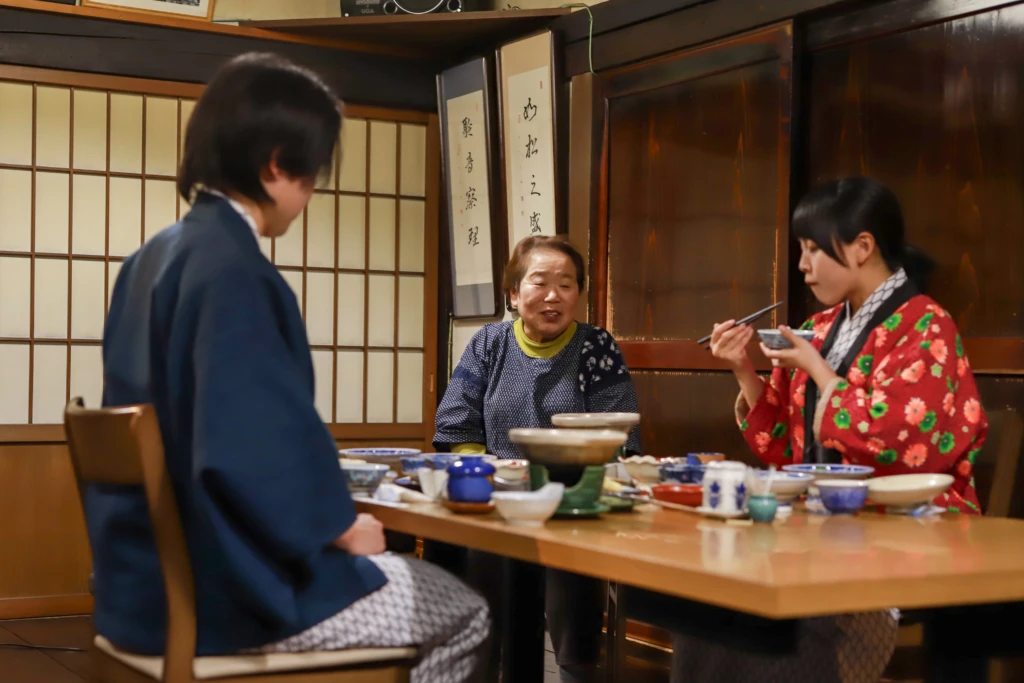
As we slide open the wooden door, someone is already there to welcome us.
She is the heart of this inn—the well-known landlady affectionately called Kiiko Obaya.
The moment we take in the historic feel of the building and her warm, open smile, we are wrapped in a sense of comfort— as if we had returned to our grandmother’s house after a long time away.
Kiiko Obaya speaks in the local Aizu dialect. Its gentle sound slowly softens even the tension left by the cold snow outside. Before I realize it, I almost feel as though I once had a grandmother who spoke just like this.
The guest rooms are traditional Japanese tatami rooms, and the dining area features rich wooden floors. From the living space to the kitchen and even the water facilities, the inn is closely connected to the daily life of Kiiko Obaya and her family.
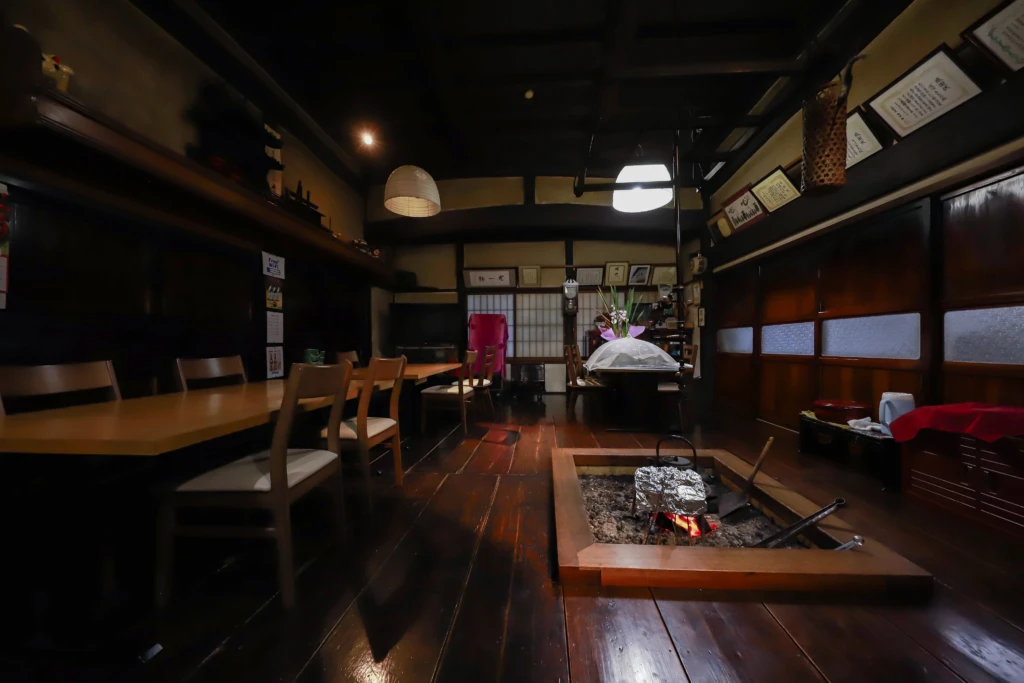
You naturally call out toward the living area. That closeness makes it feel just like staying at your grandmother’s house.
When we slide open the fusuma doors to our room, the space is already warmly heated.
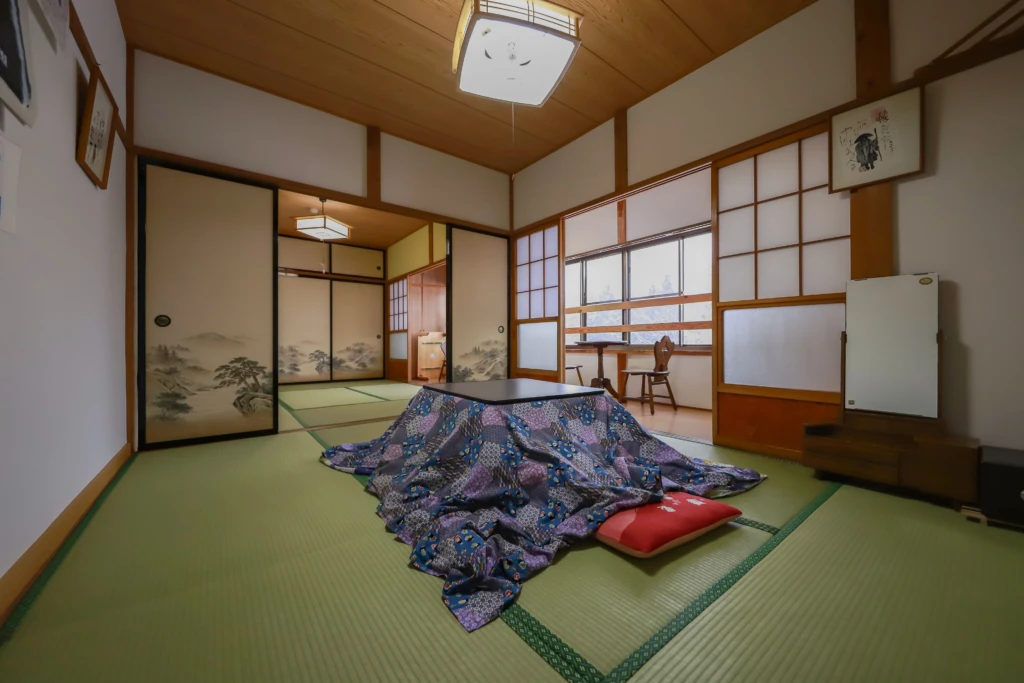
A kotatsu sits at the center of the room, with tea ready and waiting. The futons are laid out by the guests themselves—another small but meaningful part of staying in a traditional Japanese room.
Spending the night in a countryside home. That is exactly what it feels like. Wrapped in the warmth of the kotatsu, we let the fatigue of the journey slowly melt away.
Welcomed by the Flavors of the Land
When it was time for dinner, the table quickly filled with dishes from Aizu. Made with local ingredients, the food was not flashy. Instead, each dish had a gentle flavor that allowed the natural taste of the ingredients to shine. Among them, one dish stayed with me most deeply: kozuyu, a traditional local dish of Aizu.
This light, clear soup is made with broth from dried scallops and filled with taro, carrots, shirataki noodles, wheat gluten, shiitake mushrooms, and wood ear mushrooms. Although it is full of ingredients, each flavor is distinct, creating a quiet sense of richness.
The ingredients, cooked until tender, were so comforting that I wanted to refill my bowl again and again. I later learned that there was once a custom in Aizu: while elaborate dishes were taken home, it was never considered rude to have multiple servings of kozuyu. In that single bowl, I felt the spirit of Aizu’s hospitality. This time, because there were so many dishes, I stopped at just one bowl. Even so, I felt completely satisfied.
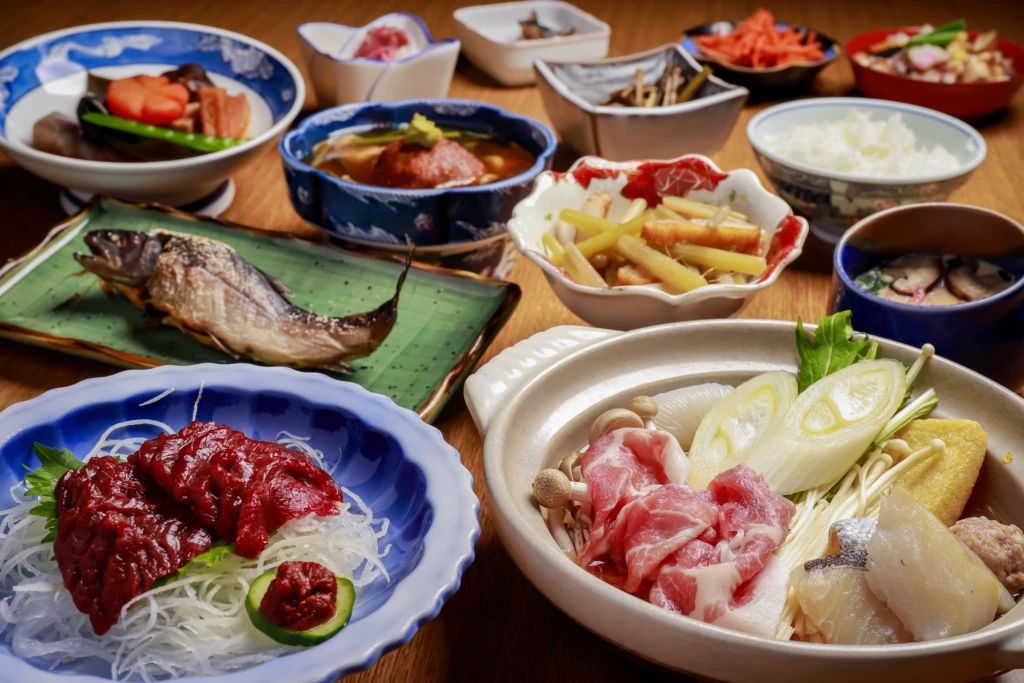
I was also surprised by the ayu fish grilled over the irori hearth and the small side dishes made with mountain vegetables. These were not foods prepared in a single day. Some had been carefully prepared over several days, or even months.
In a region with heavy snowfall, people naturally developed the wisdom to store food and use it fully. The culture of preserved foods still exists here not as something special, but as a natural way of life—simply what was needed to live in this land.
The takuan pickles on the table are part of that same tradition. Their saltiness was remarkably gentle, allowing the sweetness of the daikon to spread quietly. Rather than standing out as a “flavor,” the long process behind them was felt as a sense of everyday living.
That evening’s meal included more dishes than I had expected. Each was prepared in small portions, but with great care. It felt as though the host’s thoughts—Is this enough? Are you warm enough?—had taken shape on the table.
By the time the meal ended, my body felt completely full. Not just because of the quantity of food, but because I had touched the everyday food culture that has quietly continued here for generations. It was not a flashy meal. It was a table shaped by the time and lives of the people who have lived here—and that is why it stayed with me.
A Post Town of Treasures
Once the meal comes to a gentle close, conversation with Kiiko Obaya begins. We talk about the food, the history of the inn, and the years she has spent living in Ouchi-juku.
This post town had difficult times in the past. That is why, she says, they value hospitality that makes guests want to return.
Without her saying it out loud. The feelings were already clear in her expression.
Before Ouchi-juku was designated as an Important Cultural Property and began to attract attention, there were many challenges simply in continuing to protect and preserve the area.
Still, she says with conviction, “Ouchi-juku is a town of treasures.” Believing this, she has continued to run the inn here.
In spring, flowers bloom. In early summer, fireflies dance through the night. On cool summer evenings, stars sparkle overhead, and in winter, the town is wrapped in quiet snow. All of this—and the warmth of the people—are what make Ouchi-juku truly precious.
Watching Kiiko Obaya speak with such joy, I find myself wanting to return in another season as well.
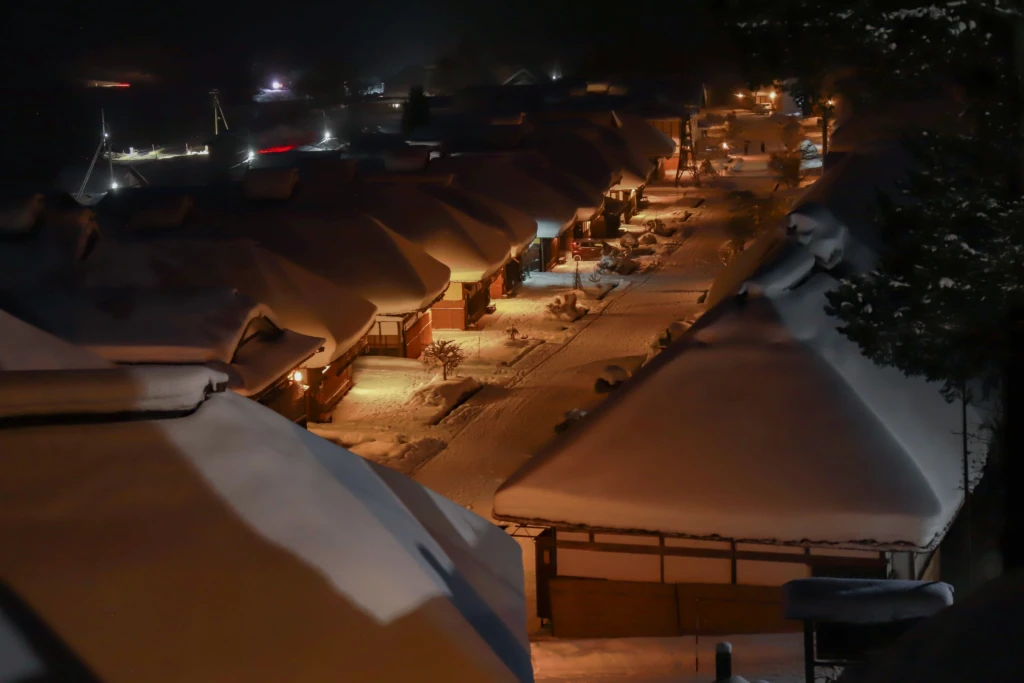
From crossing the mountains from Koriyama into Aizu, to welcoming the night in Ouchi-juku, the landscapes, people, and culture encountered during this two-day, one-night journey remain vividly in my memory.
Looking back, I realize that what allowed me to experience all of this so deeply was the quality of the travel itself. There was no rushing to catch trains or buses, no constant checking of schedules, no burden of luggage. Rather than hurriedly moving between scattered sights, I was able to stop at each place, take it in fully, and understand its background. That was possible because the strain of transportation had been removed.
Being guided right to each destination, then quietly connected to the next— this steady rhythm transformed travel from something to be “used up” into time spent preparing to truly receive each experience.
This journey was completed not only by the places themselves, but by a way of traveling that allowed their charm to fully unfold. On my next trip, I hope to once again follow this unhurried flow of time, and venture even deeper into Aizu.
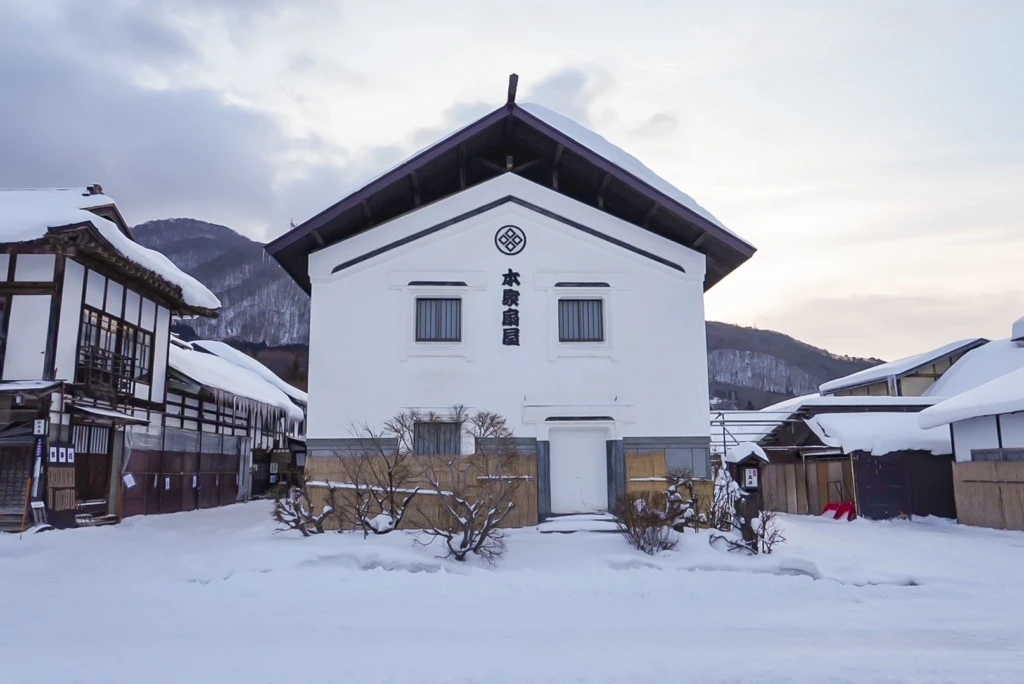
HONKE OGIYA
View Details