Travel satisfaction isn’t determined by how many places you manage to visit. What matters more is a rhythm that feels right—smooth transitions, well-timed meals, and space to rest. These small choices quietly shape how a day is remembered.
This journey doesn’t rely on special preparations or costly transportation. Public transit forms the backbone, with additional transport used only when necessary, allowing the day to unfold without strain.
The morning begins in a quiet place. By midday, you step into town. In the afternoon, you touch history. And at night, the day comes to rest at a single inn. Moving in this order, each experience connects to the next—not as isolated moments, but as part of one continuous flow.
From here, we’ll retrace the day in the order it was actually walked. And the journey begins with one inn.
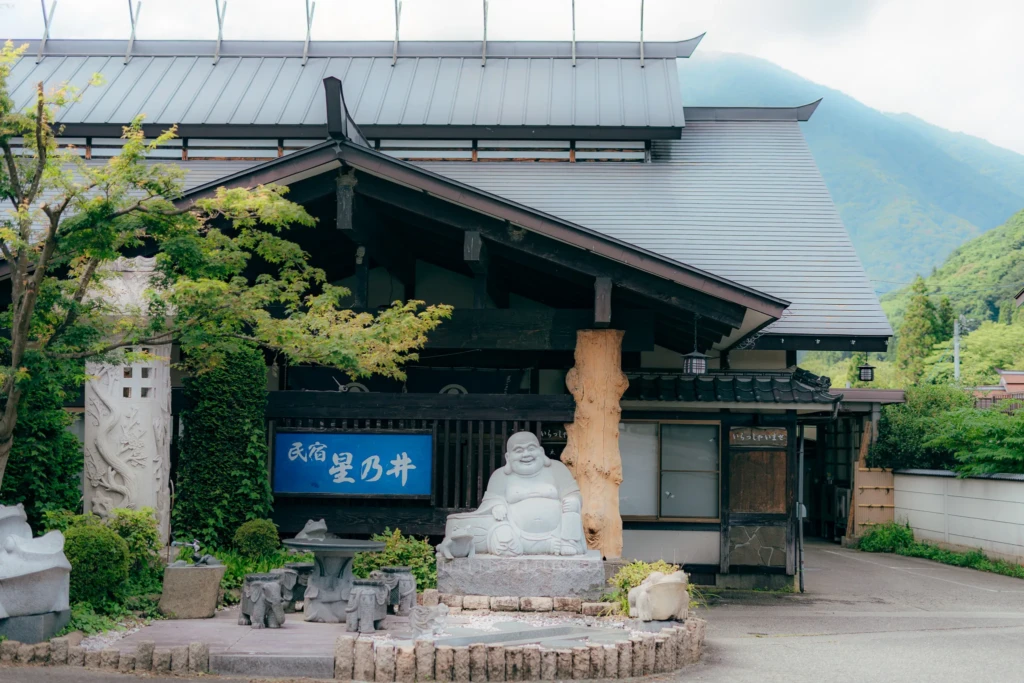
Our first destination in the early morning was The inn of sincerity -Hoshinoi- a quietly situated inn on the outskirts of Aizuwakamatsu. There was a reason for choosing this place before visiting any major sights.
Rather than efficiently checking off famous landmarks, this trip was about first absorbing the atmosphere of the land—and the sense of distance between people—through the body. As an entry point to the journey, Hoshinoi was an ideal place to begin.

The inn of sincerity -Hoshinoi-
Hoshinoi is a long-established ryokan known as a “The inn of sincerity” a place where visitors can experience a distinctly Japanese sense of values embodied in the word magokoro.
Magokoro refers to acting naturally out of genuine care for others, without expecting anything in return. In English, it comes close to phrases like “a sincere heart” or “a true heart,” though its full nuance is difficult to put into words. At Hoshinoi, this idea isn’t explained verbally—it’s conveyed through experience. There are no flashy performances or excessive service. Instead, you notice it in the quiet tone of conversation, the respectful sense of distance, and the thoughtfulness of not intruding more than necessary.
The building itself was once used as a sake brewery, and its history blends seamlessly with the feeling of everyday life. It’s about a 15-minute walk from the station, and a shuttle service is available, so even travelers with heavy luggage can arrive without worry. Around 70 percent of guests are repeat visitors, a clear sign that this is more than just a place to stay—it’s a place people want to return to.
For many international travelers, ryokan culture can feel intimidating. Tatami rooms and onsen etiquette may seem unfamiliar at first. At Hoshinoi, however, guests are not expected to follow every custom perfectly. As long as there is a willingness to be respectful, support comes naturally from those around you. That atmosphere—quiet, forgiving, and human—is at the heart of Japan’s ryokan culture.
Dinner at Hoshinoi is built around local dishes that reflect the land and seasons of Aizu. Wild mountain vegetables, river fish, and locally grown produce take center stage—nothing flashy, but each ingredient’s quality speaks for itself. One dish in particular, the simmered potatoes (nimono), has been passed down for more than 50 years and is the inn’s signature. Simple to the point of surprise, it leaves a strong impression on many first-time guests, often prompting the quiet remark, “I’ve never tasted potatoes like this before.”
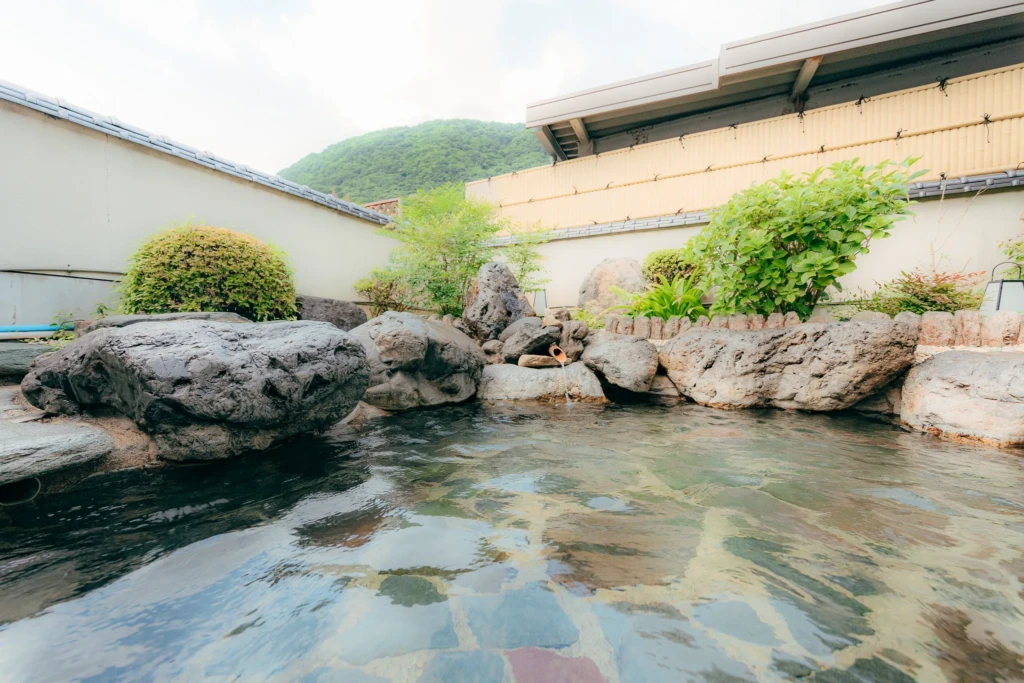
After the meal, guests head to the open-air bath fed by the natural hot springs of Yunokami Onsen. One of Aizu’s historic hot spring areas, Yunokami is known for its clear, gentle waters. Hoshinoi’s outdoor bath is open 24 hours a day. At night, stars reflect on the surface of the water, and the only sounds are insects in the dark. It is a kind of silence and darkness that simply cannot be found in the city.
What makes a night at Hoshinoi truly special is a guest-only night tour—an experience you won’t find anywhere else. The inn’s owner personally drives a small bus, guiding guests to Ouchi-juku after dark.
Ouchi-juku is a thatched-roof village that draws large crowds during the day. At night, however, the visitors disappear, leaving only the sound of running water and a sky filled with stars. Because the contrast between day and night is so striking, the stillness feels even more profound. What began simply as a wish to show guests the area’s fireflies gradually spread by word of mouth, and has since become one of Hoshinoi’s defining experiences. This is less about sightseeing and more about quietly touching Japan’s original landscape.
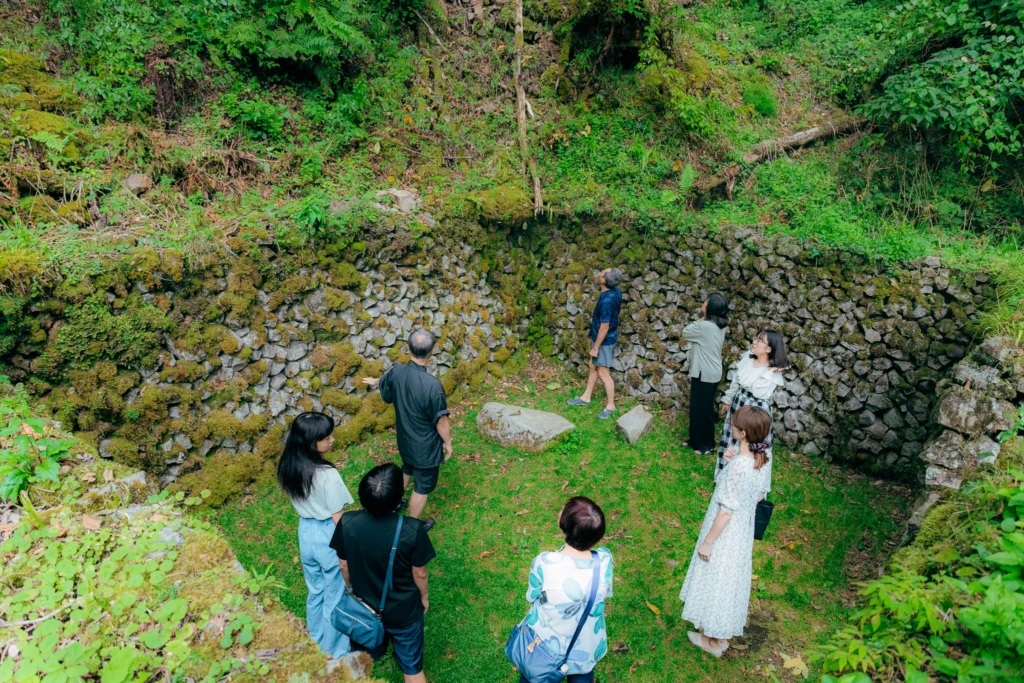
The next morning begins with Hoshinoi’s signature morning tour. Driven by the owner himself, the destination is not a polished sightseeing spot, but a quietly hidden cold-air phenomenon found deep in nature. At first glance, the landscape appears unremarkable—but the moment you step into it, you feel the difference in the air.
Little is explained here. This is something best received directly, through the body, exactly as it is.
A brief stop at a thatched-roof station
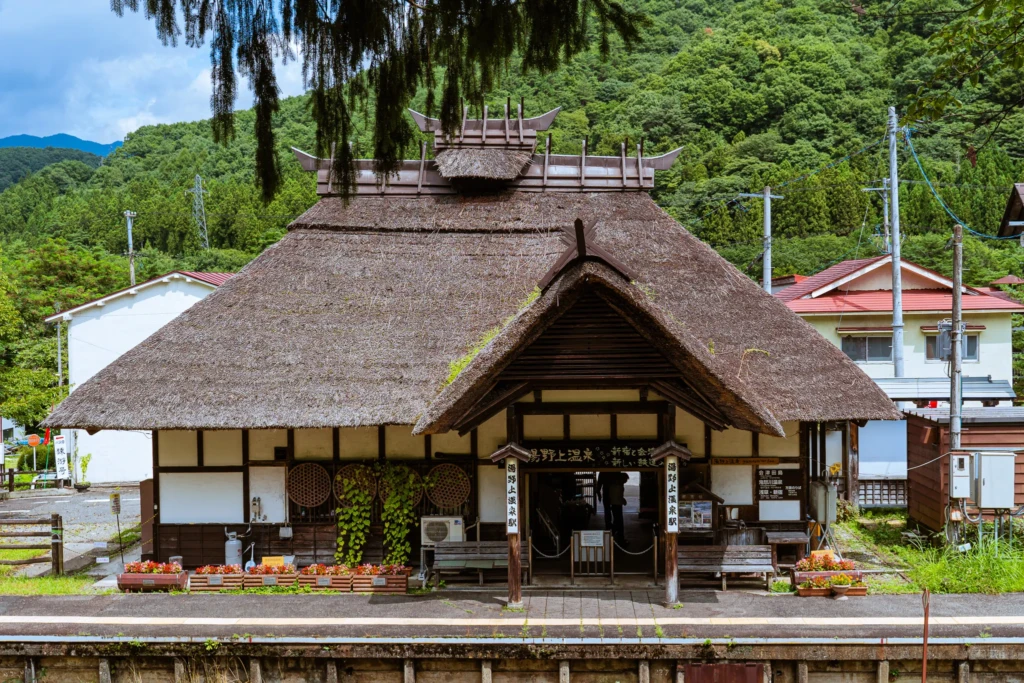
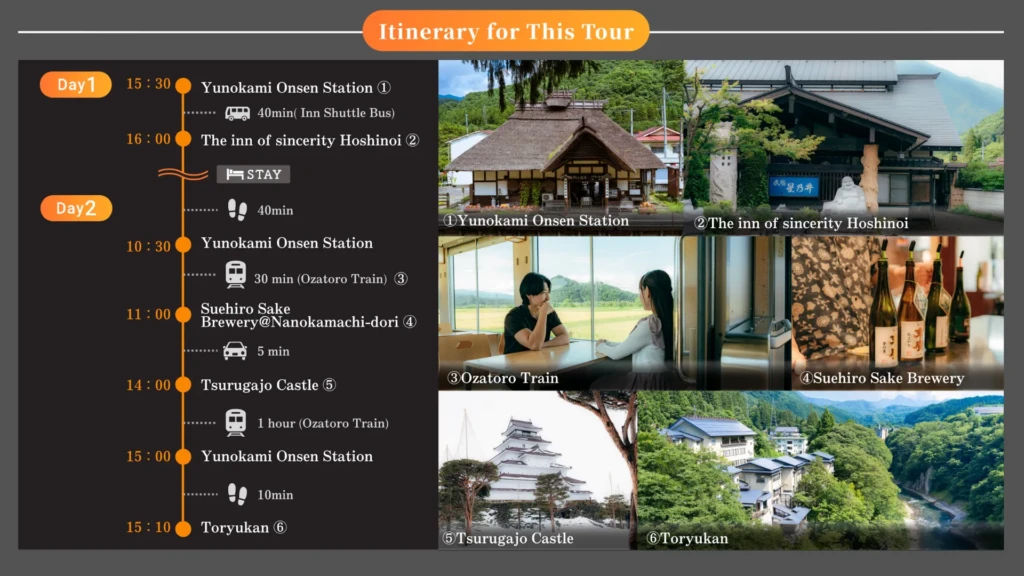
After the tour, we head to Yunokami-Onsen Station, about a ten-minute walk from Hoshinoi.
The station is known for its rare thatched-roof building—an uncommon sight in Japan—and was rebuilt in its current form in 1999. Unlike stations designed purely for efficiency, this one exists as part of the surrounding landscape.
Bathed in the soft light of morning, the station building is understated yet quietly dignified. The thickness of the roof and the texture of the wood naturally convey the long passage of time this area has accumulated. Beside the station is a small footbath, where travelers can soak their feet in warm water and wait for the train in silence.
Rather than feeling like a stop along a sightseeing route, the station feels placed within the flow of the scenery itself. Even during the brief wait for the train, standing here gently slows the rhythm of the journey.
A Scenic Train Ride
From Yunokami-Onsen Station, we board the Aizu Railway Ozatoro Train, one of the line’s most distinctive sightseeing trains. Combining a traditional tatami-floored carriage (ozashiki) with an open-sided trolley car (torokko), this train is more than a way to get from place to place. From the moment you step aboard, the ride itself becomes part of the journey.
In the tatami carriage, passengers remove their shoes and sit close to the floor. Viewing the scenery from this lower perspective feels very different from sitting in a standard seat—the mountains and rivers outside seem closer, more intimate. Inside the car, you can enjoy Japanese sweets or local sake, and as the train gently sways, time naturally begins to slow.
The trolley car offers a contrasting experience. With no windows, the wind, sounds, and temperature reach you directly. As the train follows the river, the sound of flowing water blends with the rhythm of the wheels, allowing you to take in the landscape not only with your eyes, but with your whole body. At a scenic point overlooking the gorge, the train briefly stops, giving passengers time to quietly admire the clear stream and surrounding mountains. Hearing the water and wind so clearly creates a sense of closeness to nature that feels different from viewing it while in motion.
There is no reason to hurry on this train. The scenery drifts by, the body sways, and moments accumulate without effort. That gentle, unhurried feeling is likely why the Oza-Toro Train stays so vividly in people’s memories.
The Ozatoro Train generally operates on weekends and holidays from April to November. The trolley car’s open sides are available only from June through September. With just two departures per day from Aizuwakamatsu, it’s best to check operating dates and schedules in advance. On this journey, we ride from Yunokami-Onsen Station to Nanokamachi Station, where even along the same line, the changing direction offers a noticeably different view of the landscape.
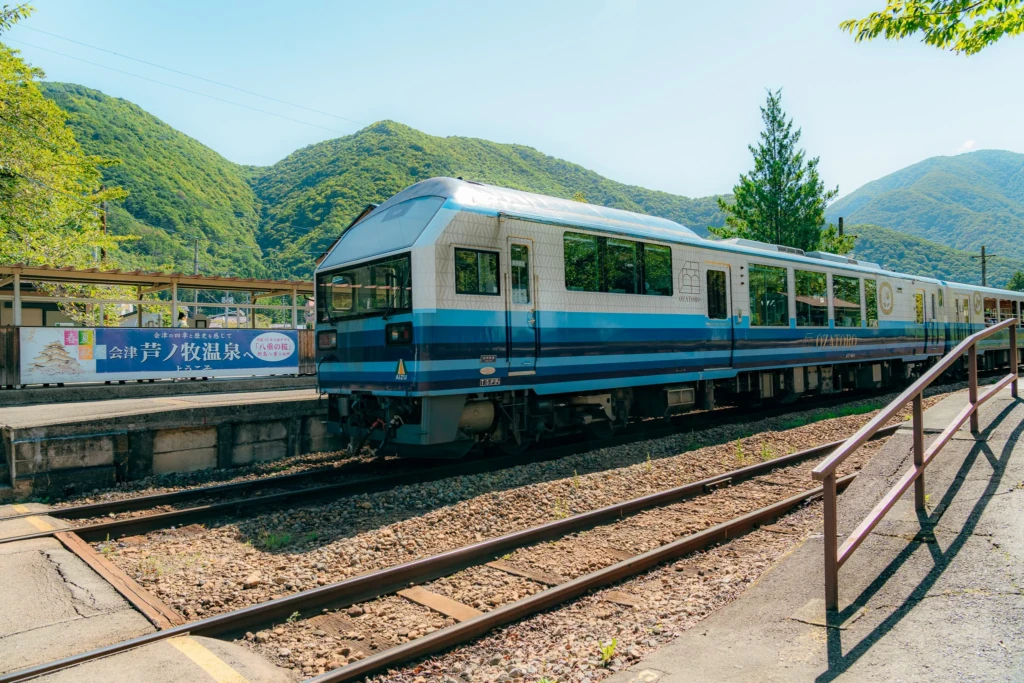
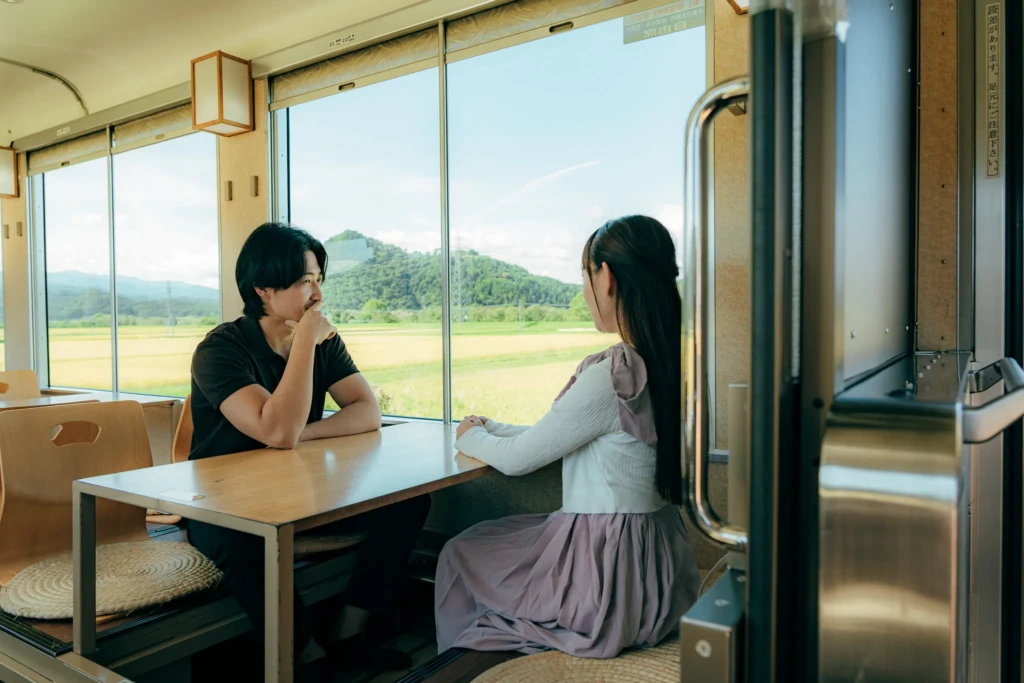
Stepping off the Oza-Toro Train and arriving at Nanokamachi Station, the atmosphere subtly shifts.
Unlike the deep quiet of Yunokami Onsen or the mountain villages of southern Aizu, the air here carries the calm rhythm of everyday life shaped over generations as a castle town. Nanokamachi has developed as a merchant district since the Edo period, and even today, kura-style storehouses and shops set inside former family homes remain scattered throughout the area. Because it hasn’t been overly polished as a tourist destination, a sense of a town where daily life has simply continued comes through naturally as you walk.
There’s no need to rush from one spot to another here. Keeping the lingering feeling of the train journey, walking slowly itself becomes the way to enjoy Nanokamachi.
Suehiro Sake Brewery
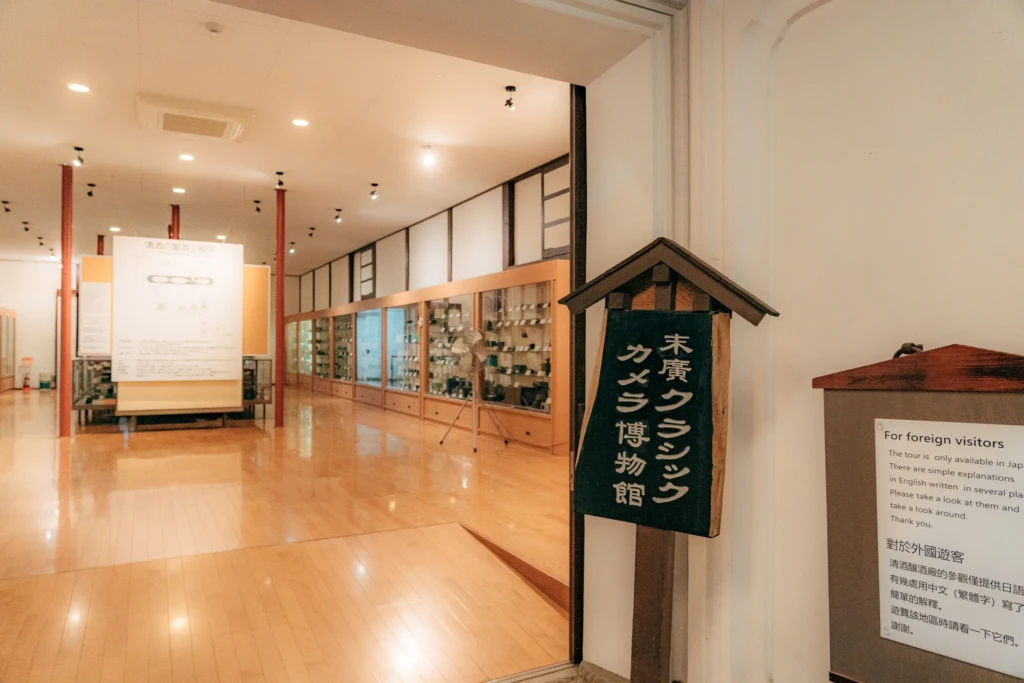
One place worth stopping by while walking through Nanokamachi is Suehiro Sake Brewery. Founded in 1850, this long-established brewery has been producing sake in Aizuwakamatsu for more than 170 years.
Part of the brewery complex is registered as a Tangible Cultural Property of Japan. Stepping inside, you’re met with a distinct coolness in the air and a palpable sense of time layered over generations. During the tour, visitors can learn how sake is made by walking through the actual brewing spaces. The explanations are clear and approachable, even for those without prior knowledge of sake.
Consideration for international visitors is evident as well, with simple English materials available—reassuring for travelers unfamiliar with the process. The explanations strike a comfortable balance, ensuring that even first-time sake drinkers can follow along without feeling overwhelmed.
The adjoining shop offers sake tastings and a range of bottles for purchase, along with sweets and seasonings made from sake lees. Choosing something here feels less like buying a souvenir, and more like taking home a small reminder of time spent in Aizu.
The Symbol of Aizuwakamatsu | Tsuruga Castle
After spending time absorbing the everyday atmosphere of Nanokamachi, we head to Tsuruga Castle, the symbol of Aizuwakamatsu. As the distance from the Nanokamachi area is considerable, taking a taxi is the most practical option. Taxis are relatively easy to find within the city and are well accustomed to serving major sightseeing spots, making them a comfortable choice even for international travelers.
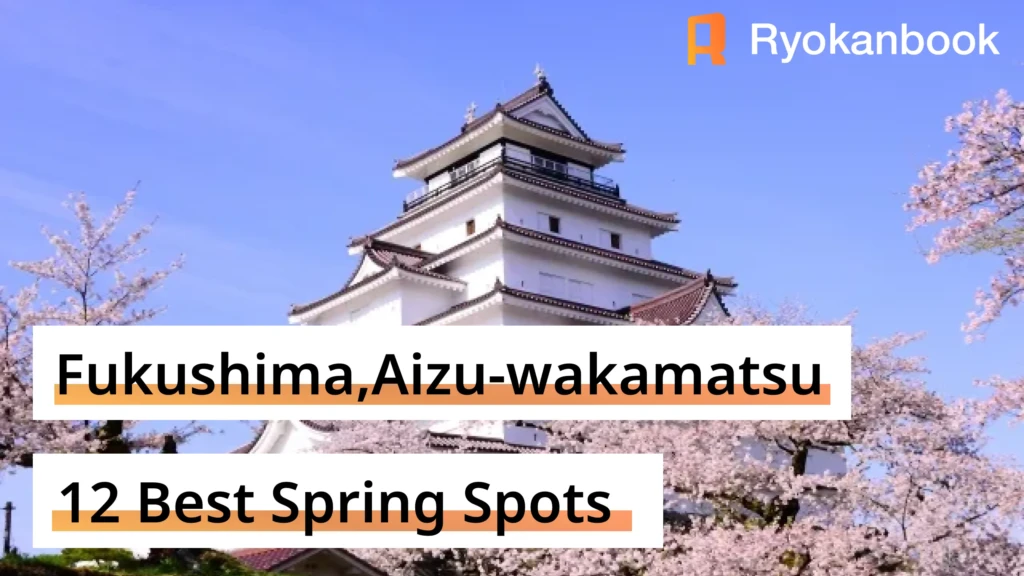
Tsuruga Castle—also known as Wakamatsu Castle—is famous as the only castle in Japan with a red-tiled keep. Its appearance changes dramatically with the seasons: cherry blossoms in spring, fresh greenery in summer, autumn leaves, and snow-covered walls in winter. The winter scenery in particular is widely regarded as one of the most striking castle views in Japan.
Inside, the castle functions as a museum, introducing the history of Aizu from the Sengoku period through the end of the shogunate. During the Boshin War, the Aizu domain remained loyal to the Tokugawa side until the very end, enduring fierce battles. Though ultimately defeated, the domain carried forward a strong sense of dignity—an attitude that still resonates in the character of the local people today.
There’s no need to understand every detail of the exhibits. What matters is sensing why this castle continues to be cherished and remembered, even now.
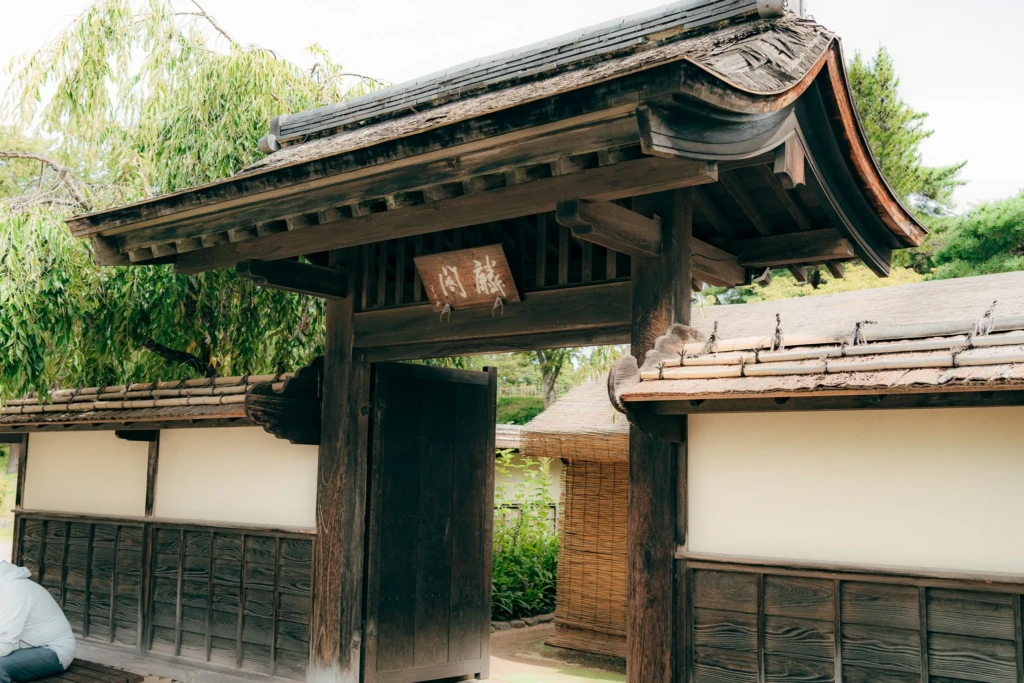
Within the grounds of Tsuruga Castle stands Rinkaku, a teahouse built by Gamo Ujisato, a leading disciple of Sen no Rikyu.
Here, visitors can take part in a tea service experience, enjoying matcha served with traditional Japanese sweets. Outside Japan, matcha is often associated with sweet drinks, but Japanese matcha offers a quieter balance of bitterness and umami. The contrast between the castle—long a symbol of martial strength—and Rinkaku, which embodies the spirit of tea culture, is striking. Placed side by side within the same grounds, the two reveal the breadth of values that have shaped Aizu over time.
A Culinary Ryokan in a Mountain Gorge|TOURYUKAN
After visiting Tsuruga Castle, we leave the city center of Aizuwakamatsu and return to the Yunokami Onsen area. If timing allows, riding the Ozatoro Train again is a pleasant option—the changing light and scenery offer a gentle sense of closure, different from the journey out.
That night’s stay is at TOURYUKAN, a long-established culinary ryokan in Yunokami Onsen. It’s an easy place to position as the final stop of an Aizu journey—where the experience is brought together through food and hot springs. The inn has just 12 guest rooms. There is no excessive decoration, and both the corridors and rooms are calm and understated. Because the scale is intentionally modest, the presence of other guests never feels overwhelming. Time naturally settles into a slower rhythm, spent quietly between the room and the baths.
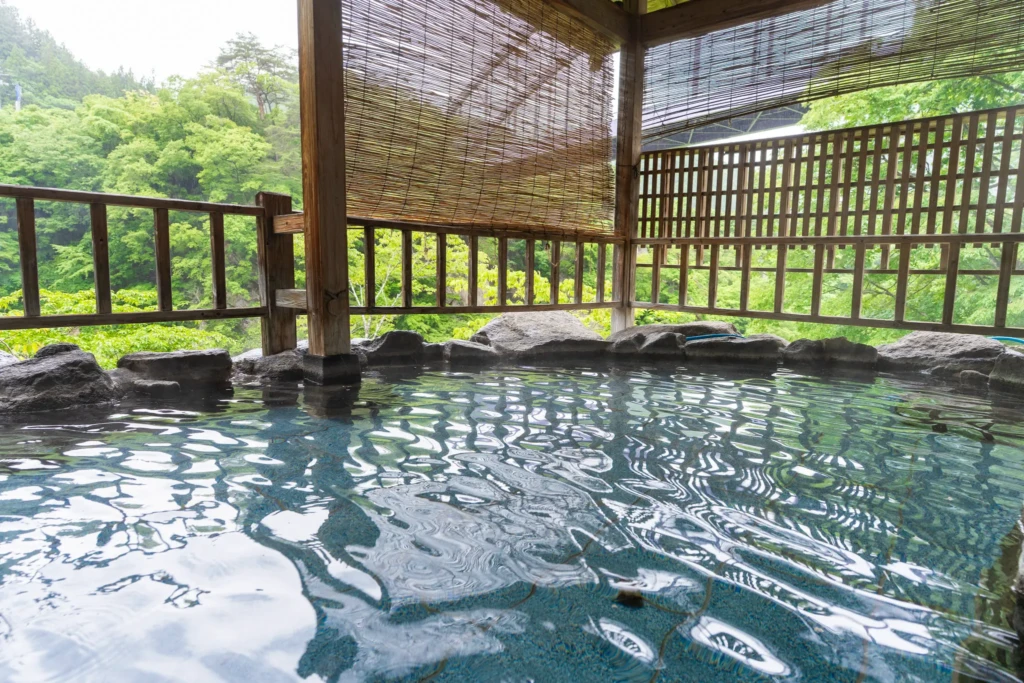
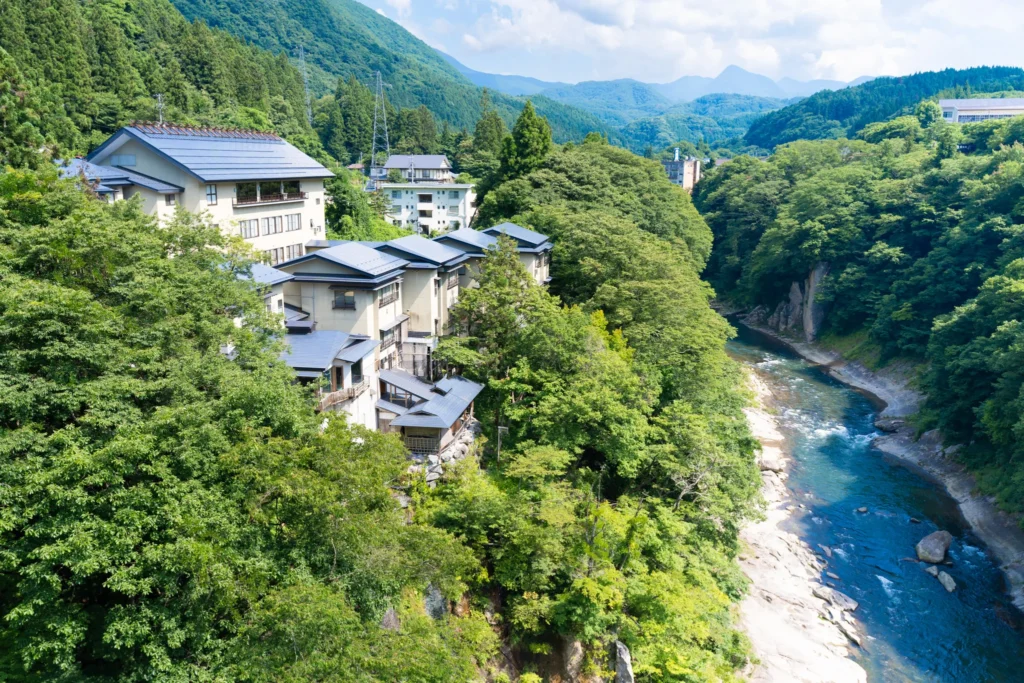
One of TOURYUKAN’s defining features is that every guest room is equipped with a private indoor bath fed directly by the natural hot spring source.
Even for guests who may feel hesitant about using large communal baths, this design allows them to enjoy onsen bathing in complete privacy—lowering the barrier for international travelers. In the special rooms Fujitsuki and Ryutsuki, guests also have access to open-air baths overlooking the gorge.
In addition to the in-room baths, the ryokan offers two public baths, Oborozuki and Mangetsu, as well as reservable-free private open-air baths (Sengetsu and Mikazuki). With multiple options to choose from, it’s easy to find a comfortable way to enjoy the hot springs, even for those new to onsen culture.
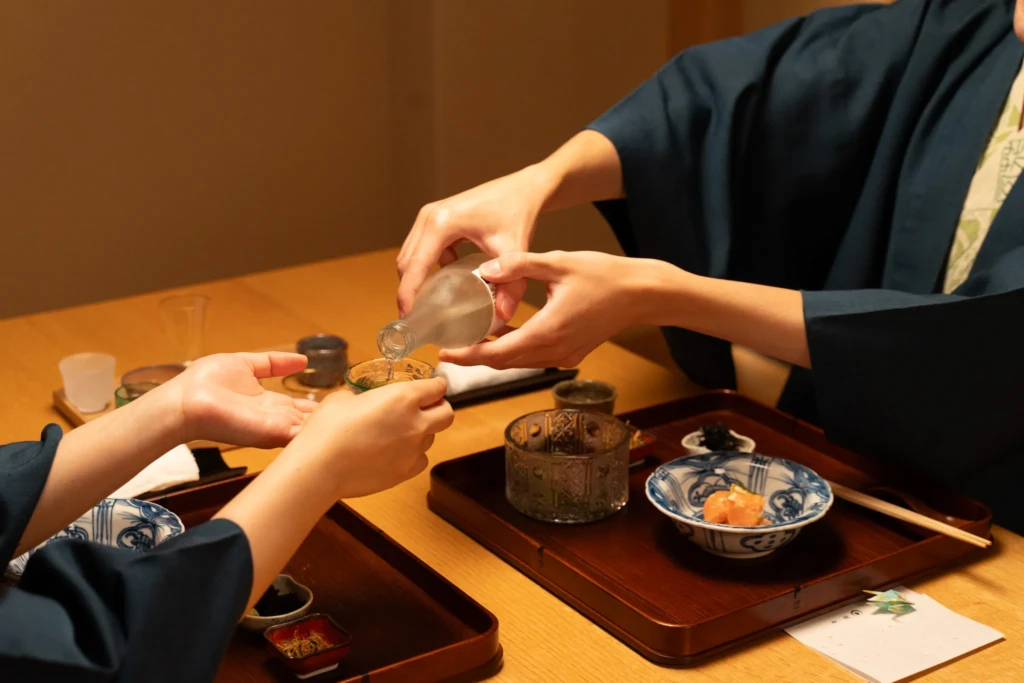
What truly defines TOURYUKAN as a culinary ryokan is the level of refinement found in its dinner.
Built on dashi drawn from Aizu’s pure water, the cuisine makes generous use of local ingredients—rice, seasonal vegetables, river fish, and Fukushima beef—while remaining firmly rooted in the traditions of Japanese cooking. Rather than relying on novelty or spectacle, the kaiseki meal leaves its impression through temperature, timing, and aroma, each dish quietly building on the last.
The progression—from the opening dish to sashimi and warm courses—feels natural and unforced, with flavors carefully restrained. This is not food that lingers in memory for its intensity, but for how it was eaten. Tableware and presentation reflect the season and the region, making the meal feel thoughtfully designed as a continuous experience rather than a series of individual plates.
The meal begins with a toast using local sake. More than a simple gesture, it serves as a gentle introduction—linking the water and rice of Aizu to the dishes that follow. Even small details, such as how lids are lifted or vessels are handled, subtly carry the context and traditions that underpin Japanese cuisine.
Breakfast the following morning feels like a natural extension of the evening before. Served in tiered boxes, the dishes are understated yet carefully prepared, each with a clear sense of purpose. The clarity of the dashi and the gentle approach to cooking echo the previous night’s meal, quietly revealing the philosophy that runs through TOURYUKAN’s cuisine—present not only at dinner, but carried calmly into the morning.
Settling into the End of the Journey
This route isn’t designed around a single, standout highlight.
Instead, movement, town walks, meals, and time spent staying in one place carry equal weight, layering gently into a day that lingers quietly in memory. It requires no special physical endurance or extensive planning, and can be realistically recreated using public transportation—one of its understated strengths. Rather than consuming one attraction after another, the day flows by following the rhythm of the land itself. That approach suits this journey well.
This is a day for those who want to experience a quieter side of Japan, beyond the crowds.For travelers who have visited Japan before and now value how they spend their time over how many places they see.
And for those who want to sleep in a ryokan, soak in hot springs, and savor the act of doing nothing at all, this day in Aizu offers a deeply comfortable pace. If you’re visiting Aizu, this is a thoughtful way to begin.
Simply paying attention to the balance between movement and rest can transform the quality of a journey. Slowly but surely, the contours of this land come into view.