


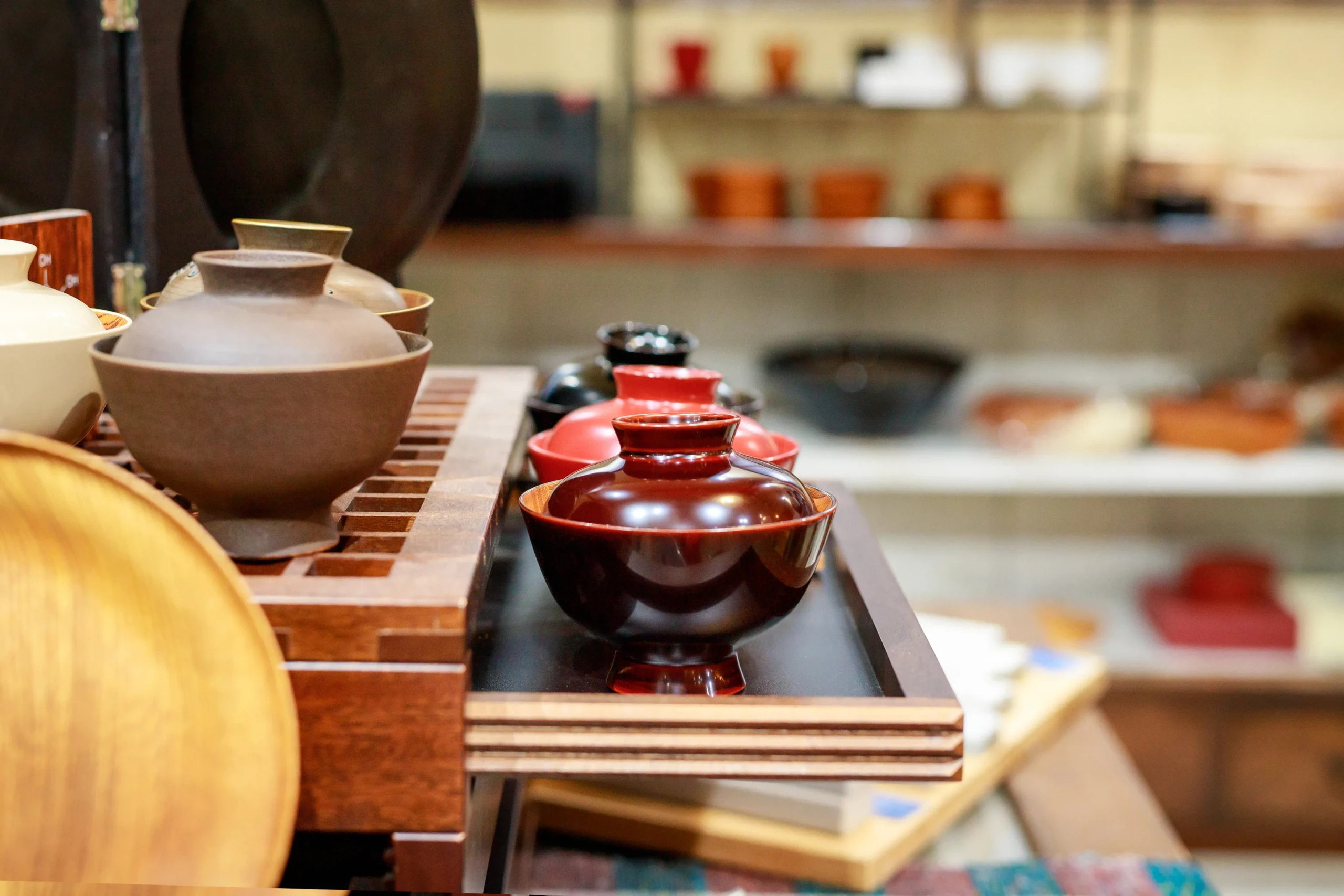
Urushi Lacquer Polishing Workshop
Create your own unique chopsticks alongside a skilled Aizu Lacquerware artisan.

A Snowy Stroll Around Mystical Lakes
Nearby Ryokans
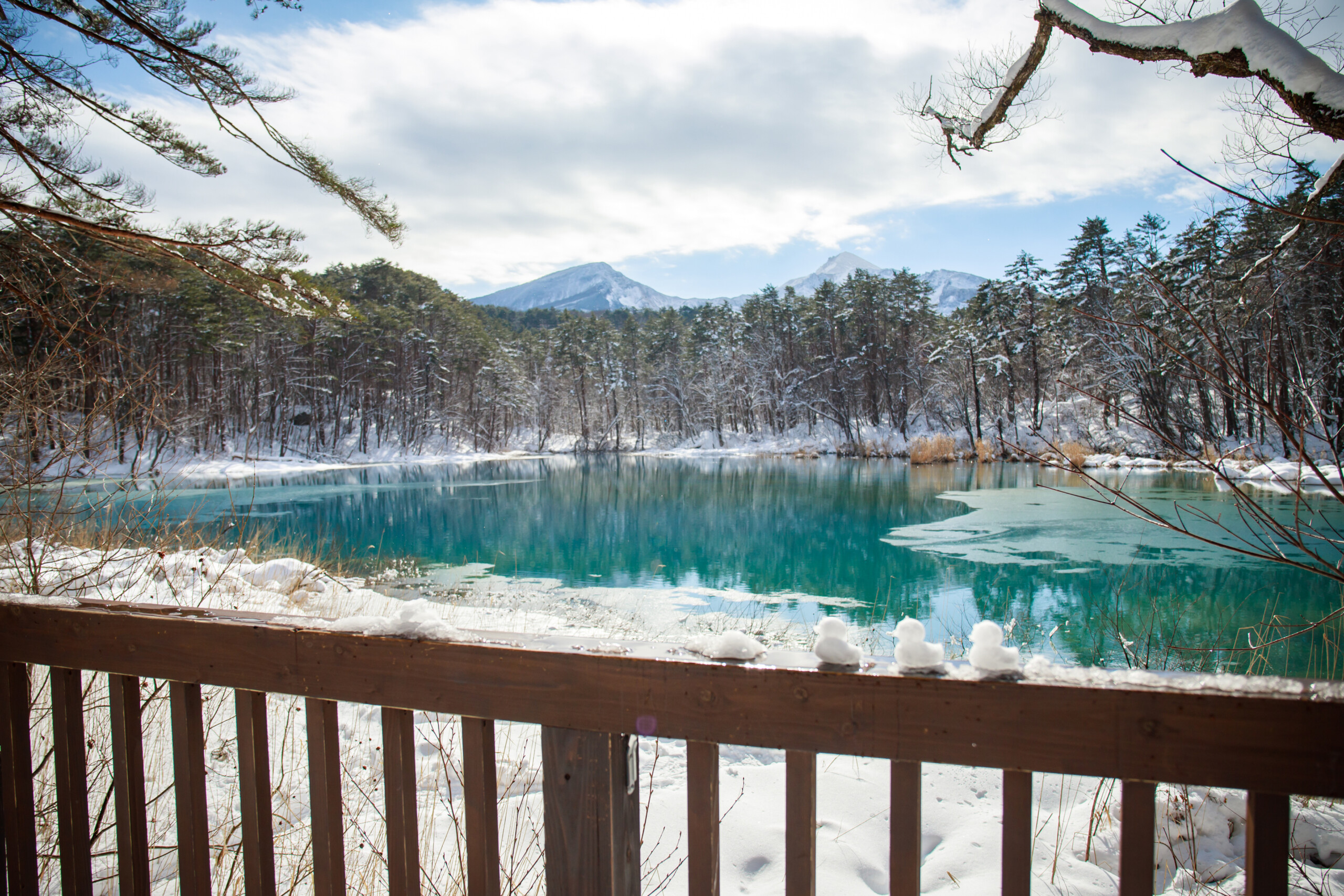
In winter, Urabandai in Fukushima Prefecture is wrapped in deep snow and quiet, revealing breathtaking scenery filled with stillness. One of the most popular spots in the area, the Goshikinuma Ponds, offers guided snowshoe tours during the winter season. Goshikinuma, as its name suggests, is a mysterious group of ponds whose surfaces shine in shades of blue, green, and other colors depending on the season and weather. These ponds were formed by a massive landslide caused by the eruption of Mount Bandai in 1888 and are part of the hundreds of ponds created at that time. Recognized for their unique and mystical beauty, the Goshikinuma Ponds were awarded one star in the Michelin Green Guide Japan in 2016, earning international recognition as a scenic destination.
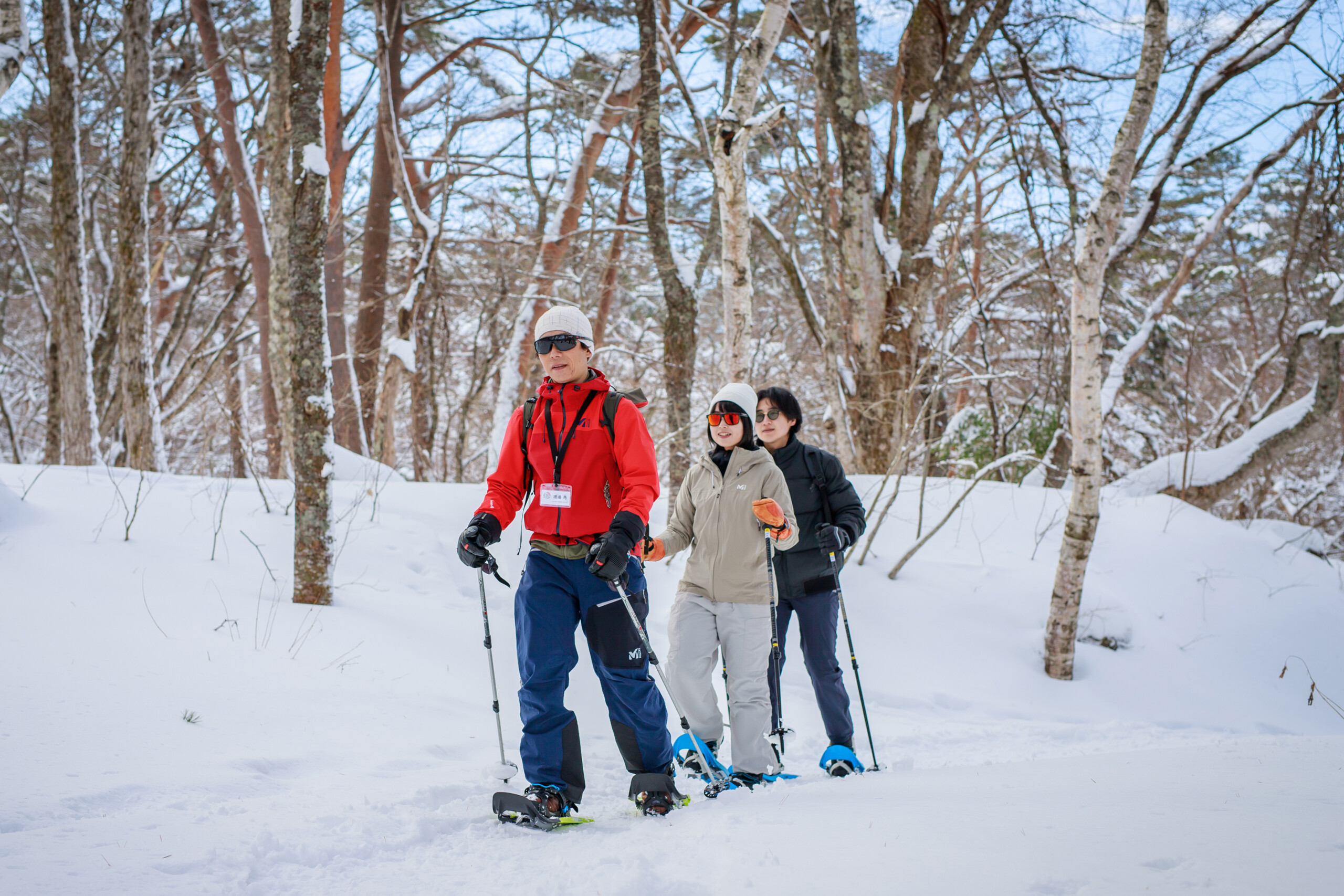
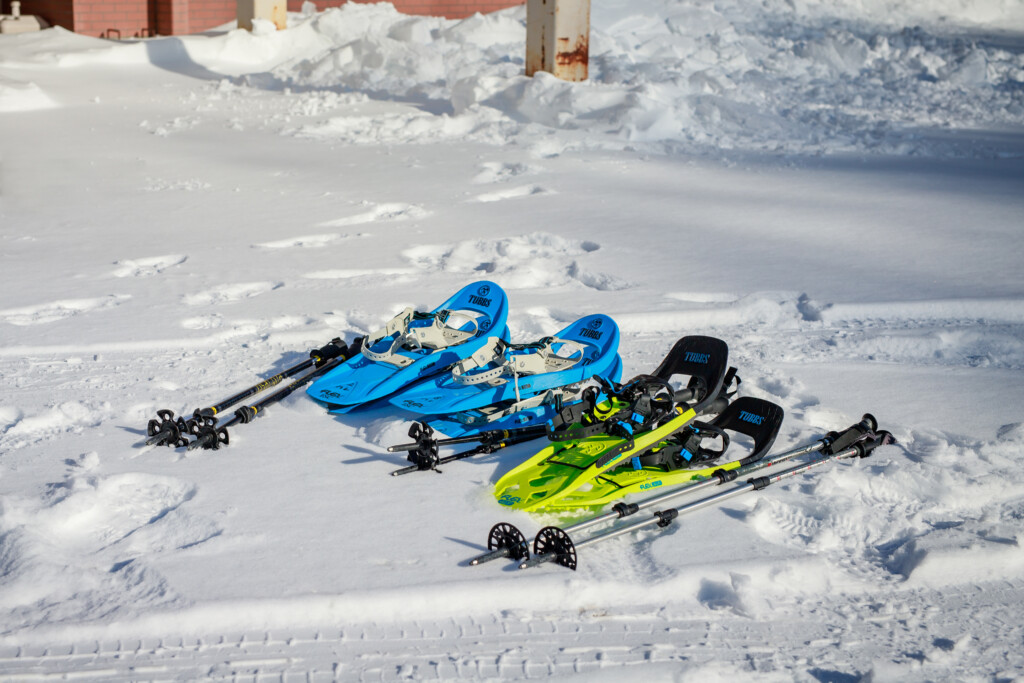
Every winter, guided tours are held in the Urabandai area that allow visitors to explore the Goshikinuma Ponds while wearing special footwear for walking on snow, known as snowshoes. While the Goshikinuma nature trail is lively and crowded during the green seasons of summer and autumn, walking the route independently becomes difficult in the deep snow of winter. By joining a snowshoe tour, however, visitors can safely enjoy the winter landscape and experience the quiet, snow-covered beauty of Goshikinuma.
The tour is open to anyone middle school age and older, and no special experience is required, making it easy for first-time snow hikers and international travelers to join. A guide accompanies the group and carefully explains everything from how to put on snowshoes to basic walking techniques, so even beginners can feel comfortable and safe. Goshikinuma offers beautiful scenery in every season—fresh greenery, autumn leaves, and frost-covered trees—but the winter snowshoe experience is especially appealing for its extraordinary views of colorful ponds floating in a pure white forest.
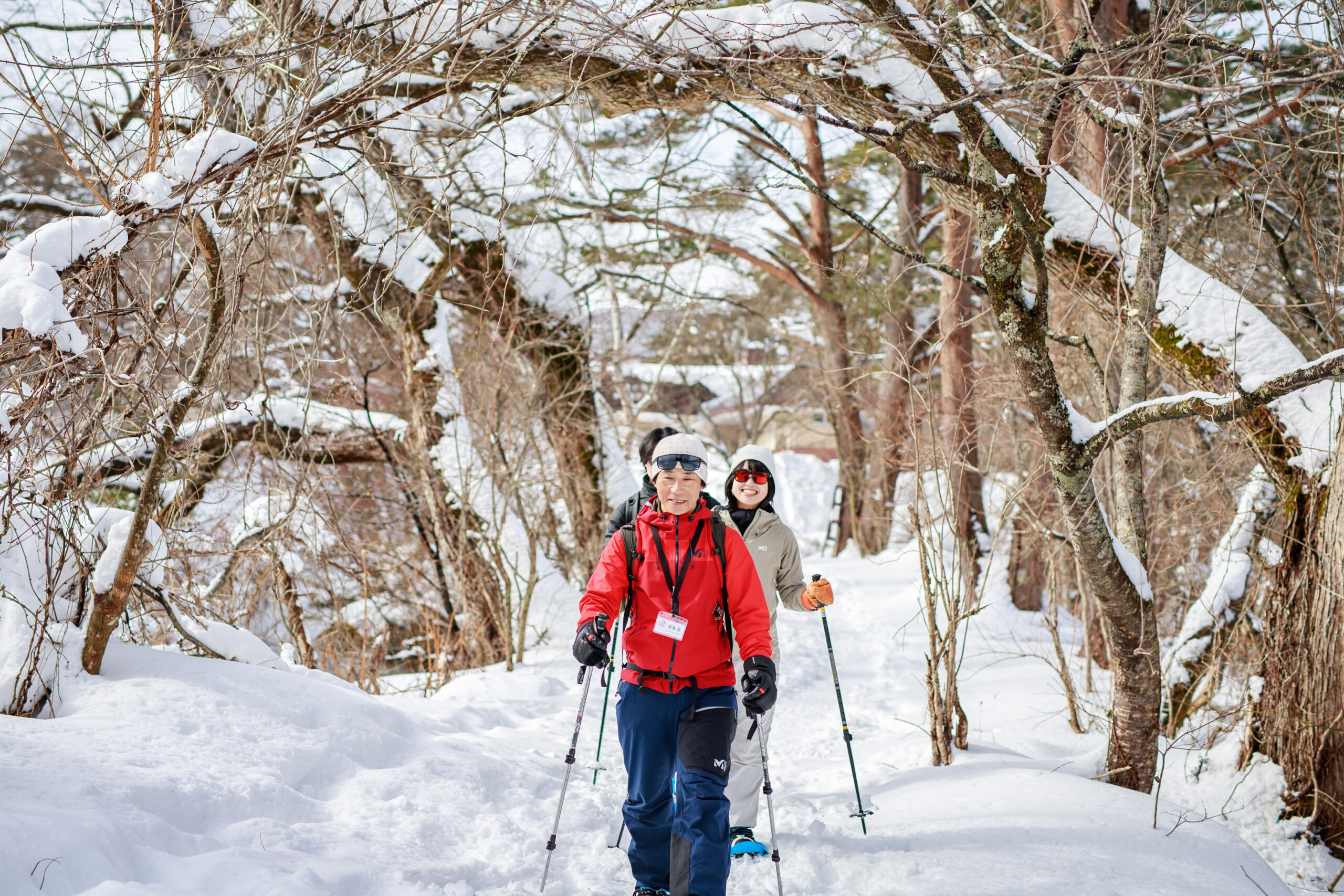
Walking across the snow in snowshoes creates a unique sensation, almost as if your body is gently floating above the ground. Because snowshoes prevent your feet from sinking deeply into fresh snow, you can step into areas that would normally be inaccessible. On the Goshikinuma snowshoe tour, the route even includes places that have no trails during the summer, guiding participants to special viewpoints that can only be reached in winter, when the landscape is completely covered in snow.
The tour also includes limited winter-only routes, such as views of Aonuma, seen from areas that are normally off-limits, and Kuronuma, which can only be admired during the snowy season. By joining this tour, visitors can fully enjoy landscapes that can only be encountered in wintertime Goshikinuma Ponds, making it a truly unforgettable seasonal experience.
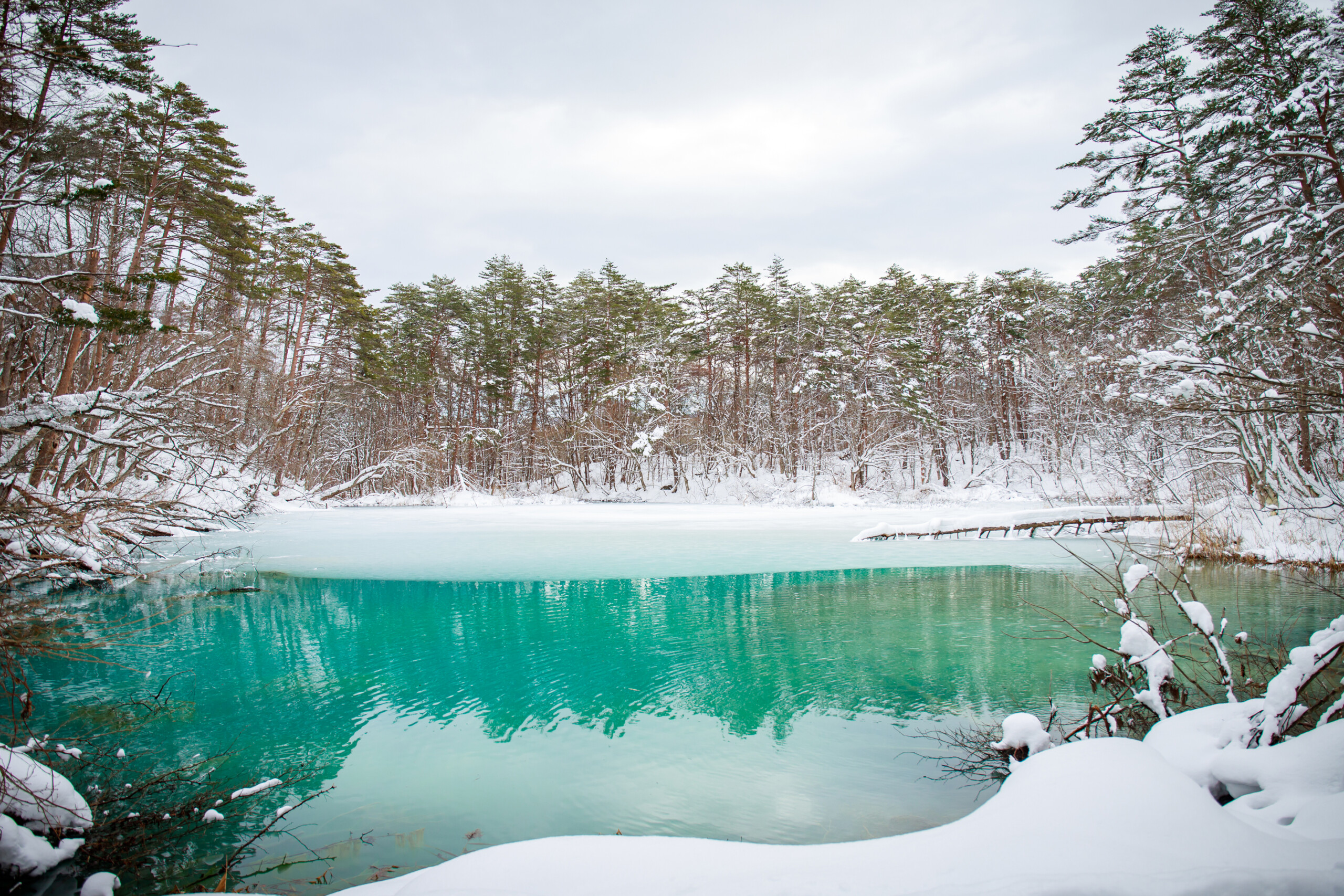
In winter, Goshikinuma Ponds offer a magical view of emerald green and cobalt blue water floating against a wide landscape of pure white snow. As the surrounding reeds are pressed down by snow, the view becomes more open, allowing visitors to look down at the ponds from a higher viewpoint than usual. This makes the colors of the water stand out even more clearly. On sunny days, the sunlight reflects on the water’s surface, making it shine brightly, and the contrast with the blue sky creates a breathtaking scene. In winter, parts of the ponds may freeze due to low temperatures, and the soft mix of ice and open water adds another kind of beauty. With good timing, visitors may capture stunning photos at places such as Aonuma and Bishamon-numa, where vivid blue-green water appears against a snow-covered landscape.
Winter in Urabandai is also much quieter, with far fewer visitors than in summer. The Goshikinuma area feels surprisingly peaceful, and the nature trail, which is busy with hikers in warmer seasons, becomes almost empty during the snowy months. At times, it may feel as if you have the entire area to yourself. The only sounds you hear are the soft crunch of snow underfoot, snow falling gently from trees, and the distant calls of birds. Walking through this silence, far from the noise of the city, while listening to nature’s subtle sounds, is a truly special experience.
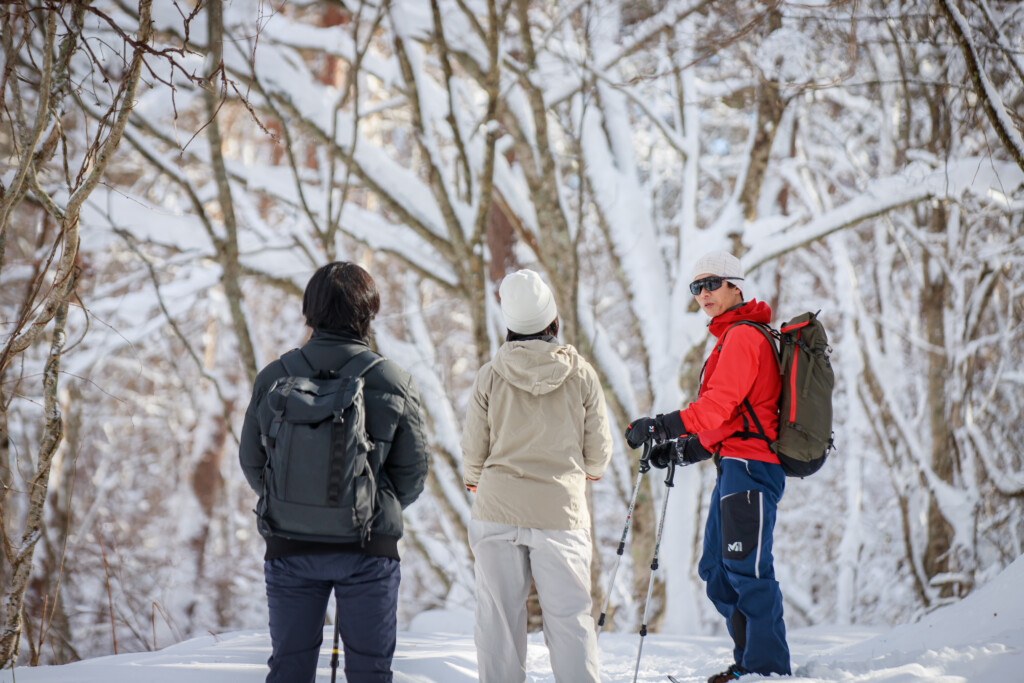
Another highlight of the Goshikinuma snowshoe tour is the guide, who explains the nature and history of the Urabandai region along the way. As you walk, you may hear stories about the great eruption of Mount Bandai, the origins of the ponds’ names, and why the water changes color. Listening to these stories can change the way you see the scenery. Rather than simply viewing the landscape, the guided tour allows you to enjoy the deeper connection between nature, history, and culture—one of the true pleasures of joining a guided experience.
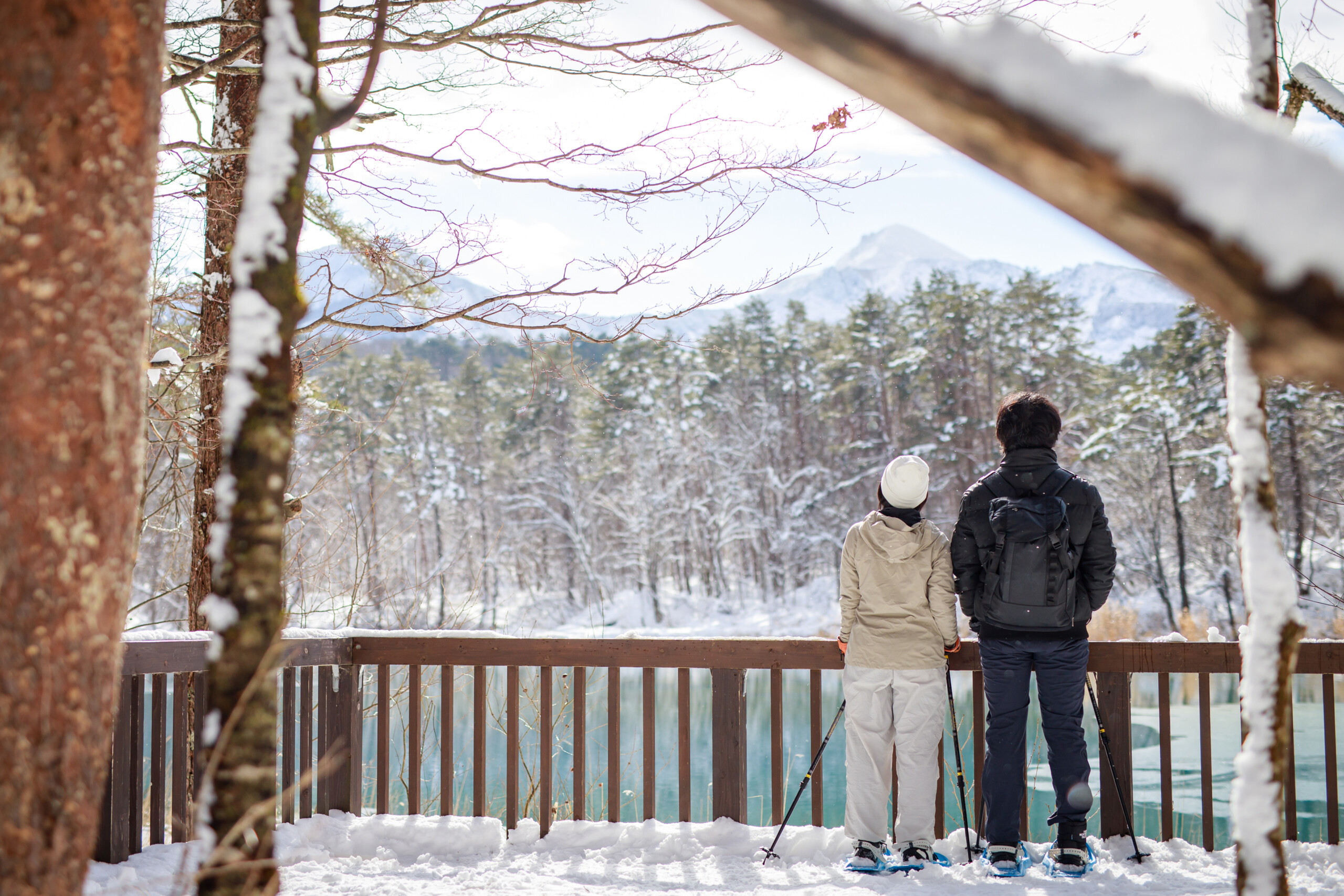
You can enjoy scenery that can only be seen in winter—views that aren’t usually accessible during other seasons!
 OsakiYohei
You will also be guided to exclusive viewpoints that are accessible only during the winter season.
To make the most of the Goshikinuma snowshoe tour, proper cold-weather preparation is essential. Winter temperatures in the Urabandai area often fall below freezing. Ideal clothing includes ski wear or a well-insulated jacket and pants, a warm hat that covers the ears, gloves, thick socks, and winter boots. On clear days, sunlight reflecting off the snow can be surprisingly strong, so bringing sunglasses and sunscreen is also recommended.
The tour price typically covers the guide fee, rental of snowshoes and poles, and insurance. Even if you do not own waterproof footwear or winter gear, some tours offer rental options. Checking availability in advance will help ensure a smooth experience.
Tours are generally offered twice daily, once in the morning and once in the afternoon, with each session lasting approximately two and a half hours. The morning tour usually begins shortly after 9:00 a.m., while the afternoon tour starts after 1:00 p.m. Each time slot has its own advantages. In the morning, the crisp air and clear light often make the blue tones of the ponds appear especially vivid, and freshly fallen snow sparkles beautifully in the sunlight. In the afternoon, the light softens and the forest takes on a warm, golden hue, creating a more atmospheric and tranquil mood. Around the time of the winter solstice, the sun sits lower in the sky even in the afternoon, and the angled light filtering through the trees makes the scenery particularly photogenic. Both options are appealing, so choosing based on your schedule and the weather forecast is the best approach.
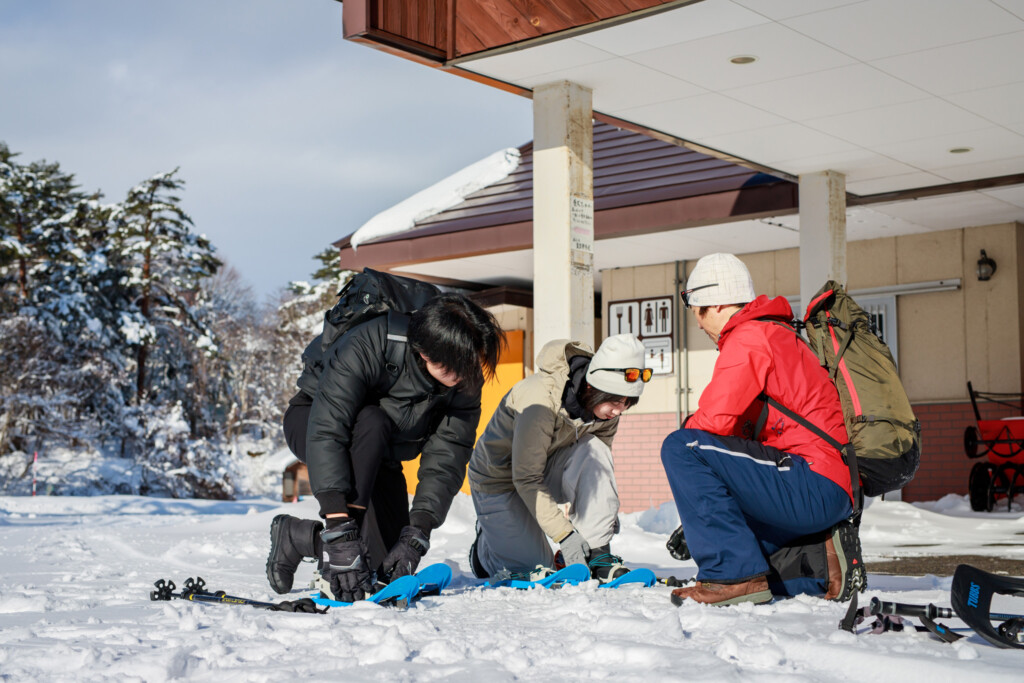
The meeting point for the tour is Urabandai Bussankan, a local visitor facility where participants meet their guide. The guide mainly speaks Japanese, but since the experience focuses on feeling nature through your senses, you can still enjoy the tour even if you do not understand the language.
Depending on the tour, the guide may offer warm herbal tea or small snacks, which feel especially comforting in the cold weather. The winter atmosphere of Urabandai has a quiet charm that is difficult to put into words. Take a moment to breathe deeply and let the crisp, clear air and beautiful scenery fill your senses.
If you have extra time, consider visiting the mysterious Yellow Fall, a winter-only attraction in the Urabandai area. This striking yellow icefall appears only during the winter at the site of an old volcanic crater on Mount Bandai. Water containing sulfur seeps from fumaroles and freezes, gradually forming a massive frozen waterfall. Absent in summer, the ice slowly grows in the deep cold of winter, eventually becoming a dramatic ice formation reaching several tens of meters in height—an unforgettable sight. Although this spot is on a different route from the Goshikinuma snowshoe tour, those who are interested are encouraged to join a guided tour to visit it safely and fully appreciate this rare natural phenomenon.
Spot Name: Goshikinuma Snowshoeing
Tour Period(Open Hours): December 20, 2025 (Sat) – March 22, 2026 (Sun) ※Open daily during the season(Tours may be canceled in case of severe weather.)
Fee: Adults ¥5,700 (tax included)(The price includes the guide fee, insurance, and rental of snowshoes and poles.)
Parking: Available (free of charge, no reservation required)
Important Notes:
Address: 1171-1 Yuheiyama, Hibara, Kitashiobara Village, Yama District, Fukushima(Meeting point: Urabandai Bussankan Visitor Center)
Access:
Car:Approximately 30 minutes from Inawashiro-Bandai-Kogen IC on the Banetsu Expressway.
Public Transportation:From JR Banetsu West Line Inawashiro Station, take a local bus for about 45 minutes. Get off at Urabandai-Kogen Station bus stop. The meeting point is just a short walk away.
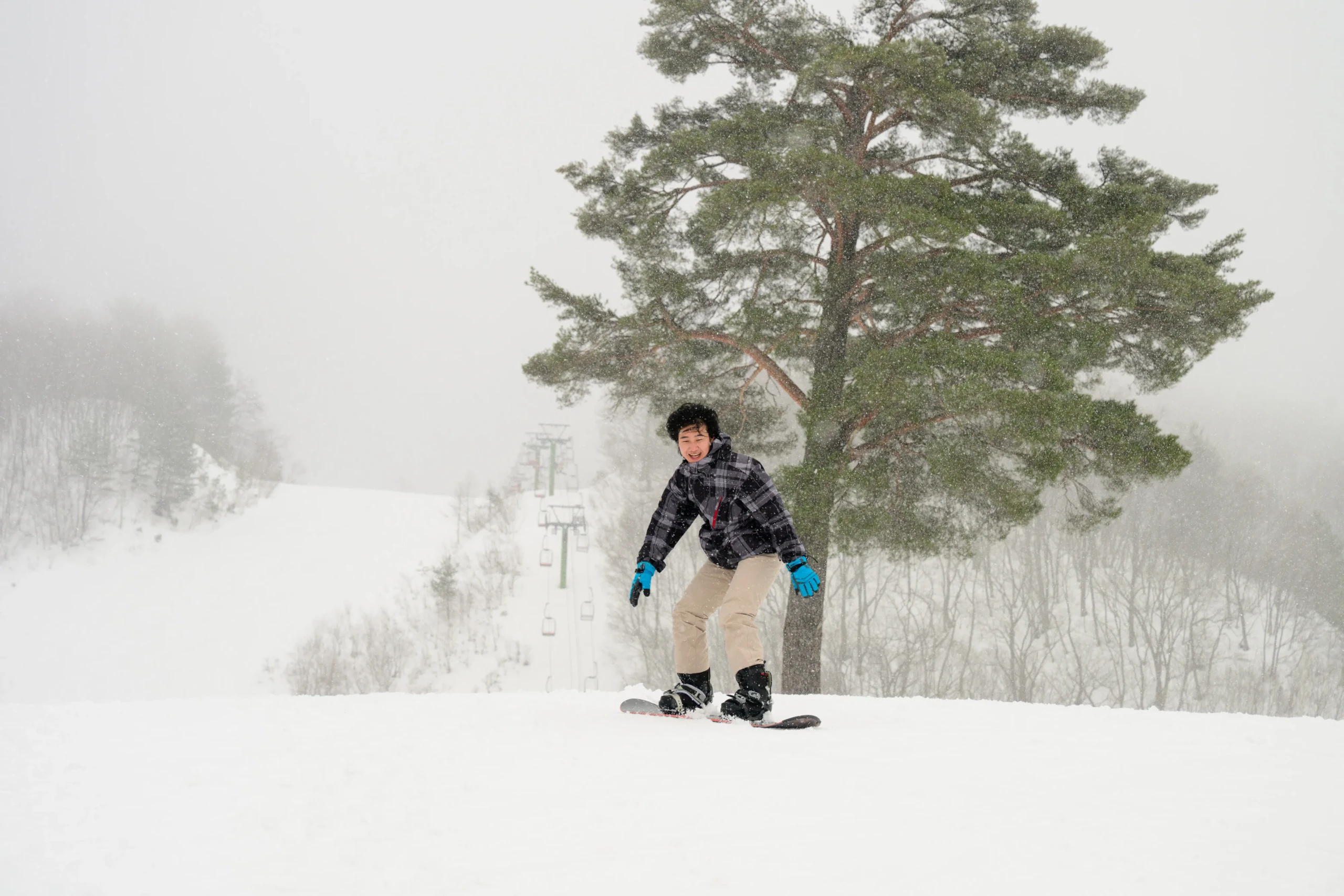
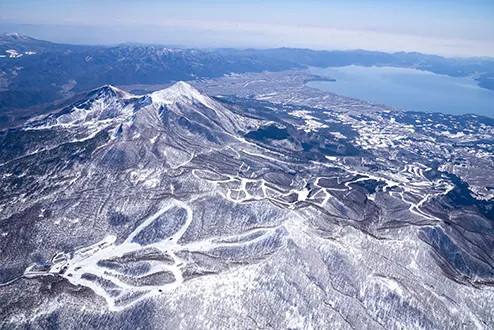



Your guide will share insights into the nature and history of Urabandai along the way, allowing you to enjoy the captivating stories behind the scenery.