



Located in Higashiyama Onsen, Aizu, Ashina is a popular inn where many guests return time and again. They are drawn to the simple flavors cooked over a hearth, a space that breathes life into old things, and an atmosphere where one can relax without pretense. We spoke with the Okami who manages Ashina. She shared her story in candid words, covering the inn’s accidental beginnings, her dedication to the hearth and cuisine, the values she holds dear in hospitality, and her desire to pass on the spirit of the inn.
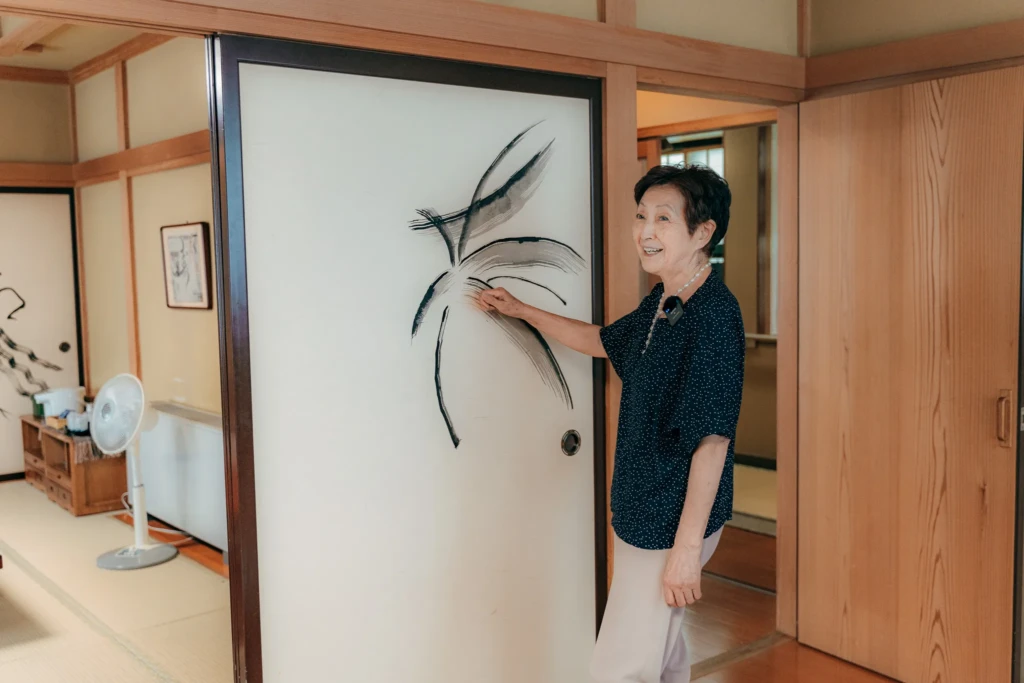
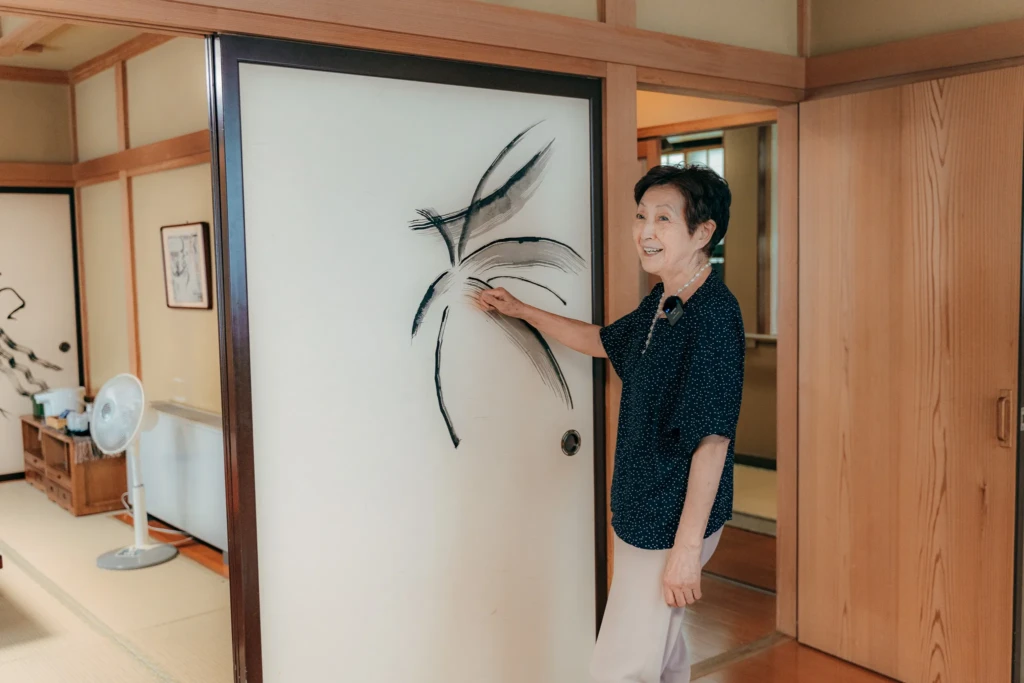
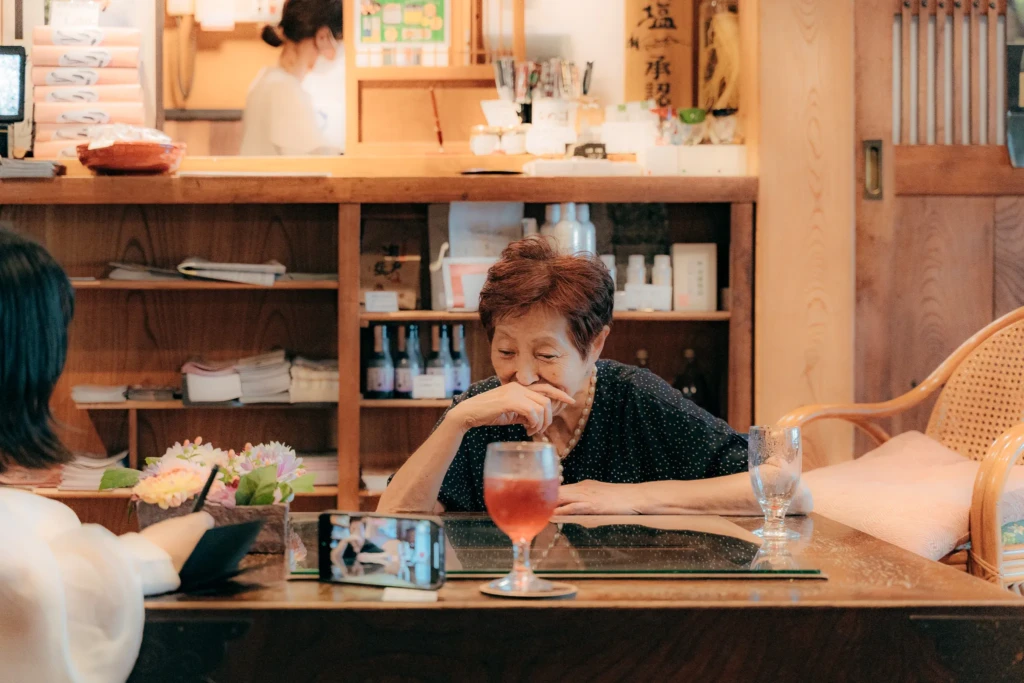
Michiyo Wada, the inn’s female head host (Okami).
Her down-to-earth style has made her a favorite among guests, who often say staying there feels just like going back to their parents’ home.
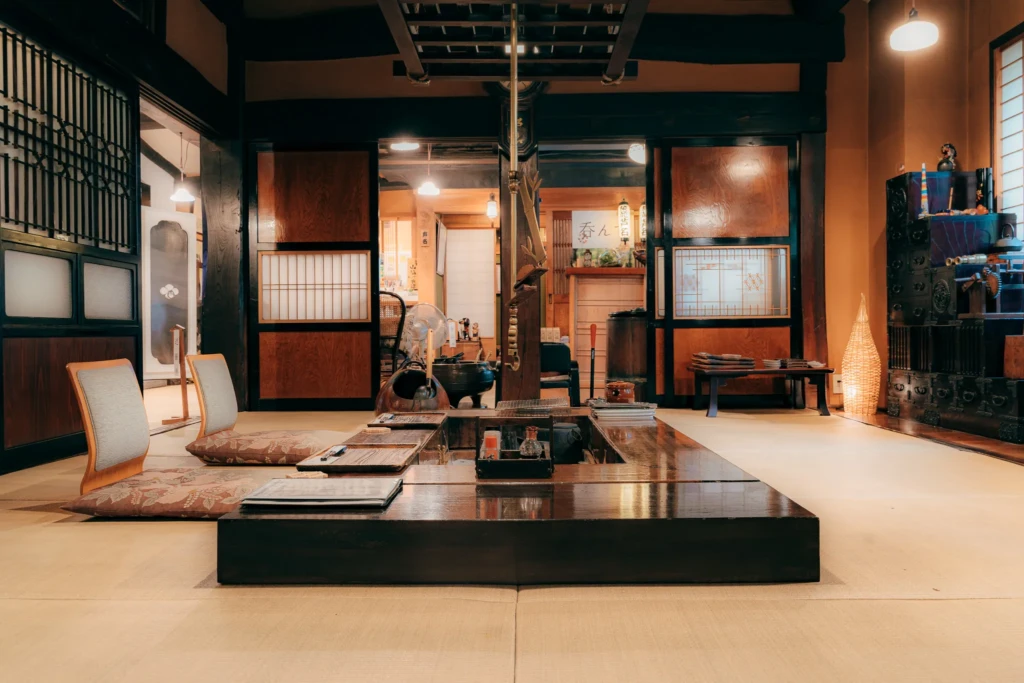
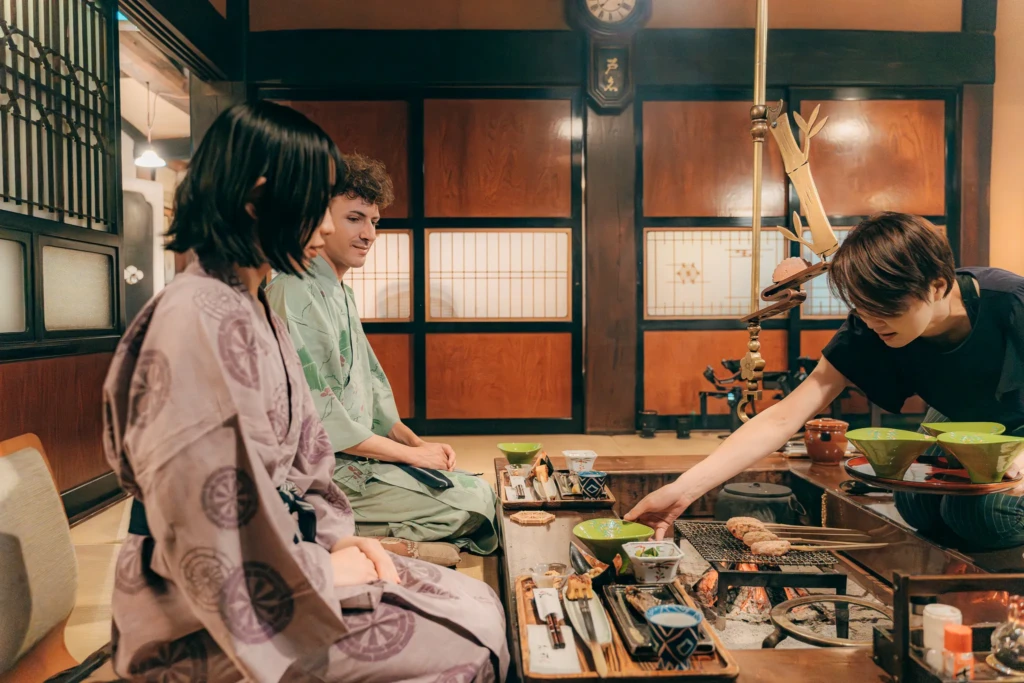
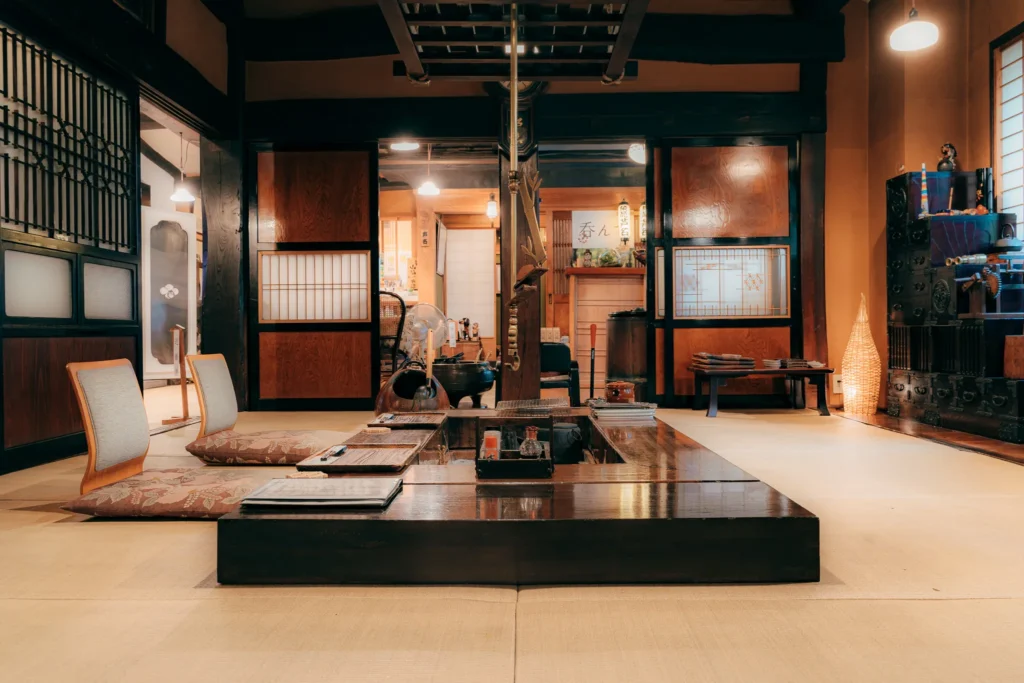
Irori-no-yado Ashina. True to its name, it’s a laid-back inn with a great fireplace and a rustic interior that highlights its age.
The Beginning of Ashina: The Inn That Started by Chance
—First, could you tell us about the history and origins of the inn?
Okami: As for the origin, I just took it over. My husband’s mother happened to buy a villa, and this place was attached to it, so she had no choice but to buy it together. It’s not like she bought it because she wanted to run a ryokan.
—So it didn’t start out as an inn from the beginning?
Okami: At first, she just commuted from Tokyo and ran it almost like a hobby. I don’t know the full details myself, but I believe the building itself was built around 1948. I think it started operating as a lodging around 1975. Back then, there were so many group tours and bus trips, right? The area was very lively as a tourist destination, so I think it began with the feeling of, Well, since it’s busy, maybe I should give it a try.
—Was the atmosphere of Higashiyama Onsen back then quite different from now?
Okami: Entirely different. It was the era of group travel, so it was a massive entertainment district. There were over a hundred geishas, strip theaters, and shooting galleries. It was truly the embodiment of a Showa era entertainment district.
—So the inn started amidst that era and changed with the times.
Okami: That’s right. It started with the idea of just trying it out for a bit, and I think they did it for about ten years. But then customers stopped coming, so they quit. That’s how it went.
Finding Beauty in the Old and a Passion for Tradition
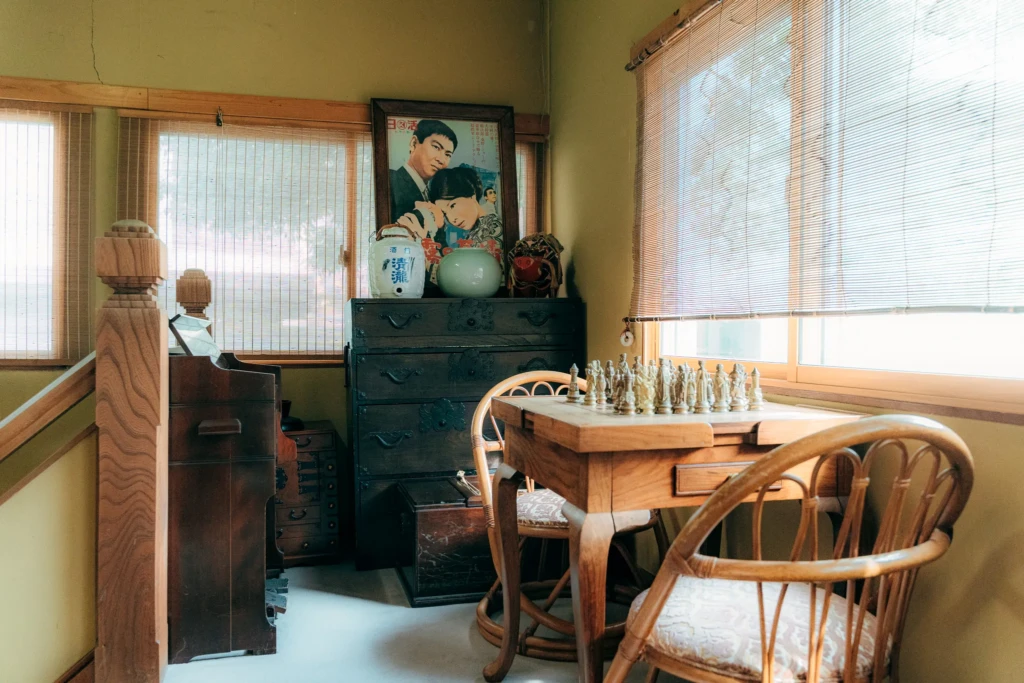
—One of Ashina’s great charms is the space that utilizes old things. How was this atmosphere created?
Okami: While everyone around us was renovating in a modern style, we were seeking the old ways and renovating to keep things old. So now, people sometimes say, It’s like a new building, but it’s not like that at all. It’s old, but unexpectedly it feels fresh. I think that kind of feeling is what’s good about it.
—So it wasn’t about following a trend of “old folk house style,” but rather that someone saw the value in it all along.
Okami: Yes. I didn’t have much interest in it back then, but my husband cared about those things deeply. Looking back now, in an era where people tore down old things to build new ones, he wanted the unwanted old items and tried to give them a second life. I think he was a person with great sense.
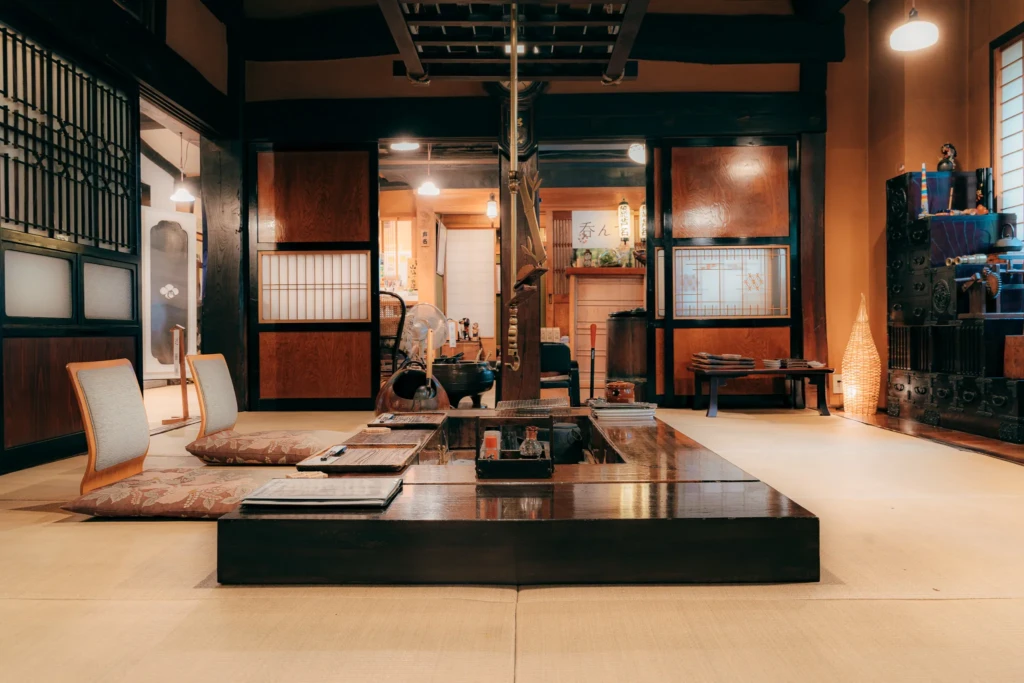
—When people think of Ashina, the sunken fireplace leaves a strong impression. How did that come to be?
Okami: My husband longed for that kind of traditional fireplace. Even though he was raised in Tokyo, for some reason he loved them. He would say things like, A fireplace has to be made of cherry wood, or It’s not real without this fire shelf, while buying all sorts of things from antique shops.
—What did you think at the time?
Okami: I was just complaining, saying, We don’t need that, or Where are you going to put such a dirty thing? But now I truly think he had sense. Now that he’s gone, I can’t argue with him anymore, so I have no choice but to say I understand and carry it on.
Simple and Charming Flavors Born from Grilling Techniques
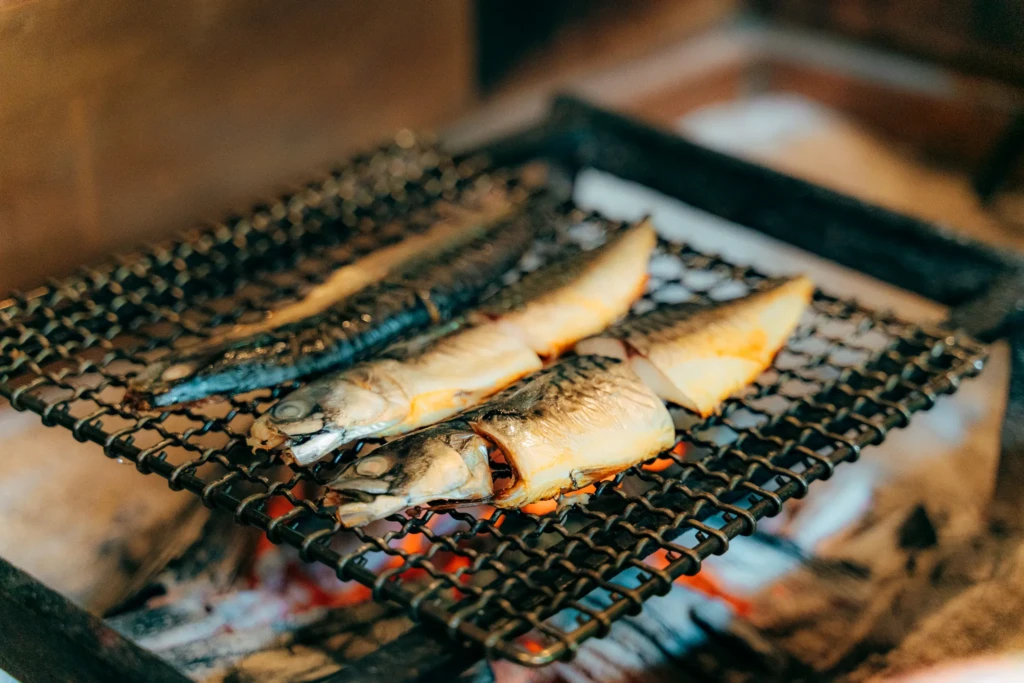
—The meals enjoyed around the fire are a unique charm of Ashina. What is your commitment regarding the food?
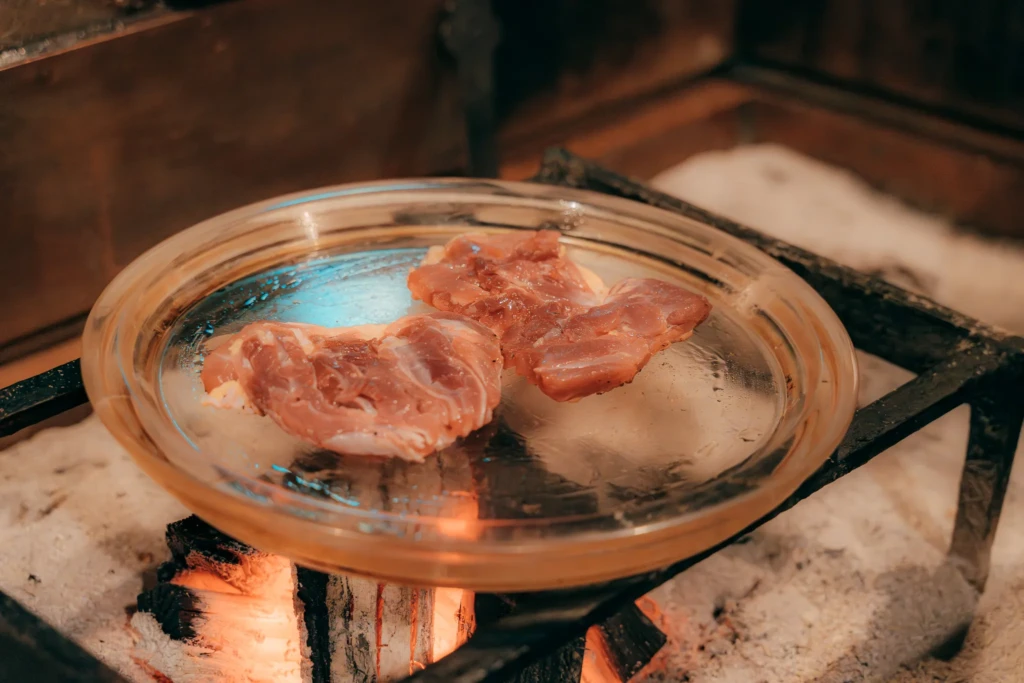
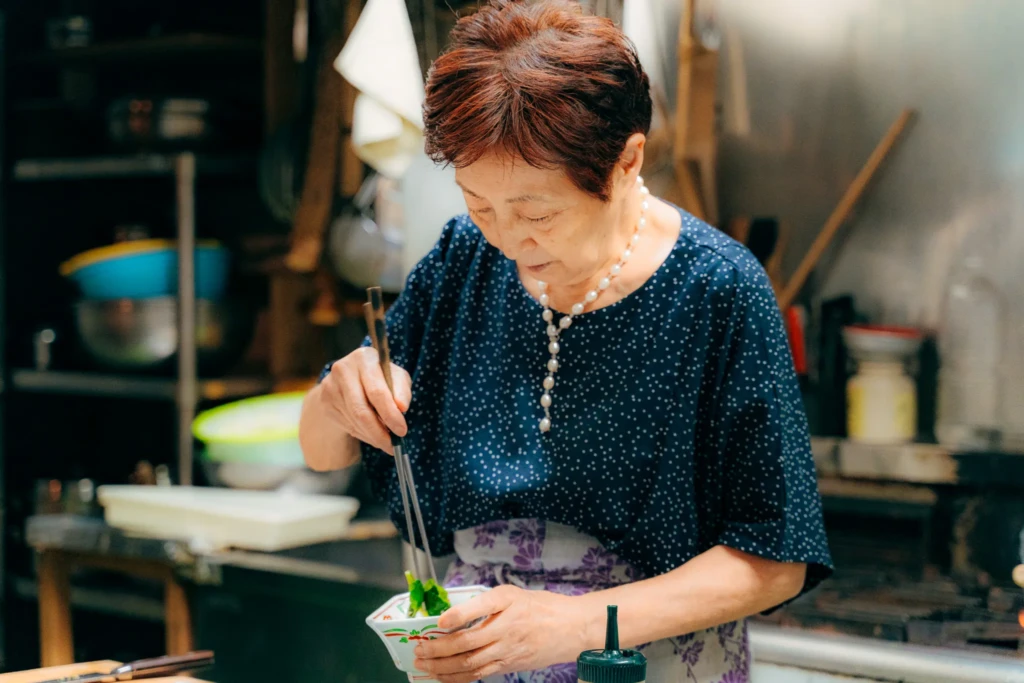
Okami: It’s not so much the food itself as it is the way we grill it. Ryokan food requires making many portions and changing the menu constantly. I just can’t do that kind of grand cooking. Since we have the fireplace, I thought, I can just grill things, and I’ve experimented with many ways to make things taste delicious.
—For example, what kind of things did you try?
Okami: At first, I grilled on a net, but the smoke was overwhelming and it was difficult. When I was wondering what to do, I found a crystal plate. With that, you can see the fire, it looks beautiful, and I thought, This is the best. I tried using salt plates for beef, grilled sweetfish, and various meats. It has been a constant series of trials and errors. Because we have that central fire, I want to make the most of it.
—Ashina’s food has a different appeal than that of high-end inns.
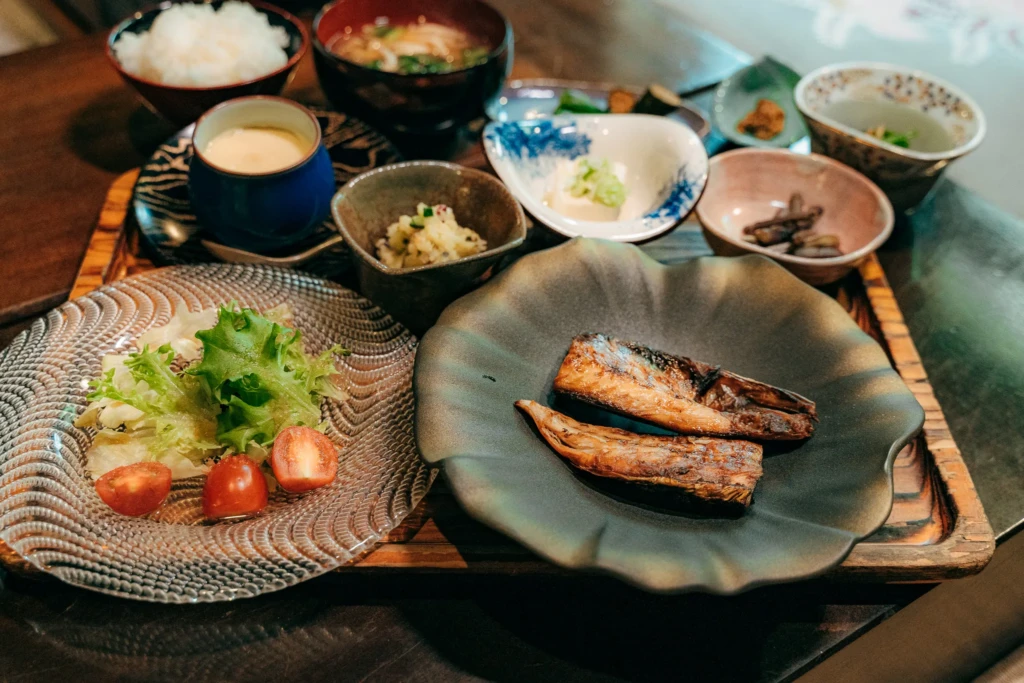
Okami: That’s true. The food here consists mostly of local vegetables and seasonal items from Aizu. We don’t really use expensive fish or rare vegetables. So, to put it simply, it’s home cooking. We just happen to grill it here to make it look a bit grand. But for some reason, people tell me it’s delicious.
—Perhaps that “some reason it’s delicious” is what makes it Ashina.
Okami: That might be it. It’s a different kind of deliciousness than the neatly prepared food of a hotel. It’s a simple taste, like a side dish from a neighbor’s house. It suits people who understand that, but it might not suit those who are only looking for a sense of luxury in their meals.
100% Natural Source Water: Only Possible at a Small Scale
—Please tell us about the hot spring.
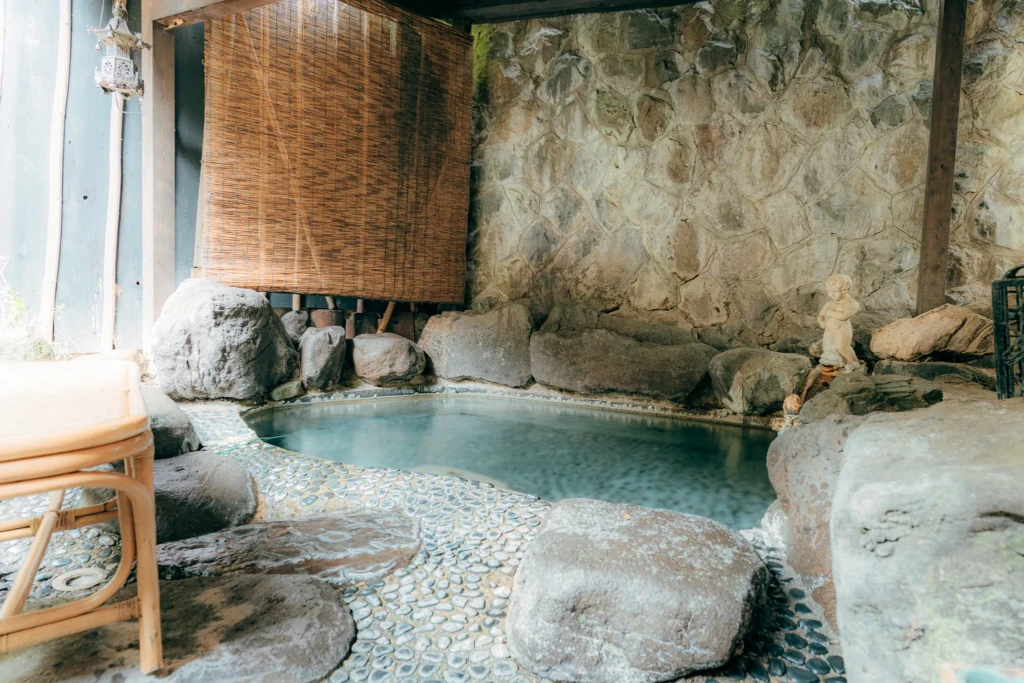
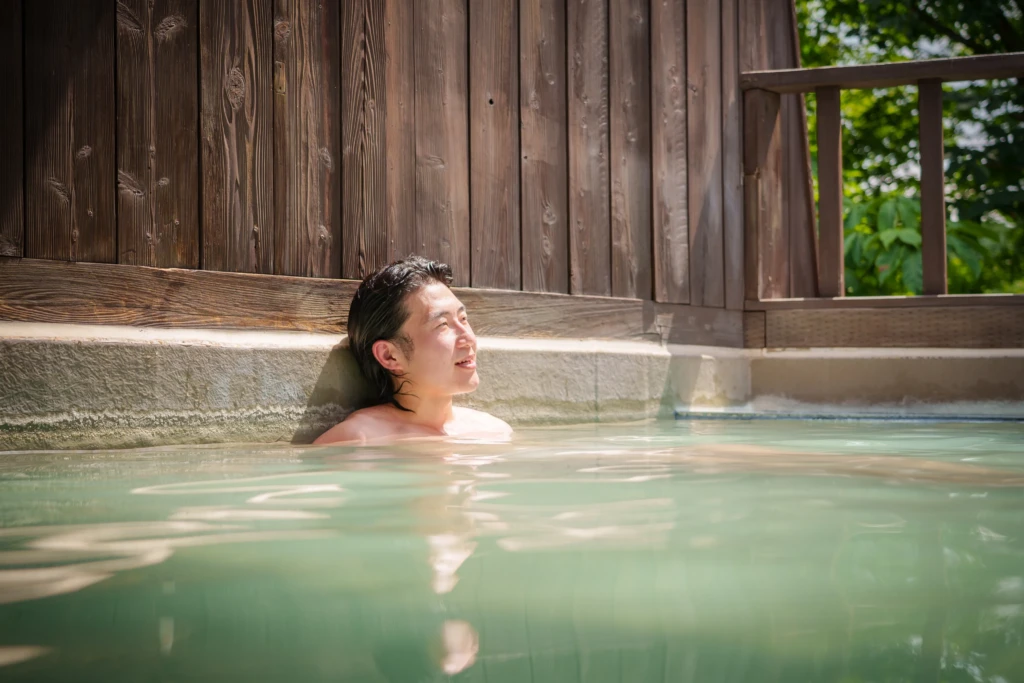
Okami: Ours is 100% natural source water. We can do it because we are a small inn. The pipe thickness and water volume are fixed, so larger inns inevitably have to add water or circulate it to keep up. But because of our size, exactly the right amount of water arrives, and we can use it as is.
—I heard you replace the water every day.
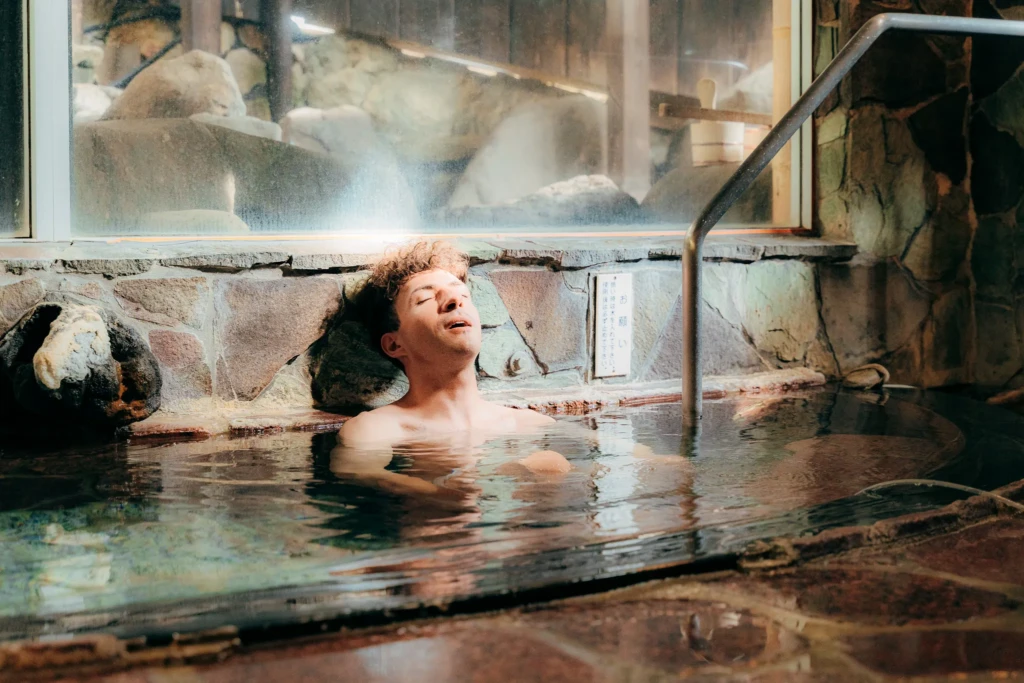
Okami: Yes. Every day we clean, drain the water, and refill it. We don’t do anything extra. According to experts, the water in the bath is replaced about eight times every 24 hours, so it’s very fresh. Water that just came from underground flows in, then flows out and is discarded. Even I think, This is a good bath.
—The ease of using it as a private bath is also a draw.
Okami: Since we limit the number of guests, the bath doesn’t get crowded. After dinner, we divide the time by family so they can use it privately. Some people want to help each other bathe, and there’s a need for that kind of privacy.
Hospitality That Leads to Comfort
—It’s impressive that you have so many repeaters. Why do you think that is?
Okami: Many come for Aizu-Wakamatsu sightseeing, but many also come back repeatedly. Some visit two or three times a year. I think it’s because they feel at ease. They say it’s like returning to their parents’ home or that they can spend time comfortably.
—So there isn’t that “typical ryokan tension.”
Okami: Right, right. I don’t really do the hotel-style Please, this way or Certainly, sir. I just use normal language like Where did you come from? or Where did you go today? It’s not formal, but I think that makes them feel more relaxed. Since I don’t act like a typical innkeeper at all, I think that’s what’s good. I’m not guarded. Some people even come to consult me about their worries. I hope it’s an inn where people can find energy.
—Hearing you speak, it feels like you were naturally good at hospitality.
Okami: Not at all. At first, I hated speaking and appearing in front of people. I was a person with a dark impression and wasn’t proactive. I wasn’t suited for this. But because I had to do it, I started watching the other person’s movements closely. What is this person looking for right now?
—By observing, you gradually learned how to provide hospitality.
Okami: Yes. If you watch, you start to understand, like Oh, they want this now, or They would be happy if I did this. That’s how I gradually became able to talk, and now people say, You’re lying about being introverted. But I really am introverted.
Preserving the Inn: Carrying on a Family’s Vision
—How do you want to move forward with this inn in the future?
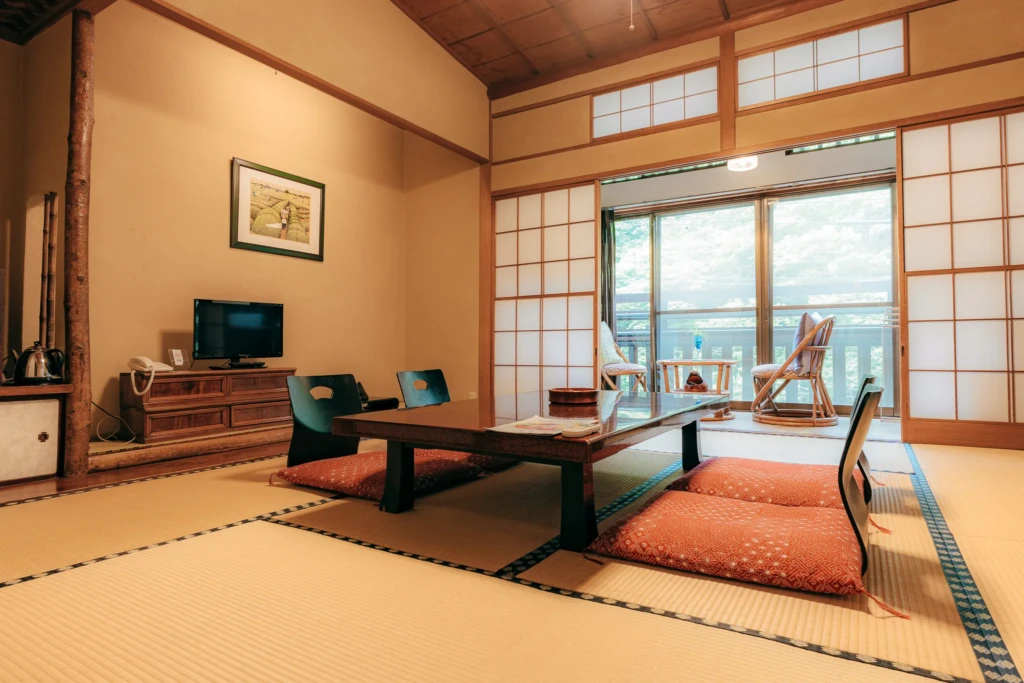
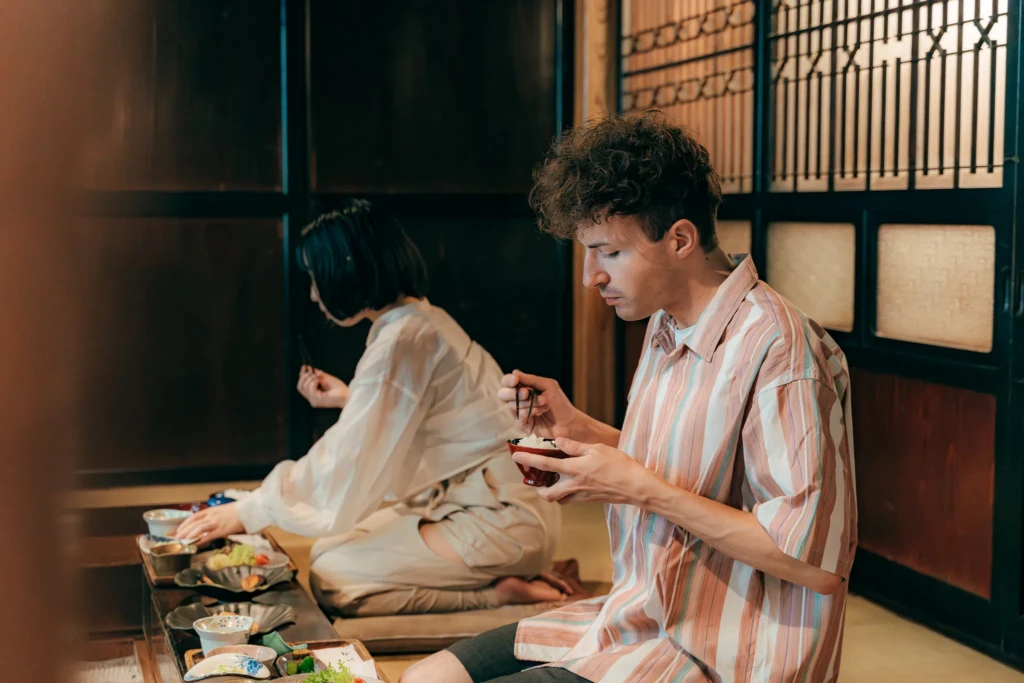
Okami: This isn’t a modernly built inn. It’s inconvenient. But I want people to understand that there is a certain goodness within that inconvenience, and that is why it is comfortable. I think people feel a sense of comfort that can’t be seen when they are surrounded by non-artificial things like wood and tatami.
—That’s why you want to protect it without changing it significantly.
Okami: Yes. I want to keep it as it is, without fixing it too much, and just keep it clean and take good care of it. It started from when my mother-in-law happened to buy a villa, and my husband collected old things because he wanted to cherish the past. I have to carry that on, don’t I? They are no longer here, but I receive the atmosphere they left behind and protect it dearly. I think that’s what it is.
—What kind of guests do you think the charm of this inn reaches most?
Okami: We have many couples. It’s just right for two people. It’s not too big, and you can relax. Besides, in modern life, everyone uses chairs and tables, right? So when they come here, they might feel like it’s the childhood home they grew up in. Entering a space different from their everyday life lets them switch gears. I think that’s a good thing.
—Are there many people who actually say that?
Okami: Many. They say, It’s like my parents’ home, or I’ll come again, stay healthy. There are even groups that decide to come every year in spring and autumn, to the point where I know those people are coming just by the season.
What She Wants to Tell Her Successor: “Do Your Best in Your Own Way”
—Is there anything you want to convey to the person who will take over the inn?
Okami: I think if you do your best in the way you think is right, that will get through to the other person. You can tell if someone is being sincere or just doing things on the surface, can’t you? So it’s not for me to tell them how or what to do.
—So failures too become part of that person’s unique hospitality.
Okami: Exactly. It’s okay to fail. I think it’s fine to just say, It got burned, I’m sorry, I’ll bring another one. If you try too hard to be perfect, it can actually make things awkward. I think the guest will feel more relaxed that way too. I have nothing to tell her like You must do this. I just want her to do her best in her own way.
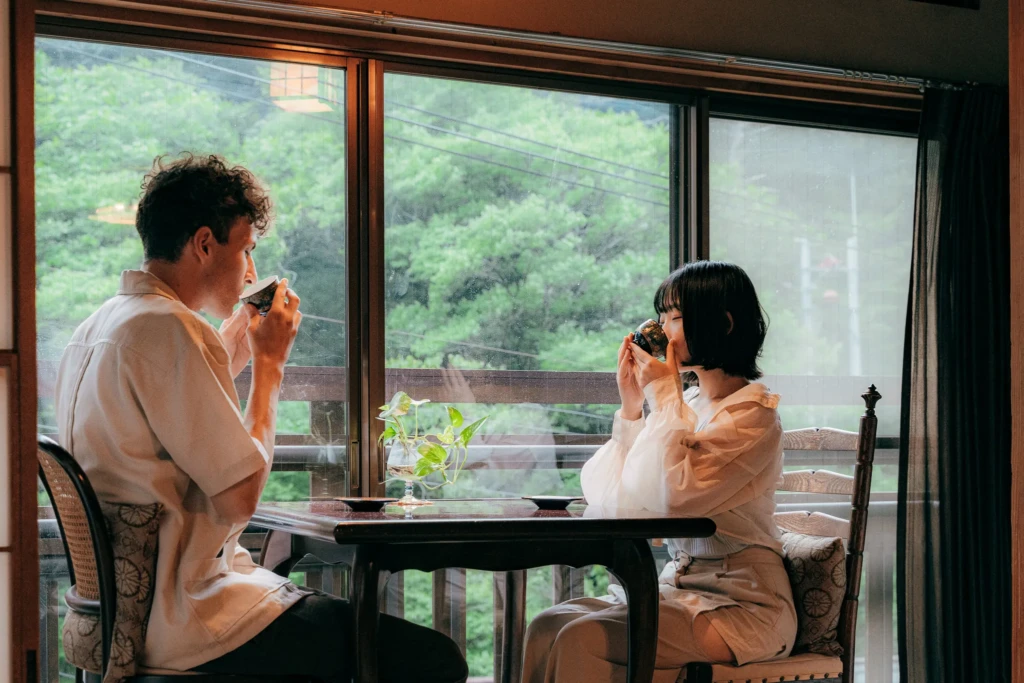
Eating around a fire while watching the flames. Spending time without pretense in a space surrounded by wood and tatami. And feeling one’s heart suddenly ease through casual conversation with a host who doesn’t act like a traditional innkeeper.
The charm of Ashina may lie not in luxury or glamour, but in the air of an inn where even inconvenience feels comfortable.
Started by her mother-in-law, infused with her husband’s passion for the past, and now preserved by the host who has received those very traces. I felt that this accumulation of time is what makes this inn a place you want to return to.
Interviewer: Yohei Osaki
Translation: Alyssa Rossi
The Irori lodge -Ashina-
View Details