



Yamazoe Village, Nara Prefecture. In this depopulated village, said to lack conventional tourist attractions or hot springs—so-called “easy-to-understand appeals”—there is an inn visited continuously by guests from all over the world: “ume,yamazoe.” It has been ten years since the representative, Shiho Umemori, rooted herself in this land. What she attempted was not mere relocation or starting a business. It was a grand reconstruction of lifestyle to reclaim bodily senses worn down by urban bustle and to live in compromise with the laws of nature.
Now, in 2026, marking seven years since its founding. We trace the footprint of a woman who stepped off the train going the opposite direction from Osaka’s business district and discovered potential in a village with “nothing.” Within it breathes a luxury named “honest inconvenience,” forgotten by modern society.
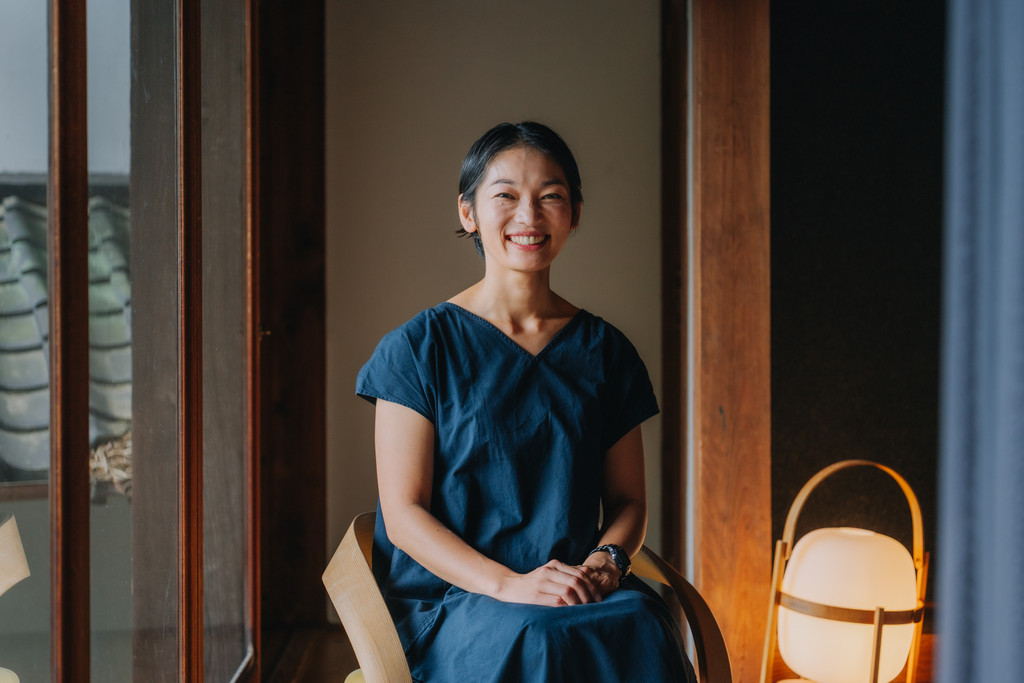
Shiho Umemori, representative of ume,yamazoe. She moved to Yamazoe Village 10 years ago and started the inn using a building that was once the former village mayor’s residence.
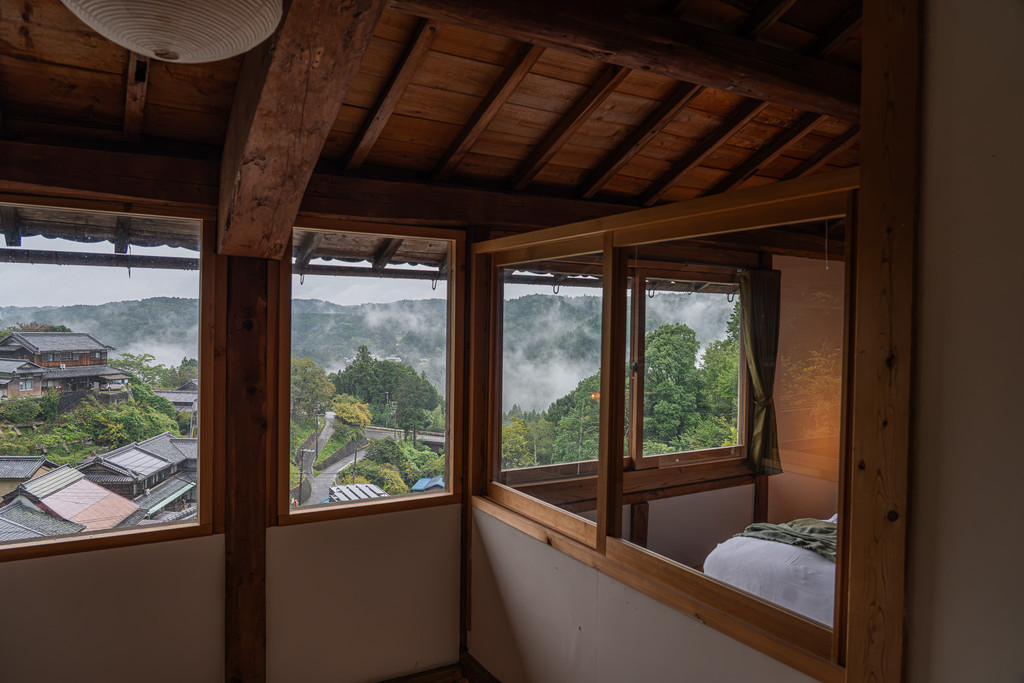
ume,yamazoe。
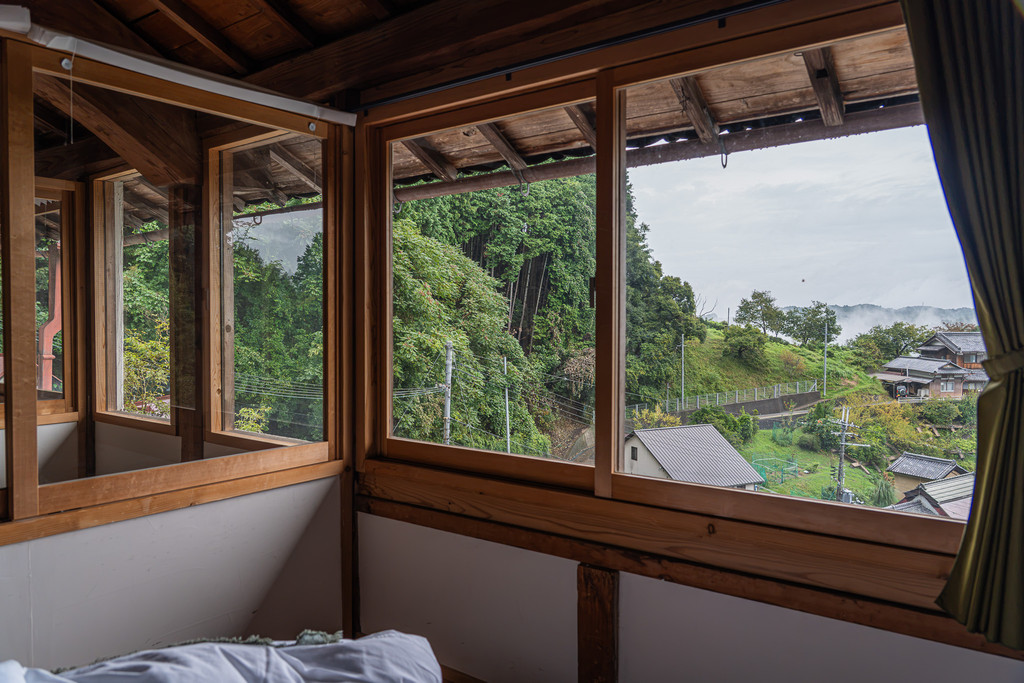
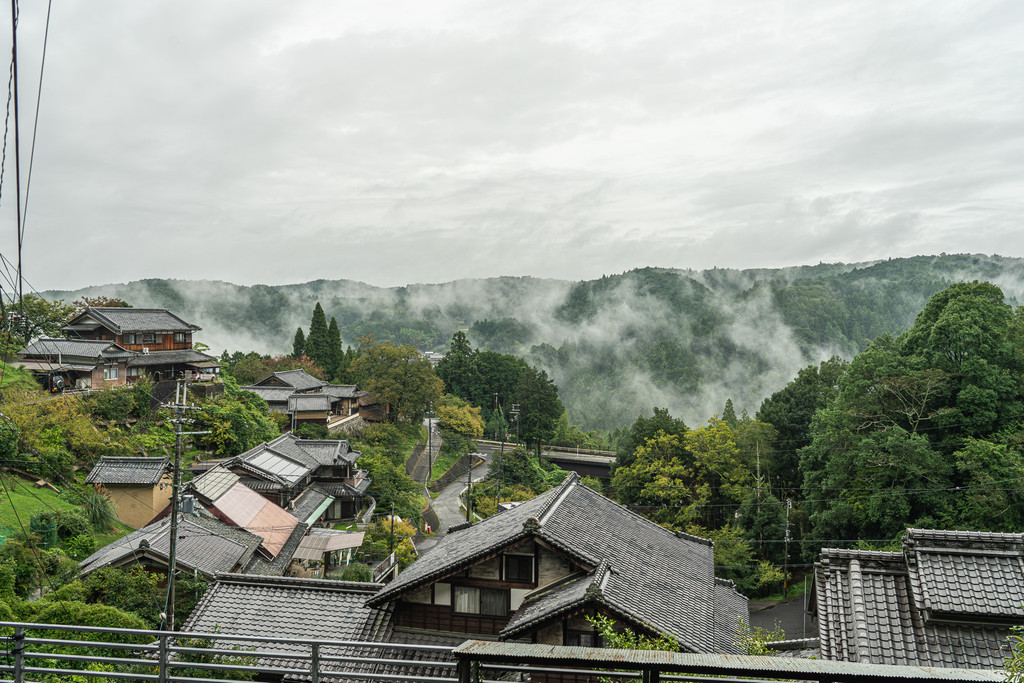
A “slightly inconvenient inn” nestling in Yamazoe Village, Nara Prefecture. Despite being a depopulated area, many people visit, drawn by its charm.
Riding the Train in the Opposite Direction: Founding in Yamazoe Village and Securing a “Place to Belong”
— First, please tell us how the inn started here. You moved to Yamazoe Village in 2016, exactly ten years ago, right?
Umemori: That’s right. In September 2016, in my mid-20s, I moved to this village. At that time, I still lived in Nakatsu, Osaka, and commuted to Nara by car. But no matter how much I commuted, I couldn’t feel that I was living within the grand rhythm of nature or rooting myself in this land.
In my 20s, my life was the exact opposite of what it is now. As a salesperson, I worked intensely from morning to night, sometimes missing the last train and sleeping on my desk at the office. In those days, my longing to “live in nature” just kept swelling. After commuting for about three years, I realized that merely moving here was not enough. I needed to create work on this land and earn my living here. Only then could I truly “be” in this place. For me, the inn was the means to fulfill that “sense of belonging to a place.”
— We heard this building was the house of a former village mayor. It has a wonderful east-facing location, but what was your impression when you first encountered it?
Umemori: At first, I thought, “The view is amazing, but it’s falling apart” (laughs). Any type of business would have been fine. My sole objective was how to immerse myself into nature. However, I happened to learn about a subsidy program for establishing accommodations in farming, mountain, and fishing villages, and thought, “With this, I might be able to bring it to life.”
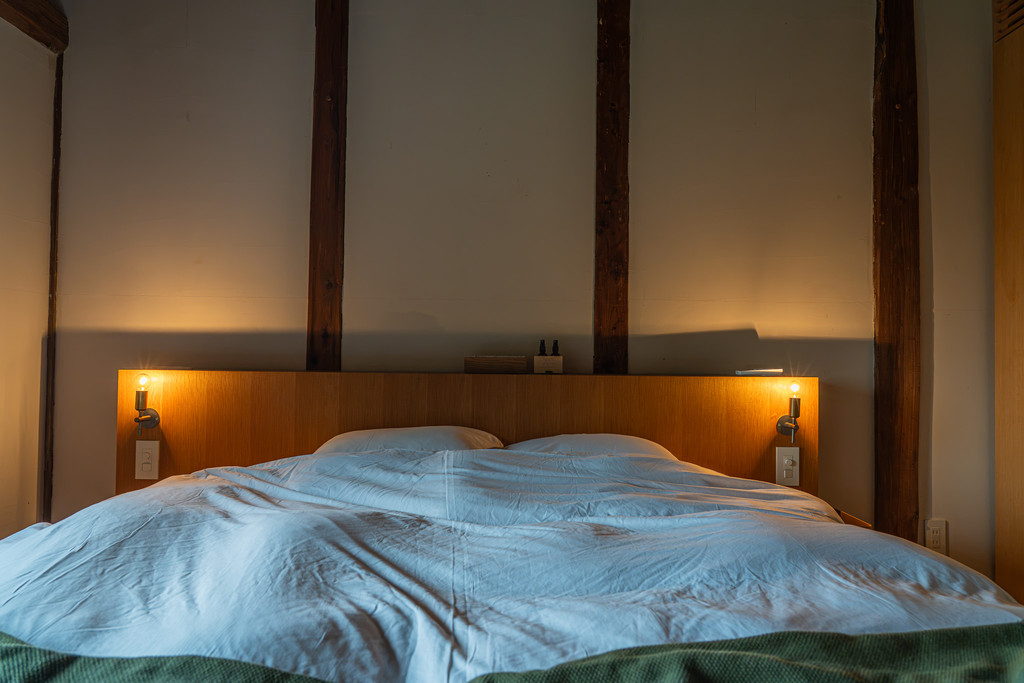
I had only one condition for finding a property: an environment that I could truly love from the bottom of my heart. This place faces east, and every morning a truly beautiful sunrise appears. It sits on slightly high ground, offering a panoramic view of nature’s long flow of time. I had zero experience in architecture or design, but I intuitively felt that with the power of this view, something would begin.
Yamazoe Village was formed by merging three villages, and this house belonged to a person who once governed one of them. I felt a strange destiny in a building that had watched over this view for over 120 years. However, the subsequent “dialogue with the community” became my true agonizing labor of founding and the first cry of my philosophy.
The “Interval” Between the 90s and 20s. The True Intent of “A Slightly Inconvenient Hotel”
— The concept “a slightly inconvenient hotel.” It seems this phrase reflects an unavoidable process: friction with local residents.
Umemori: Yes. Before opening in March 2020, we actually spent two and a half years engaging in dialogue with local residents. To be honest, there were many opposing opinions. For them, a new wind blowing in a small village meant anxieties about “more garbage” and “noise pollution.”
At that time, the person who expressed the biggest concern was a grandfather in his 90s. My righteousness in my 20s—”I want to revitalize the village and create new hope”—and his righteousness in his 90s—”I want to live quietly and peacefully.” These two positions simply could not be reconciled. Yet, both were equally “right.”
— How did you overcome that conflict?
Umemori: I stopped trying to persuade. Instead of forcing my righteousness on him to change his mind, I chose a style of “coexisting in a way that doesn’t cause trouble,” while both holding onto our respective forms of righteousness.
Neither human society nor the natural world is perfect. Every living thing has inconveniences and flaws. Society’s true essence isn’t about deciding a 0-or-100 outcome, but acknowledging each other’s “inconveniences” and functioning through mutual compromise. The harmony found in that “interval (awai)” is precisely the experience we want to offer at this inn. That crystallized into the words “a slightly inconvenient hotel.” I realized that accepting this inconvenience as an antithesis to modern society’s pursuit of convenience and efficiency leads to deep peace.
The Sound of “U” and “Me”. A Story of Rebirth Guided by Yamato-Kotoba
— Please tell us about the origin of the brand name “ume.” We heard it has a deep meaning beyond just coming from your surname Umemori.
Umemori: The surname was like a coincidence at the end, just a bonus (laughs). The primary origin is a single plum (ume) tree in the garden. This house embodied the concept of “isseki ichiboku” (one stone, one tree)—the idea of creating a landscape with a single stone and a single tree. We decided to inherit that 200-year-old plum tree, which had protected this place since before the house was built, as our identity.
Additionally, I considered the significance of naming it in Nara, the birthplace of “Yamato-kotoba” (ancient native Japanese words). Every single sound in Japanese carries a meaning. For example, “kome” (rice). “Ko” means to embrace inside, and “me” means blessing or sprouting. In other words, rice is something filled with blessings.
— So, what meanings do “u” and “me” hold?
Umemori: “U” means to birth, or to be born. “Me”, as mentioned, means blessing or sprouting. I hope our guests can pause their daily lives, reset themselves, and spend time as if “newly born” or “awakening.” I named it “ume” with the wish to be the catalyst for that. When I realized that by chance my surname was “Umemori,” meaning “guarding the plum,” I felt my resolve to live in this place was firmly set.
DIY Sauna and the Shadow of a Wolf Walking in Alaska
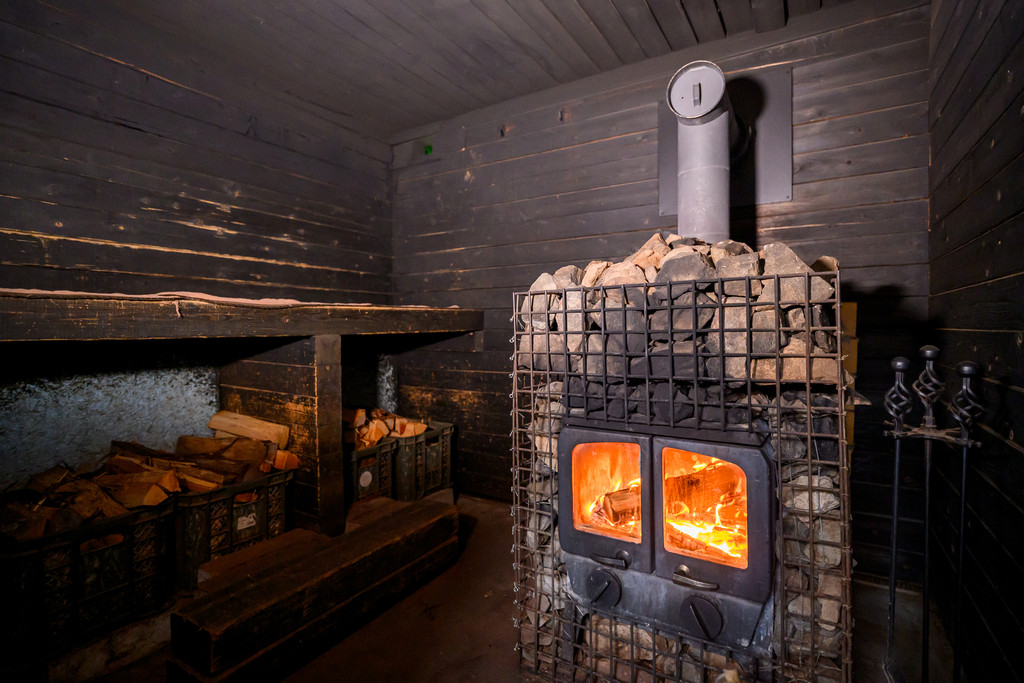
— The sauna, a symbol of ume,yamazoe, was surprisingly built by hand via DIY.
Umemori: During the COVID-19 pandemic, we had plenty of time, but no money (laughs). But it wasn’t just to save money. Offering something to guests without knowing how firewood is used or how timber comes down from the mountain felt like telling a “lie” to myself.
The structure of the stove, the characteristics of fire, the flow of wind, and how heat output changes depending on the wood species—I accumulated these inside myself, one by one, through physical sensation. Without understanding the structure, you cannot genuinely entertain guests. It was a DIY process to embody that “honesty.”
— We hear that at the origin of your deep insight into nature lies a single book.
Umemori: It’s “The Traveling Tree” (Tabi wo suru ki) by Michio Hoshino. A friend lent it to me when I was being chased by minute-by-minute schedules among the skyscrapers of Osaka.
At the exact moment I was being worn down on packed trains thinking, “I have to do this today,” a single wolf was walking across the vast land of Alaska within a time axis unchanged for hundreds of millions of years. Just being conscious of that fact made my enclosed heart feel as if it expanded all the way to the universe. I wanted to live while ticking that grand rhythm of nature, no matter how small I might be. That impulse at age 25 is what stands me here today.
A Flat Gaze Upon All People. The Prayer of the “HAJIMARI” Project
— The staff’s customer service is very unique and warm. What do you value most in operations?
Umemori: Rather than manuals, I want this to be a place where a person’s “life experience” thrives. I value a degree of freedom where the trajectory of each staff member’s life naturally melts into their hospitality toward guests.
— Could you tell us more about the background of the “HAJIMARI” project, which welcomes people with disabilities or illnesses?
Umemori: In the second year of running the inn, a question suddenly arose in my mind: Is the “kindness” we provide aimed only at a specific, healthy, and affluent group? If we advocate a “kind place,” shouldn’t it also be open to those for whom having choices is difficult? Otherwise, isn’t it incomplete?
I have an older sister with a severe mental illness, and my younger sister suffered from leukemia. As family, I know all too painfully the inconvenience of having ordinary choices taken away by illness or disability. A place where we can proudly say, “You’re safe here.” While it goes against standard marketing logic of narrowing down a target, I believe that empathizing with universal human pain serves as the ethical foundation of the ume brand. On the day I welcomed my older sister for the first time, I was so happy I ended up talking too much, though.
Hope Embedded in the Breakfast “Pakkan”
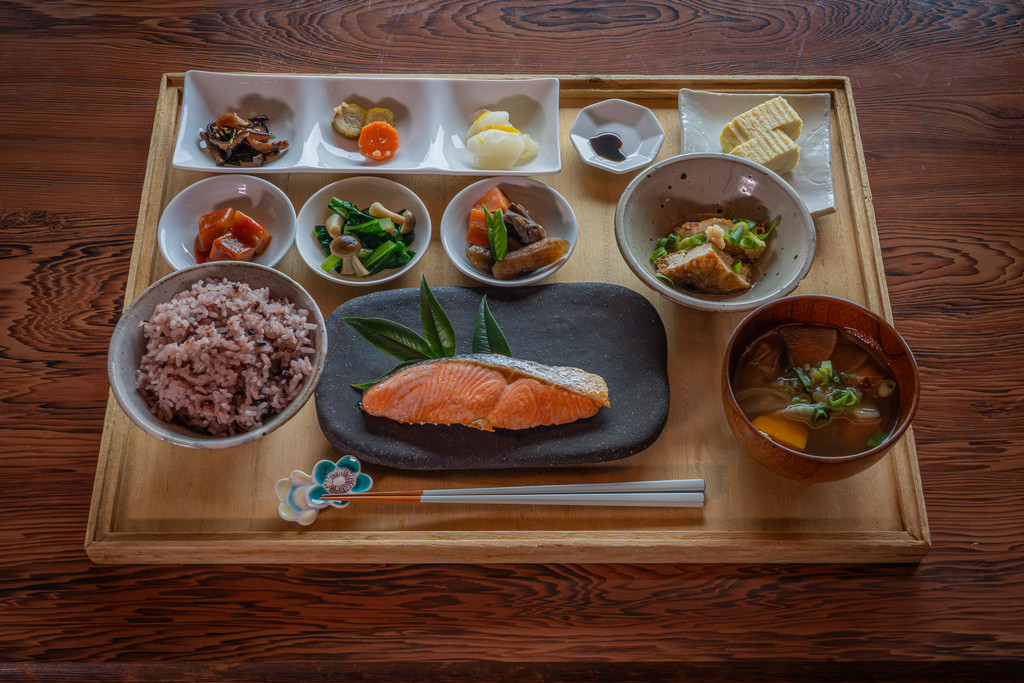
— We’d like to ask about the food. We feel a commitment that goes beyond the phrase “local consumption.”
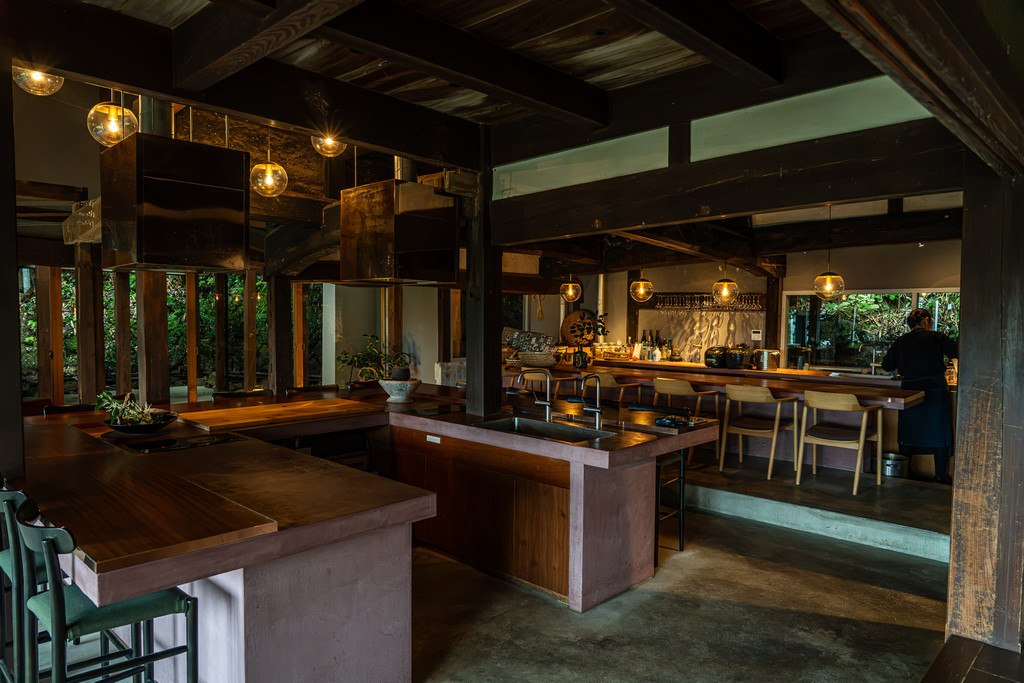
Umemori: We focus primarily on ingredients sourced within a 15-minute drive. That is not just a trend, but a “consideration for nature” by reducing transport loads, and an expression of a “sincere choice” in doing business on this land. The “wasabi sushi” passed down from my family’s sushi restaurant was also born from a connection with the “Wasabi Association” started 20 years ago by local grandfathers. We transform unutilized local resources into something valuable with our own hands.
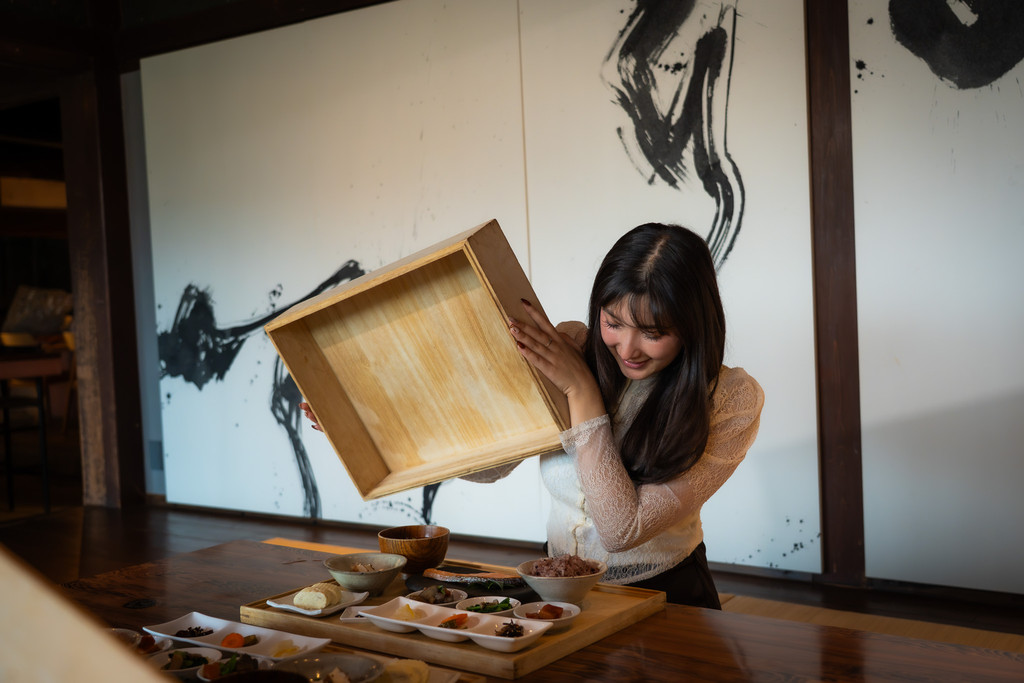
— Especially at breakfast, the “Pakkan” performance of opening the rice tub receives a huge response on social media.
Umemori: That presentation is filled with my foundational experience. When my younger sister was fighting leukemia, she earnestly said, “When I get discharged, I want to go eat kushikatsu in Osaka.” At that moment, I realized: eating is not merely taking in nutrients. It is the “hope to live tomorrow,” and the very “courage” to face treatment.
The joy of “Wow!” at the moment the lid opens. I want that small moment of emotion to turn into vitality for tomorrow, lighting up the flame of the guest’s life brightly. That “Pakkan” is our own ritual to confirm the dignity of life.
Hope in “Having Nothing”. The Future of a Regional Revitalization Model
— Nowadays, many inbound international guests visit. What are they seeking in Yamazoe Village?
Umemori: Overseas guests might be a little tired from long journeys with luxurious course meals and overly perfect service. Our inn, in a good sense, has “nothing.” That is precisely why they receive the unadorned daily life of Japan and the quietness as it is, as a luxury.
— Lastly, please tell us about your future outlook.
Umemori: Across Japan, there are countless regions considered to have “nothing”—neither hot springs nor snowscapes. But what ume,yamazoe showed is that precisely because there is “nothing,” polishing everyday life as it is allows us to connect with the world.
When sending guests off, I always feel a desire to “root for them.” I hope their experience here becomes nourishment for peacefully navigating their daily lives. If there are regions across Japan struggling in the same way, I want to share the wisdom of “polishing what exists” that we have learned. Rather than lamenting depopulation, spreading a culture of cherishing a land’s “inconvenience”—I believe that is my way of giving back to expand the possibilities in various parts of Japan.
A solitary traditional house standing quietly in a depopulated mountain village.
Unraveling the path of “ume,yamazoe,” there lies not mere management of a tourist hotel, but the trace of a quiet yet passionate challenge to reclaim the “honest inconvenience” that modern society has left behind.
Coexistence in the “interval (awai)” born from conflict with local residents. A sauna crafted by hand, conversing with firewood and fire. And the “HAJIMARI” project warmly embracing all people, along with breakfasts that kindle hope.
Each of these is a beautiful and powerful puzzle piece that transforms a depopulated area’s “inconvenience” into irreplaceable value. A rich rhythm of nature that satisfies precisely because there is “nothing.” Why not set off on a journey to regain your own time and senses while feeling the breeze of Yamazoe Village?
Interviewer: Yohei Osaki