


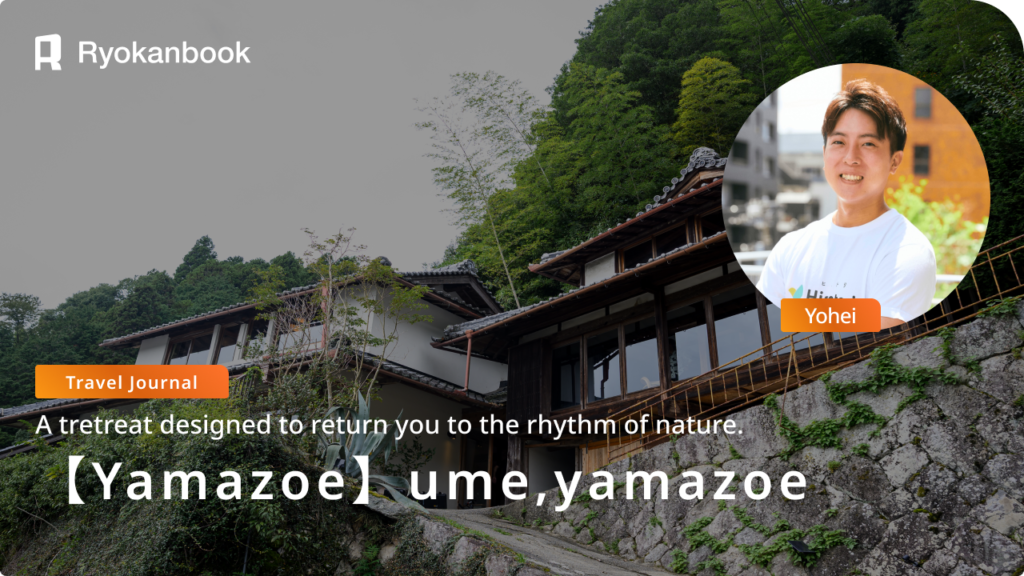
In Yamazoe Village, Nara Prefecture, set in the mountains away from downtown Nara City, sits “ume,yamazoe,” a small retreat that welcomes only three groups of guests per day.
Here, you warm up in a wood-fired outdoor sauna, enjoy meals made primarily with ingredients grown in Yamazoe, watch the night sky, and wake up as the sun rises over the mountains. It is not a place that piles on luxurious amenities.
Instead, ume,yamazoe describes itself as a “slightly inconvenient hotel.” It offers a step back from modern convenience to help guests reconnect with familiar elements like fire, wind, fresh food, and morning light.
I first visited ume,yamazoe in 2022 and have returned several times since. Back when I managed my own accommodation business, I even participated in their wood-firing workshop for inspiration when building an outdoor sauna. On this visit, I stayed as a guest again and interviewed the founder, Shiho Umemori. Having visited multiple times, I want to share what makes this place so special.
What Is ume,yamazoe?
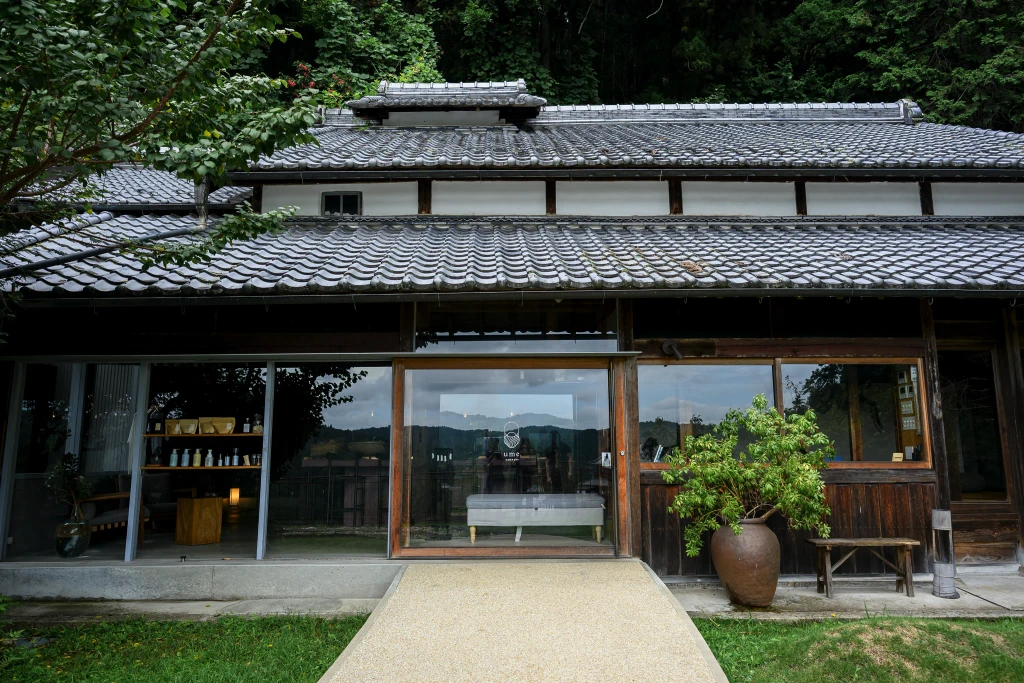
Located on high ground in a small settlement in Yamazoe Village, Nara Prefecture, ume,yamazoe is an exclusive lodging for just three groups a day.
The property opened in March 2020 following the renovation of a 100-year-old home that once belonged to the mayor of the former Hatano Village. The renovation carefully preserved original features, including the central wooden pillar, decorative transom screens (ranma), and the plum tree in the garden.
The concept behind the stay is a “slightly inconvenient hotel.” Everyday life in the mountain village, local produce, and relationships with community members are all crafted into the guest experience.
This approach has earned significant outside recognition. In 2020, the adjacent “ume,sauna” ranked 10th in the SAUNACHELIN 2020 awards. In 2025, the facility won the Social Impact Category at the Japan Travel Awards for its “HAJIMARI” initiative, which invites individuals with disabilities or severe illnesses and their families to stay, an effort that has since spread to other lodgings across Japan.
In 2026, it was selected for “The 30 Collection” in Forbes JAPAN’s “Destinations of the Year 2026.” What draws praise is not lavish hardware, but how the village’s daily life, such as making tofu, foraging for wild mountain vegetables, and crafting straw New Year decorations, is transformed into meaningful experiences. By sourcing meal ingredients locally and firing the sauna with regional firewood, the property turns Yamazoe Village itself into a travel destination.
Since my first visit in 2022, I have returned to this hostelry many times. To be honest, I did not fully understand its background during my first stay. I simply felt that it was an incredible place. After visiting repeatedly, managing an accommodation myself, and talking with Ms. Umemori, I have come to understand the subtle appeal I could not put into words back then.
Arrival | A Historic House on High Ground in Yamazoe
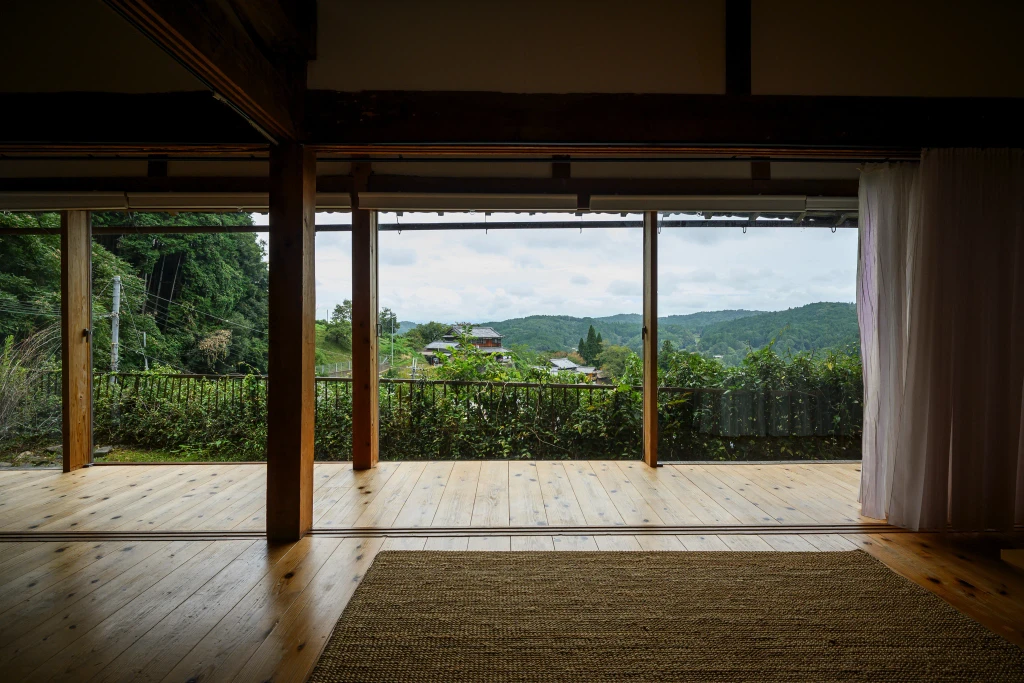
Passing through the village and following the road uphill brings you to ume,yamazoe, situated near the top of the settlement. Thanks to its elevated position, the front of the house overlooks the surrounding mountains of Yamazoe.
Before becoming ume,yamazoe, the house belonged to the mayor of Hatano Village. During our interview, Shiho Umemori laughed as she recalled her initial impression: “The view was spectacular, but the house was completely run-down.”
Even so, she chose this spot. Rather than starting a business for the sake of running a hotel, her primary desire was to live close to nature, and creating a guest house was the path to achieving that lifestyle.
Inside, the original atmosphere of the historic home has been carefully maintained while providing everything needed for a comfortable stay. Nothing feels over-designed, making you feel as though you are staying in a long-standing local home.
Guest Rooms | Spaces Designed for Watching the Sunrise
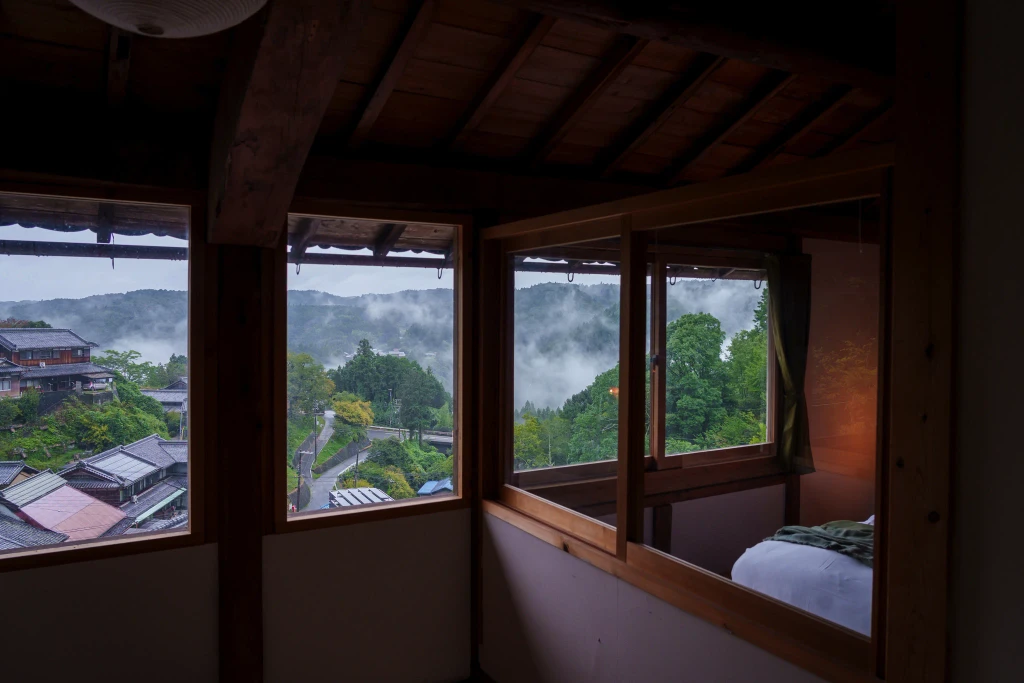
Morning is my favorite time at ume,yamazoe. During my first stay in 2022, I woke up watching the sky outside slowly brighten through the window.
As the sun rises from behind the mountains, warm orange light fills the room. You do not need to head out for famous tourist spots or participate in packed activities. Watching the simple act of the sun rising becomes the main event of the morning.
I remember staying here once with a group of fellow business owners. While everyone else stayed up late drinking, I went to sleep early, woke up at sunrise, and headed straight to the sauna. A staff member remarked, “You live in the healthiest rhythm, Osaki-san.”
That comment has stuck with me ever since. Staying at ume,yamazoe gently encourages you to align your time with natural cycles rather than a clock.
ume, sauna | Starting with Fire and Wood
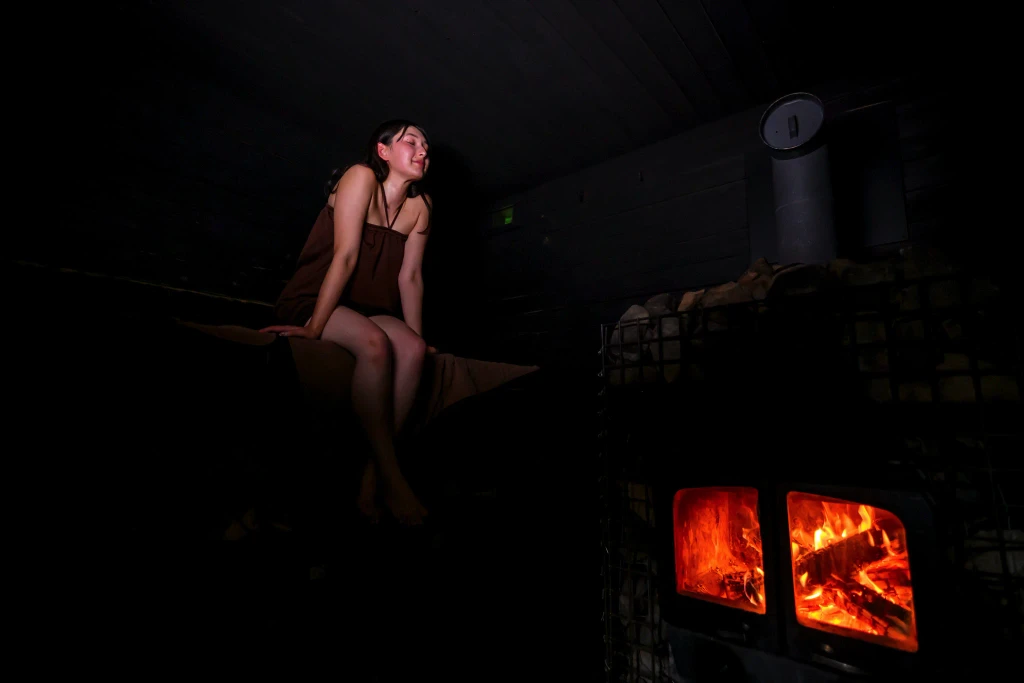
One of the signature experiences here is “ume,sauna,” an outdoor Finnish-style sauna that earned a spot in the SAUNACHELIN top 10 in 2020.
As someone who loves saunas and previously operated an outdoor sauna at an accommodation business, what makes ume’s setup fascinating is not just that it gets hot and feels good. It forces you to engage directly with the element of fire.
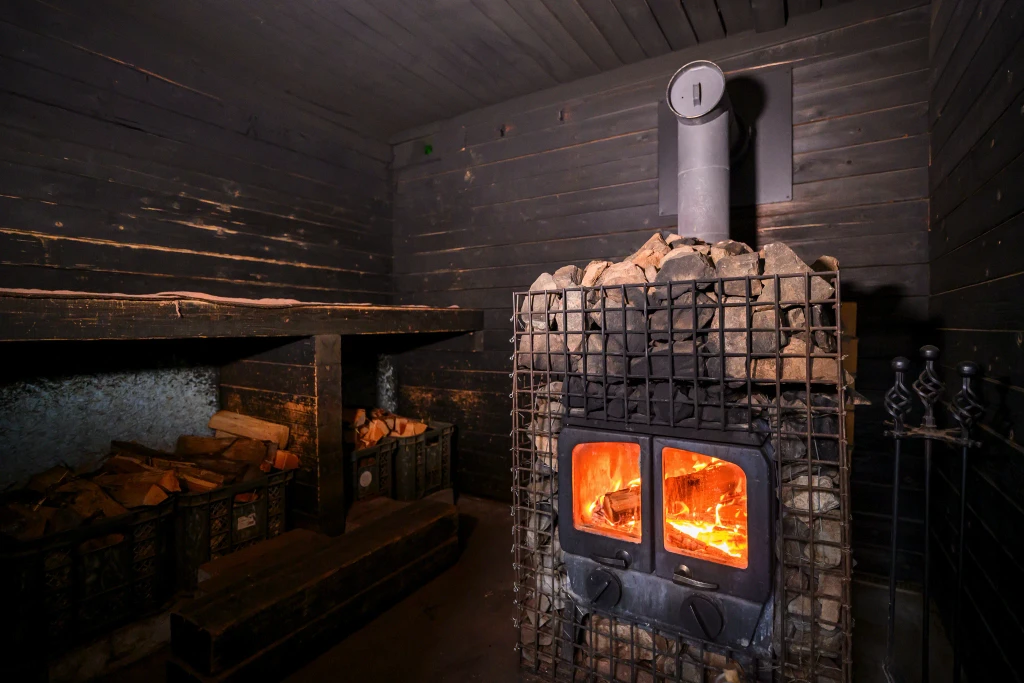
I once took part in their fire-making workshop. The tools are minimal: matches and cardboard. You learn how to stack the wood, manage airflow, and create proper draft lines. Rather than simply lighting a flame, you learn how fire behaves and how to nurture it.
When built correctly, the wood burns cleanly with complete combustion, producing almost no smoke. Participating in this workshop after managing a sauna myself made me realize how much there was to learn about the basic act of using fire.
Using Wood Wisely
There is a story about the sauna that left a strong impression on me. Once, a sauna enthusiast stayed as a guest and loaded a massive amount of firewood into the stove to make the room as hot as possible.
Ms. Umemori was deeply saddened by this, almost to the point of tears. To her, firewood is not just disposable fuel.
A single tree grows in the mountains, gets cut down, dried, and chopped into logs before finally fueling the sauna. At ume, staff monitor the fire carefully and add wood only as needed. Instead of burning excess wood just to raise the temperature, the goal is to respect each piece of firewood and use it efficiently.
Having managed a sauna myself, this perspective resonated with me. Behind any sauna service lies a relationship with the surrounding mountains and forests. When entering the sauna at ume, keeping this background in mind adds a deeper level of appreciation.
The Name “ume” | Birth and Awakening
The name “ume” carries a specific meaning. During the interview, Ms. Umemori explained that the sound “u” connects to creation and birth (umare), while “me” relates to blessings and sprouting buds (mezame). The phrase “birth and awakening” is central to the concept of the stay.
During my first stay in 2022, staff explained the meaning of “u” and “me” while I was in the sauna. At the time, I thought it was a nice concept. Returning over the years has helped me understand it on a deeper level.
What you gain at ume is not new information or stimulation, but a reminder of simple sensations you might have forgotten: the warmth of a fire, waking up to natural sunlight, enjoying a meal when hungry, or feeling a fresh breeze.
Dinner | Savoring Daily Life in Yamazoe
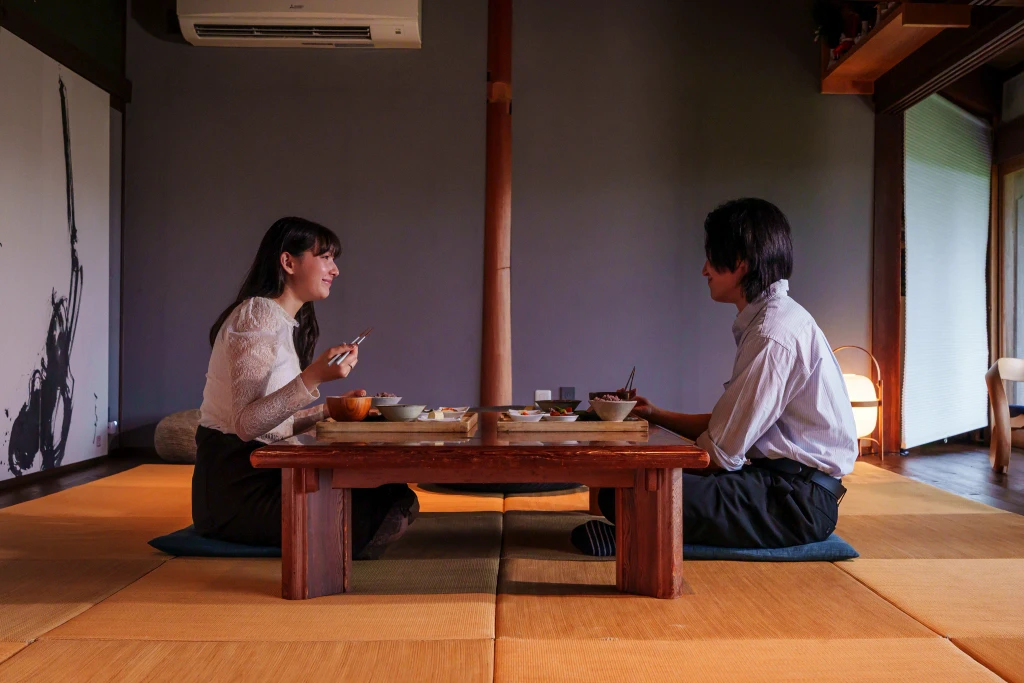
Our dinner was prepared by Yuki Kimura, who explained each dish in detail. When I asked questions, she kindly shared background on the ingredients, cooking methods, and how these foods are traditionally eaten in Yamazoe.
Her warm personality and sincere approach to cooking and hospitality left a lasting impression, equal to the meal itself.
Often, loving a hotel comes down to appreciating the people who run it. This stay reinforced that feeling for me once again.
Meals at ume center on seasonal Yamazoe produce. Through my work, I visit many ryokan and hotels across Japan, and while serving local ingredients is common, ume stands out because every dish comes with the context of why it belongs on the table in this specific region.
Appetizers | Seasonal Flavors of Yamazoe
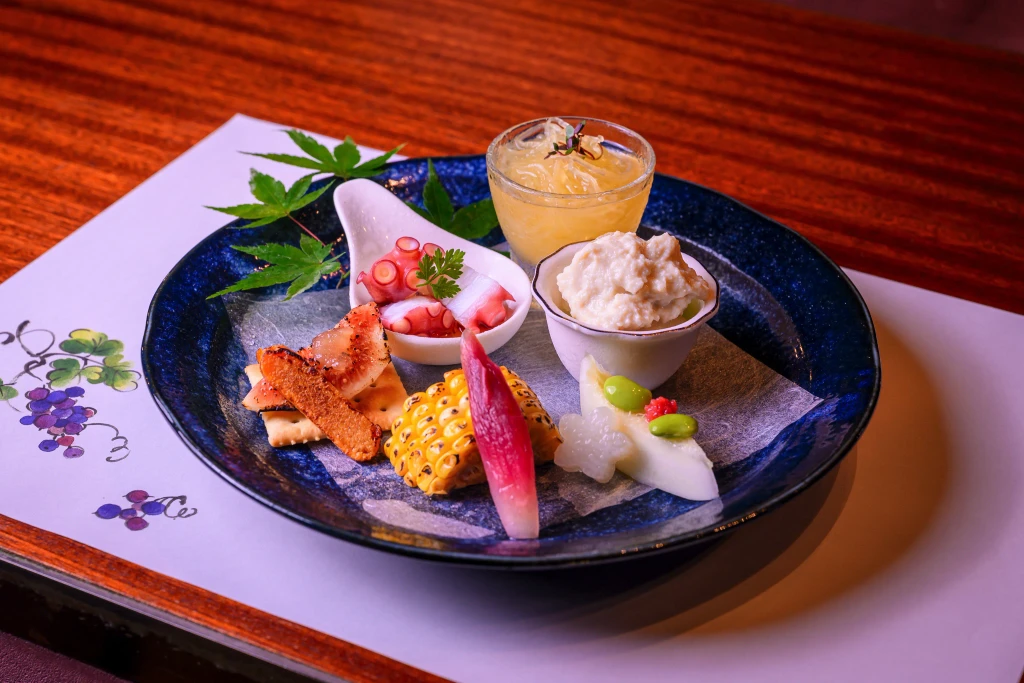
The meal opens with a series of seasonal bites: spaghetti squash soaked in dashi, octopus in sweet vinegar, muscat grapes with tofu dressing (shiroa-e), fresh figs with dried mullet roe (karasumi), Japanese ginger (myoga), and oriental melon (makuwauri).
The oriental melon was particularly interesting. While rarely seen in modern supermarkets, it was traditionally packed as a sweet item in children’s lunchboxes in Yamazoe.
What seems novel to a visitor carries nostalgia for locals. ume’s kitchen frequently features items that were once everyday staples in the community.
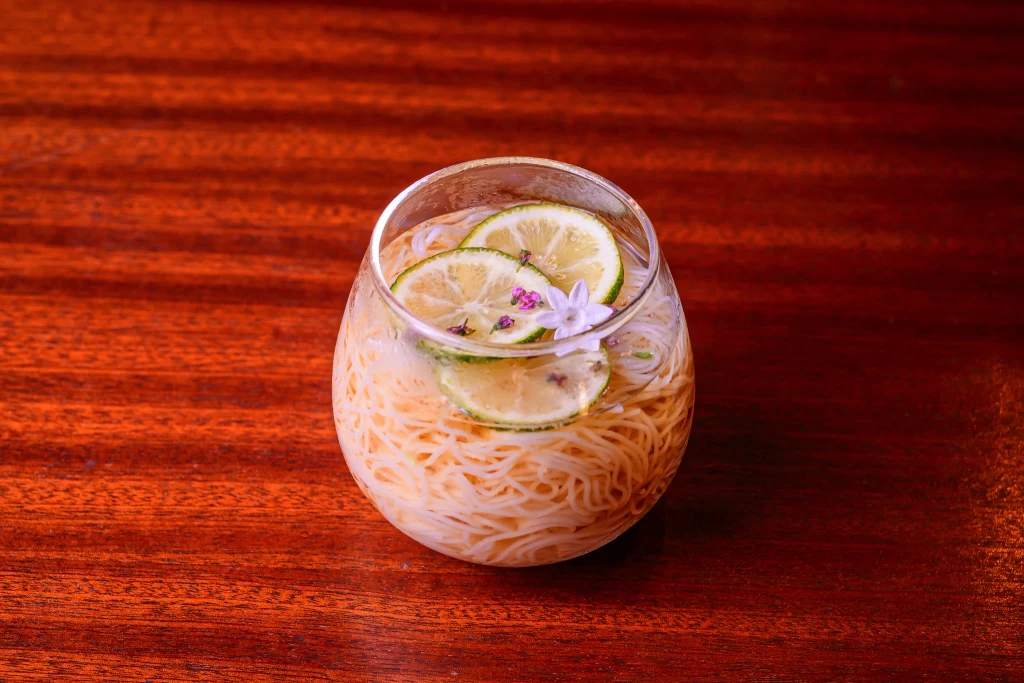
Somen Noodles in Tea Country
Yamazoe Village is known for producing Yamato green tea. During the quiet winter months when tea cultivation slows down, locals traditionally turned to making somen noodles.
We were served ultra-thin somen made by the local Nakagaki Noodles. Though delicate, the noodles retain a firm texture that catches the Yamato green tea broth perfectly.
Rather than serving somen simply because it is a Nara specialty, the dish connects directly to the seasonal rhythms and traditional work of this specific village. Understanding that context elevates every bite.
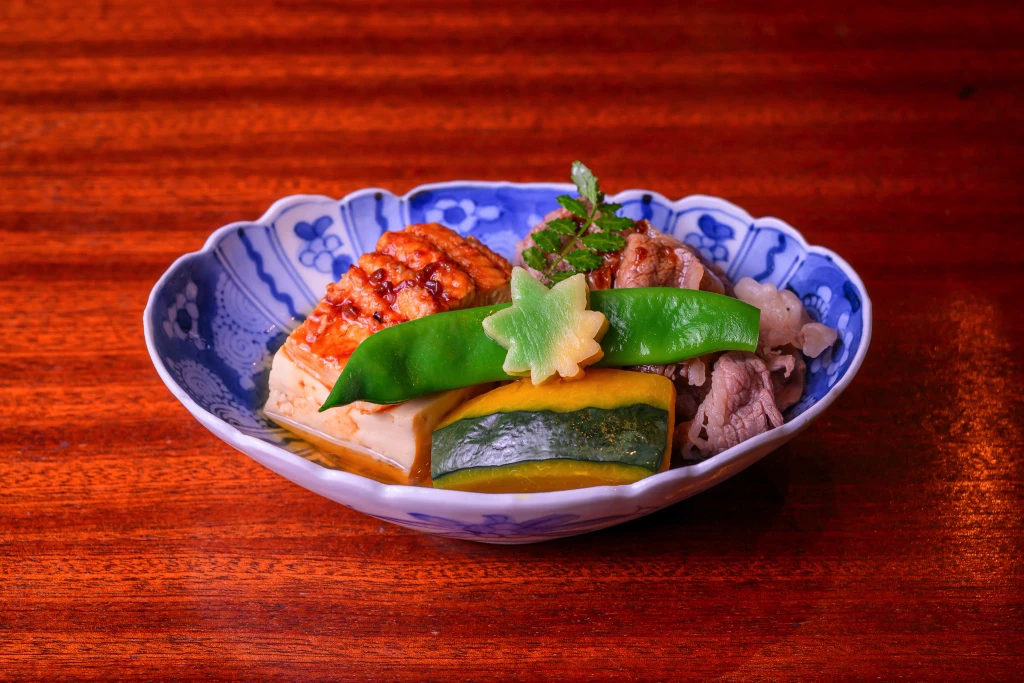
Simmered Dishes | Individual Care in One Bowl
The simmered dish (takiawase) featured chestnut pumpkin, Romano beans, Iga beef, eel, and local tofu.
Instead of cooking all the ingredients together in a single pot, each item is prepared separately to preserve its distinct flavor and texture before being assembled together, topped with soy sauce koji. It is an unpretentious dish that highlights meticulous preparation.
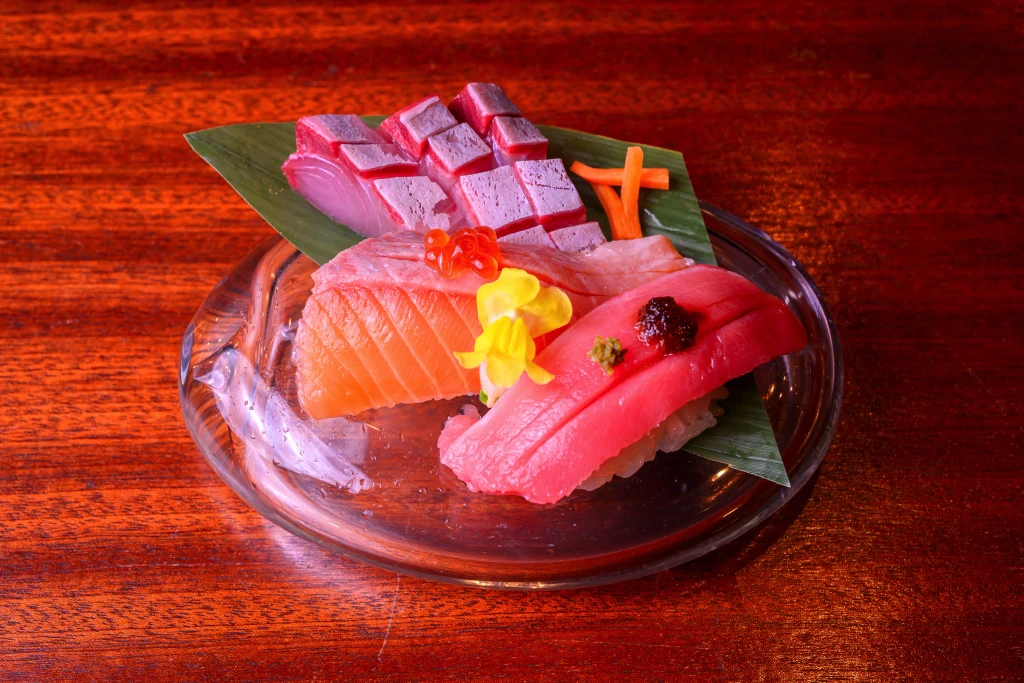
Sushi Born from Local Wild Wasabi
Wild wasabi grows naturally in Yamazoe, leading locals to form a community group to explore ways to use it in regional cooking. That collaborative effort led to the creation of local wasabi sushi.
Our course featured medium-fatty tuna (chutoro), salmon, and yellowtail. The tuna was paired with a nori ponzu sauce and a green chili yuzu kosho made by a local resident.
Rather than restricting the menu strictly to local produce, the kitchen combines regional flavors with quality ingredients sourced from outside, striking an enjoyable balance.
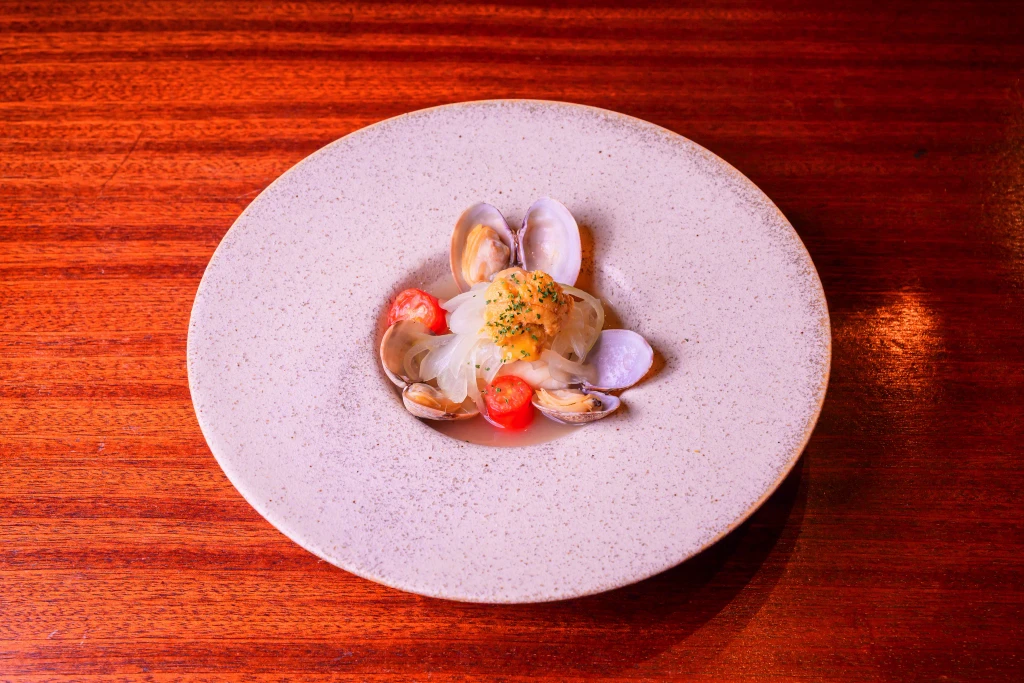
Yamato Chicken, Japanese Aqua Pazza, and Hojicha Fried Shrimp
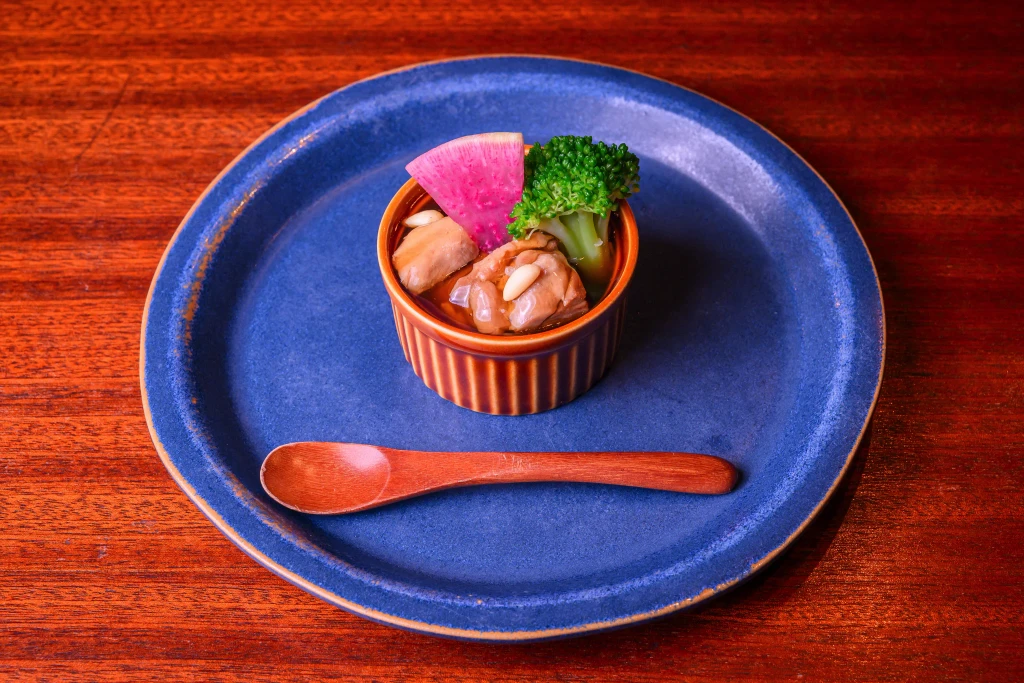
The local Yamato chicken becomes more flavorful as you chew, so it is prepared simply with salt and house dashi to bring out its natural taste.
Next came a Japanese-style aqua pazza featuring sea bream, clams, and local Yamazoe onions. While standard aqua pazza uses white wine, this version uses bonito flakes to create a Japanese flavor profile.
For the fried shrimp, roasted green tea (hojicha) from Yamazoe is blended into the breading, giving a familiar favorite a distinct local aroma. Rather than relying solely on traditional recipes, ume uses current local ingredients to craft new, regional dishes.
Local Desserts
Dessert was an ice cake made with Beniharuka sweet potato and cream cheese, served alongside fresh local blueberries.
The meal concluded with Yamazoe black tea, crafted from local green tea bushes, offering a smooth, gentle sweetness.
Finishing the meal felt less like completing a formal multi-course dinner and more like taking a slow walk through Yamazoe Village.
“A Slightly Inconvenient Hotel” Is Not Just Marketing
The phrase “a slightly inconvenient hotel” is memorable, but talking with Ms. Umemori revealed that it was never created as a marketing catchphrase.
Ms. Umemori moved to Yamazoe Village in 2016 and spent two and a half years building relationships with local residents before opening the inn. Naturally, not everyone in the community welcomed the idea initially.
Local residents worried that outside visitors might bring noise or trash. One conversation with a local resident in their 90s left a deep impression on her.
In her 20s at the time, Ms. Umemori was eager to revitalize the village and build something for the future. Meanwhile, the older resident wanted to spend their remaining years in peace and quiet.
Neither perspective was wrong. Rather than trying to persuade others to change their minds, Ms. Umemori chose to honor both viewpoints and find a way to coexist.
Living together in a community requires accepting small compromises and inconveniences. That mindset gave rise to the concept of the “slightly inconvenient hotel.”
Knowing this background makes it clear that the stay is about much more than simply “enjoying inconvenience.”
Making a Welcoming Inn Truly Inclusive
One topic from the interview stood out in particular. About two years after opening ume, Ms. Umemori began asking herself a fundamental question: “Is the warmth and hospitality we offer accessible only to able-bodied, comfortable guests?”
Having a sister with a severe mental health condition and another who battled leukemia, she witnessed firsthand how illness or disability can restrict a family’s travel choices.
This led to the creation of “HAJIMARI,” an initiative that invites individuals with disabilities or illnesses and their families to stay at the inn free from worry. This social impact earned recognition at the Japan Travel Awards 2025.
As Ms. Umemori put it: “We wanted to create a place where we can proudly say, ‘You are completely safe and welcome here.'”
True hospitality goes beyond polite service. Her words clarified the deeper purpose behind the welcoming environment ume aims to build.
Breakfast | The Small Joy of Opening the Steam Box
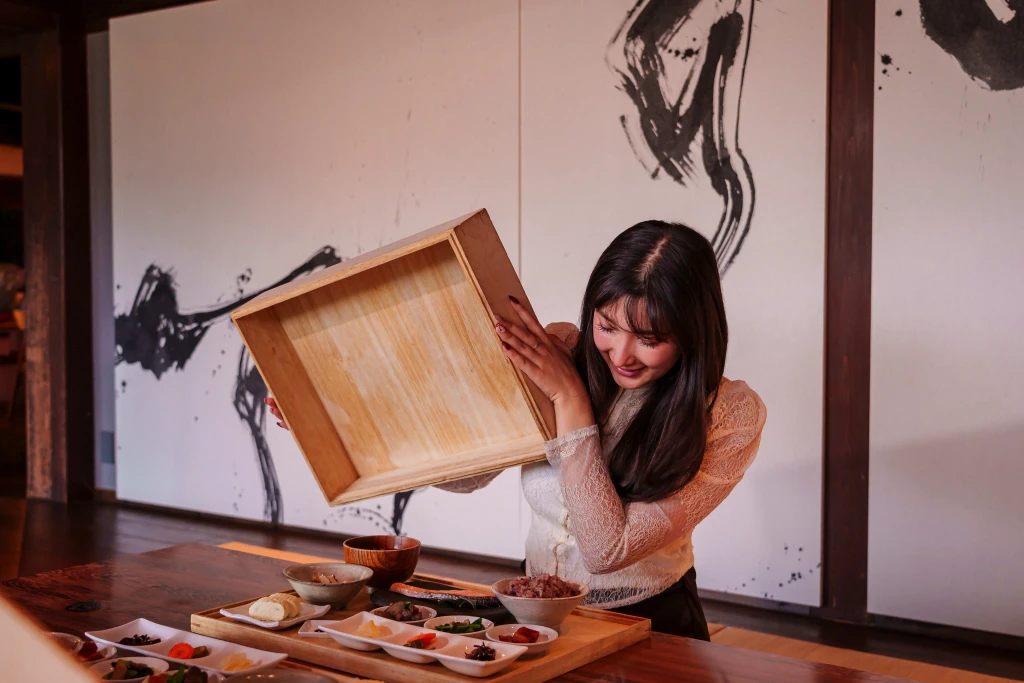
A highlight of breakfast at ume,yamazoe is removing the lid of the wooden rice container (ohitsu). Opening it releases a cloud of warm steam over freshly cooked rice, a simple moment that naturally brings a smile to your face.
This detail also connects back to Ms. Umemori’s family history. While her sister was undergoing treatment for leukemia, she mentioned wanting to go out for Osaka kushikatsu once discharged.
Hearing those words made Ms. Umemori realize that eating is not just about nutrition; it can offer hope for tomorrow. That insight inspired her to design breakfast to include small, joyful moments.
At ume, staff affectionately call this moment “Pakkan” (the sound of popping off a lid). It is not a theatrical trick, yet it remains one of the most memorable parts of the stay.
Understanding Why I Fell in Love with This Place Years Ago
I first stayed at ume,yamazoe in January 2022 with eight university friends.
We used the sauna, spent the evening chatting, watched the sunrise, and enjoyed our meals together. I loved the property from the start, though if someone had asked me why, I would have struggled to explain it clearly.
Since then, I managed my own lodging, built an outdoor sauna, and traveled across Japan reviewing ryokan for work. Returning four years later to speak with Ms. Umemori and Ms. Kimura brought everything into focus.
The things I felt intuitively during my first stay all had clear reasons behind them: the beauty of the sunrise, the careful use of firewood, the local Yamazoe ingredients, the slight inconvenience, and the genuine warmth of the staff.
These were not separate features, but elements working together toward the exact same purpose.
Recommended For
ume,yamazoe is very different from large-scale ryokan focused on extensive hot spring facilities and endless amenities. It is an ideal fit for travelers seeking a quiet setting, wood-fired sauna enthusiasts, people interested in regional food culture, and anyone looking to reset their pace in nature.
For international travelers who have already visited major tourist hubs like Tokyo, Kyoto, Osaka, or central Nara, it serves as an excellent off-the-beaten-path destination to experience real, daily life in rural Japan.
The appeal of ume,yamazoe does not lie in a massive tourist attraction. Instead, it takes the existing lifestyle, food, and natural environment of Yamazoe Village, refines them with care, and transforms them into the main reason for your trip.
Check-Out | Realigning Your Personal Rhythm
Leaving ume,yamazoe does not give you the intense rush of completing a heavy sightseeing itinerary.
You used the sauna, sat by the fire, ate good food, and watched the sunrise. On paper, the activities are remarkably simple.
Yet by the time you leave, your internal rhythm feels subtly restored. You feel sleepy earlier in the evening, wake up naturally with the morning light, and find quiet comfort in gazing at a wood fire.
For me, ume,yamazoe is not a place you fully grasp in a single visit, but one that reveals more of itself each time you return. Visiting during a busy work period feels different from visiting during a major life transition, even when watching the exact same sunrise.
Rather than adding something new, it helps you remember what was already there inside you.
Step beyond the typical sightseeing routes of Nara, and take time to return to the rhythms of nature in Yamazoe Village.