


Ukiha is one of Fukuoka’s hidden gems, tucked in the foothills of the Mino Mountain Range. It’s known for its pure spring water, the fruit that water nurtures, and a townscape of white-walled merchant houses that still carries the atmosphere of the Edo period. This time, we’re introducing a one-day sightseeing model course for Ukiha that you can fully enjoy without a car. Centered on JR Kyudai Line’s “Chikugo-Yoshii Station” and “Ukiha Station,” we’ve carefully selected spots you can visit efficiently on foot and by public transport. Savor the delicious specialties of this fruit-growing paradise and the quiet, deeply atmospheric streets for a fulfilling day out. This plan is perfect for anyone planning a visit to Ukiha, so please use it as a reference!
1. Starting from Chikugo-Yoshii Station! Strolling the White-Walled Townscape
[9:00] Chikugo-Yoshii Station
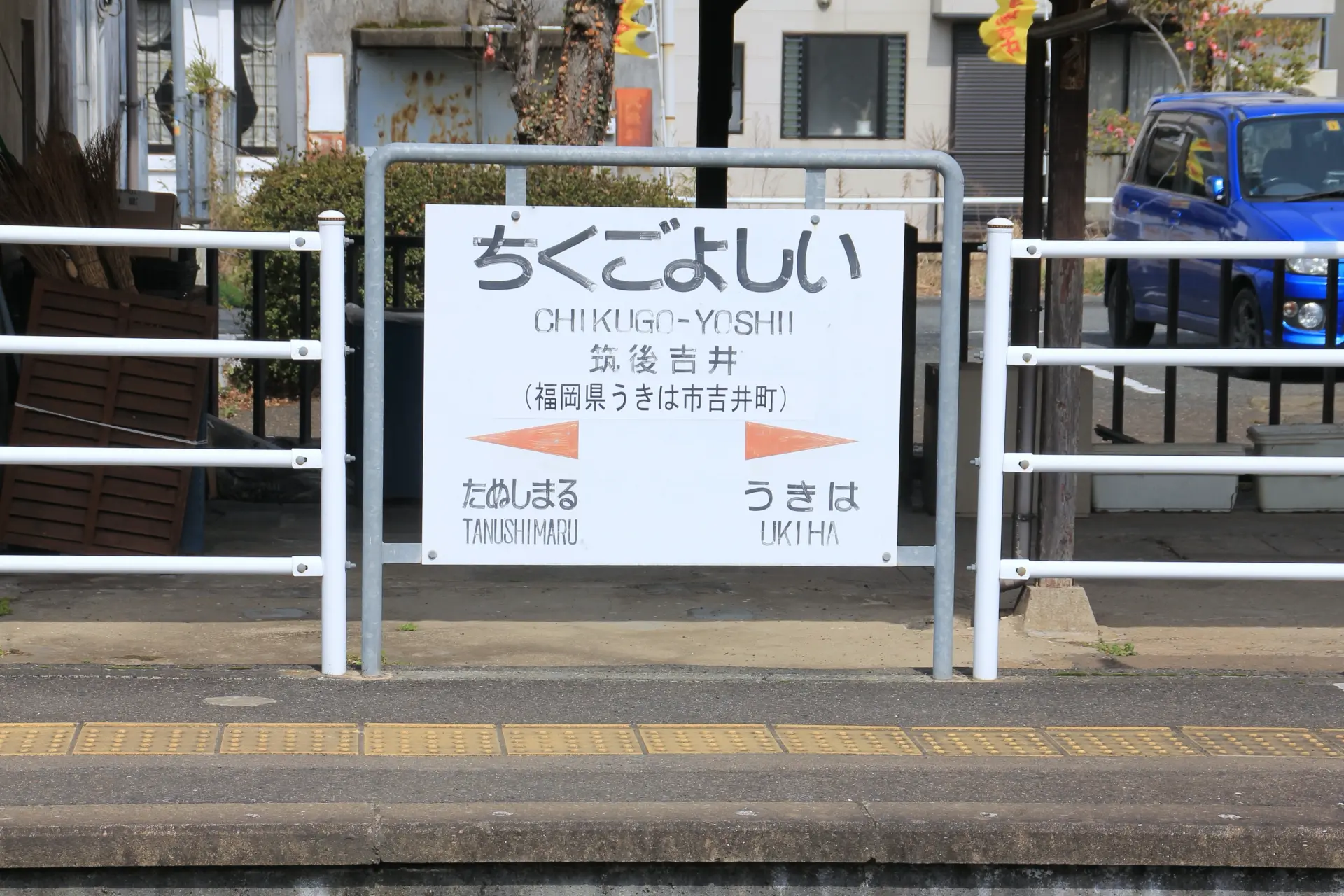
Your Ukiha sightseeing begins at JR Kyudai Line’s “Chikugo-Yoshii Station.” It’s about a 40-minute limited express ride from Hakata Station, or a direct connection from Kurume Station with no transfers needed. As soon as you step out of the station, you’ll find yourself in an area that still preserves the atmosphere of an Edo-period merchant town.
[9:15] The White-Walled Townscape of Chikugo-Yoshii
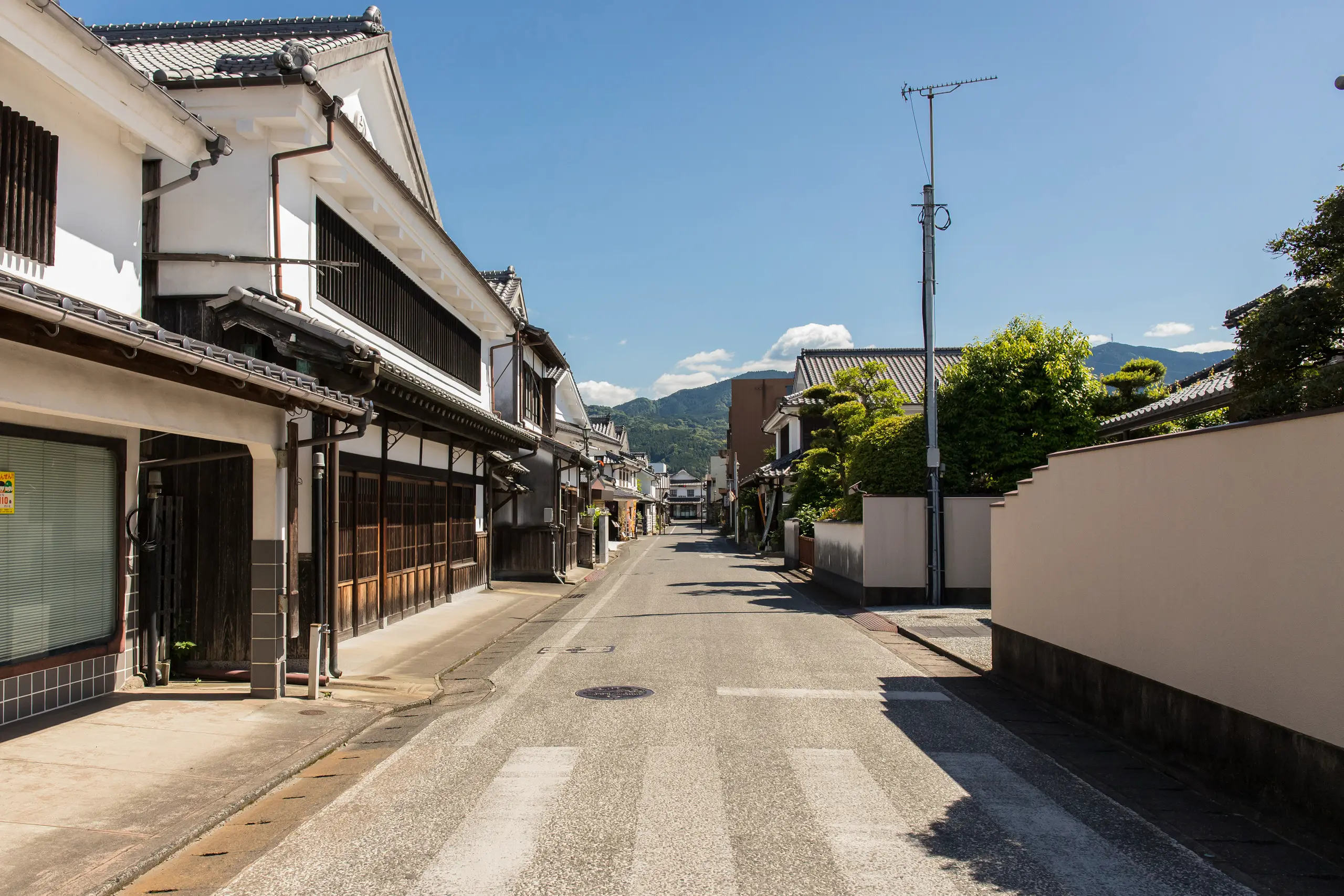
The white-walled townscape of Chikugo-Yoshii flourished during the Edo period as a post town along the Bungo Kaido, the road connecting the castle town of Arima Domain’s Kurume with the shogunate territory of Hita. Merchants who made their fortunes in wax and sake brewing after the Meiji era built tile-roofed, plaster-walled storehouse-style shops, and about 250 traditional buildings still stand today much as they did back then — the area is designated as a nationally Important Preservation District for Groups of Traditional Buildings.
As you walk through town, you can spot “kote-e” — plaster reliefs of Ebisu, cranes, turtles, rabbits, and other auspicious motifs — decorating the exterior walls of old merchant houses, letting you appreciate the craftsmanship of the era. One highlight not to miss is “Ikura no Yakata” (the former Matsuda family residence), the mansion of a wealthy merchant who made his fortune in the wax industry. You can get an up-close look at its lavish construction, including a great room with an open ceiling and a domed bathroom.
The “Ukiha City Yoshii Tourist Hall Kura,” which serves as the area’s hub, offers multilingual tourist maps as well as electric-assist rental bicycles. Guided walking tours led by local guides (2,000 yen per guide, about 2 hours) are also held daily — if you have time, joining one will give you a deeper understanding of the town’s history. The streets along the Bungo Kaido have no utility poles, preserving the cobblestone paths and canal-side atmosphere just as they were, making it a wonderful place for a leisurely, photo-filled stroll.
2. Discovering Ukiha’s Culture and Art
[10:00] MINOU BOOKS
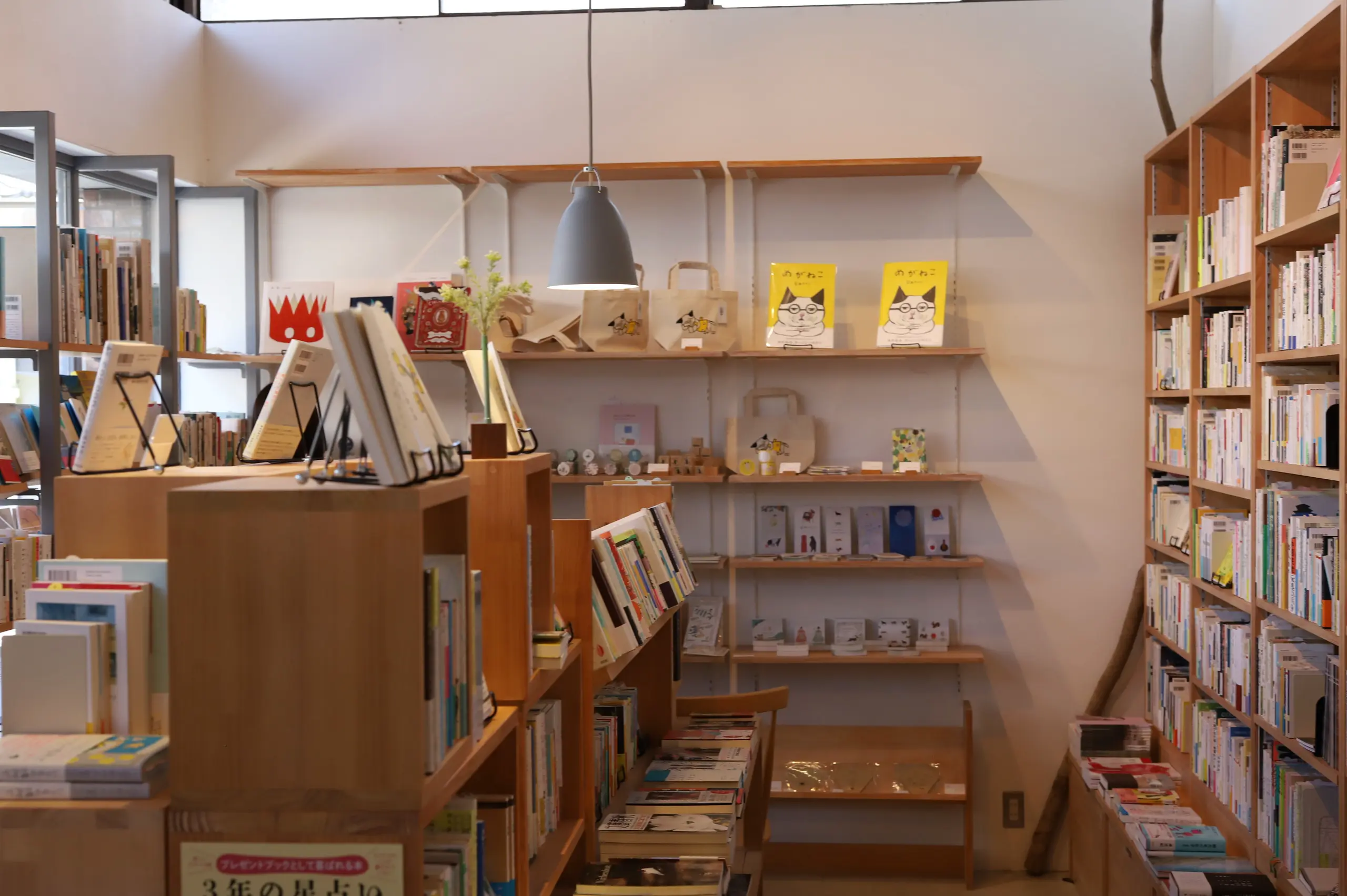
Tucked in a corner of the white-walled townscape is “MINOU BOOKS,” a bookshop with an attached cafe. It carries a carefully curated selection focused on books about everyday life — clothing, food, and shelter — alongside art, design, essays, and picture books, all chosen from the owner’s unique perspective. The shop is also rich in independently published titles and personal “little press” zines you won’t easily find at large chain bookstores, making it a paradise for book lovers.
The warm, wood-toned interior includes a cafe space where you can sip specialty coffee or enjoy locally made baked treats while slowly reading a book that’s caught your eye. It’s the perfect quiet, Ukiha-style spot for a break during your travels.
[11:00] Shigatsu no Sakana (April’s Fish)
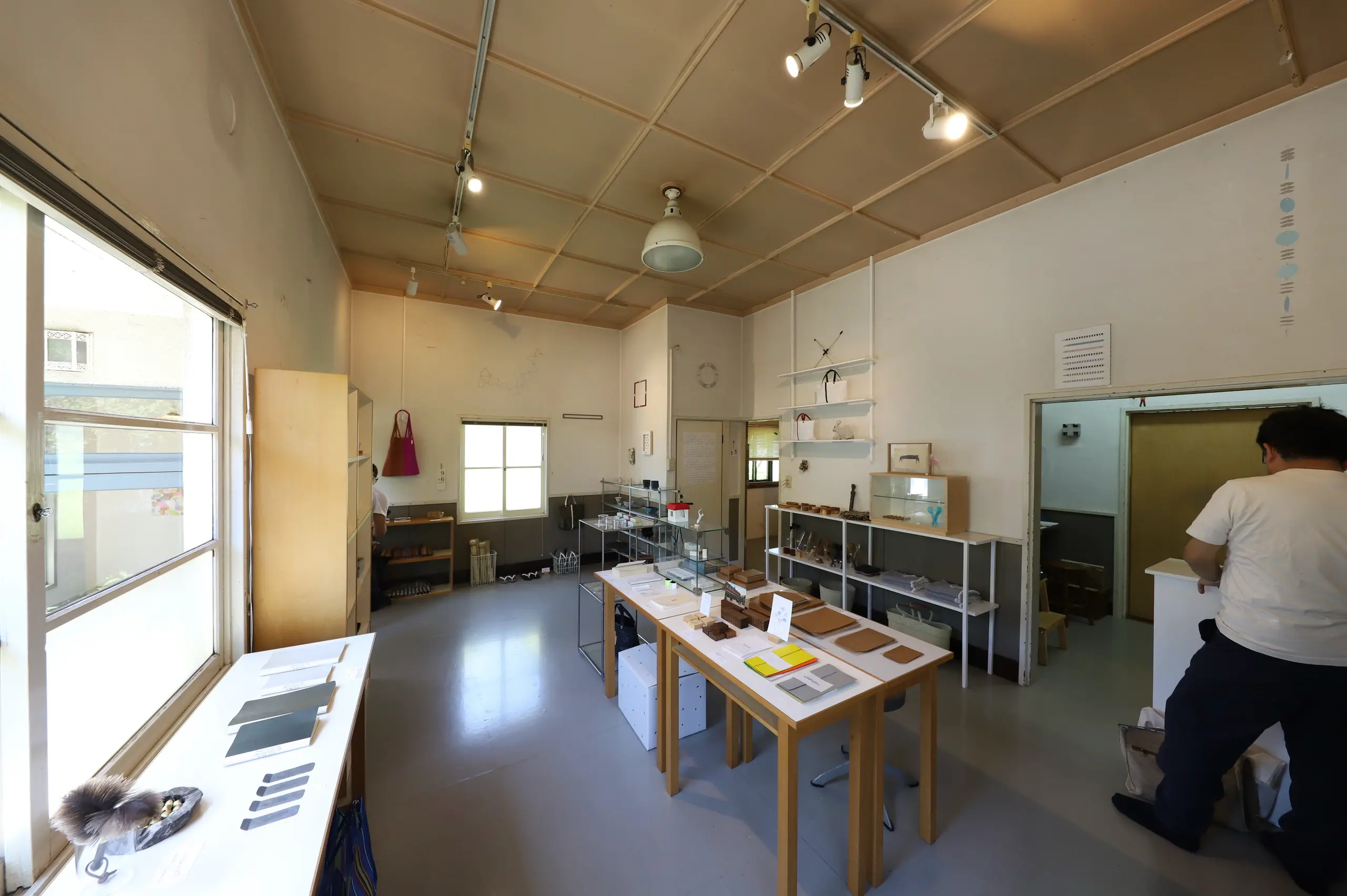
A short walk down a side street from MINOU BOOKS brings you to “Shigatsu no Sakana,” a gallery and general store run by wire artist Masao Seki. Housed in a whitewashed building renovated from a former dental clinic dating to the Showa 30s (1950s–60s), it quietly displays delicate handcrafted wire art alongside antiques gathered from Japan and abroad.
The three-dimensional wire sculptures, shaped from a single continuous line into animals and everyday objects, are charming in how the shadows they cast shift with the angle of the light. Since each piece is handmade, no two have quite the same expression, making it fun to search for your own favorite. It’s a nostalgic yet refined space where you can forget the bustle of daily life for a while.
[11:45] Kawasemi Danish
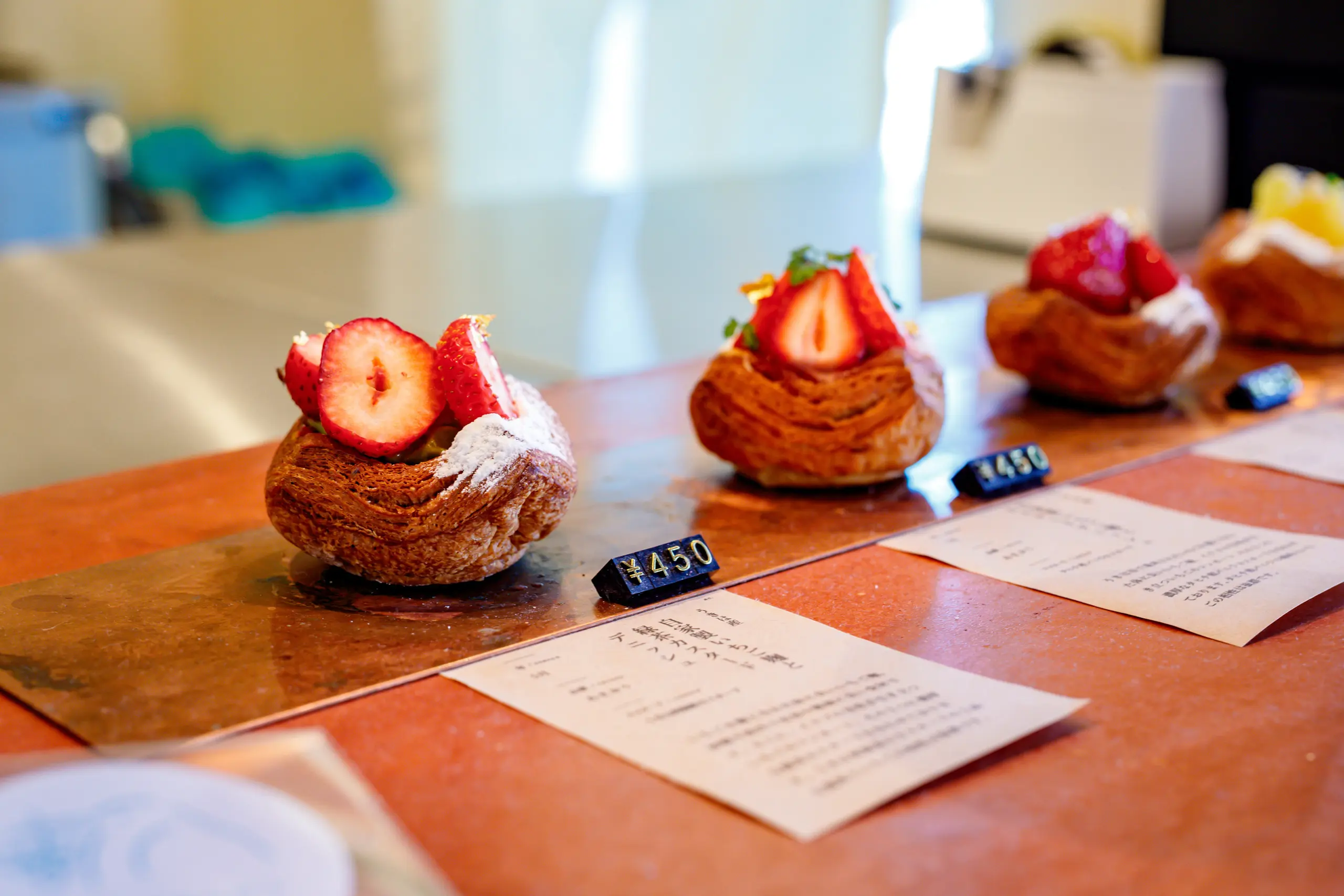
If you’re feeling a bit peckish from your stroll, head to “Kawasemi Danish,” a shop with sweeping views over the white-walled townscape. It’s known for its Danish pastries, generously topped with fresh, local Ukiha fruit. The shop’s name comes from the kingfisher (“kawasemi”), Ukiha City’s official bird and a symbol of its beautiful natural environment.
We recommend enjoying a seasonal-fruit Danish alongside locally roasted coffee or tea while taking in the view of the white-walled townscape through the shop’s large windows. Taking your Danish to go and snapping photos with the white-walled streets as a backdrop is also a popular way to enjoy it. Pastries sell out once they’re gone, so an early visit is a safe bet if you have your heart set on trying one.
3. A Spectacular Photo Spot! Ukiha Inari Shrine
[13:00] Ukiha Inari Shrine
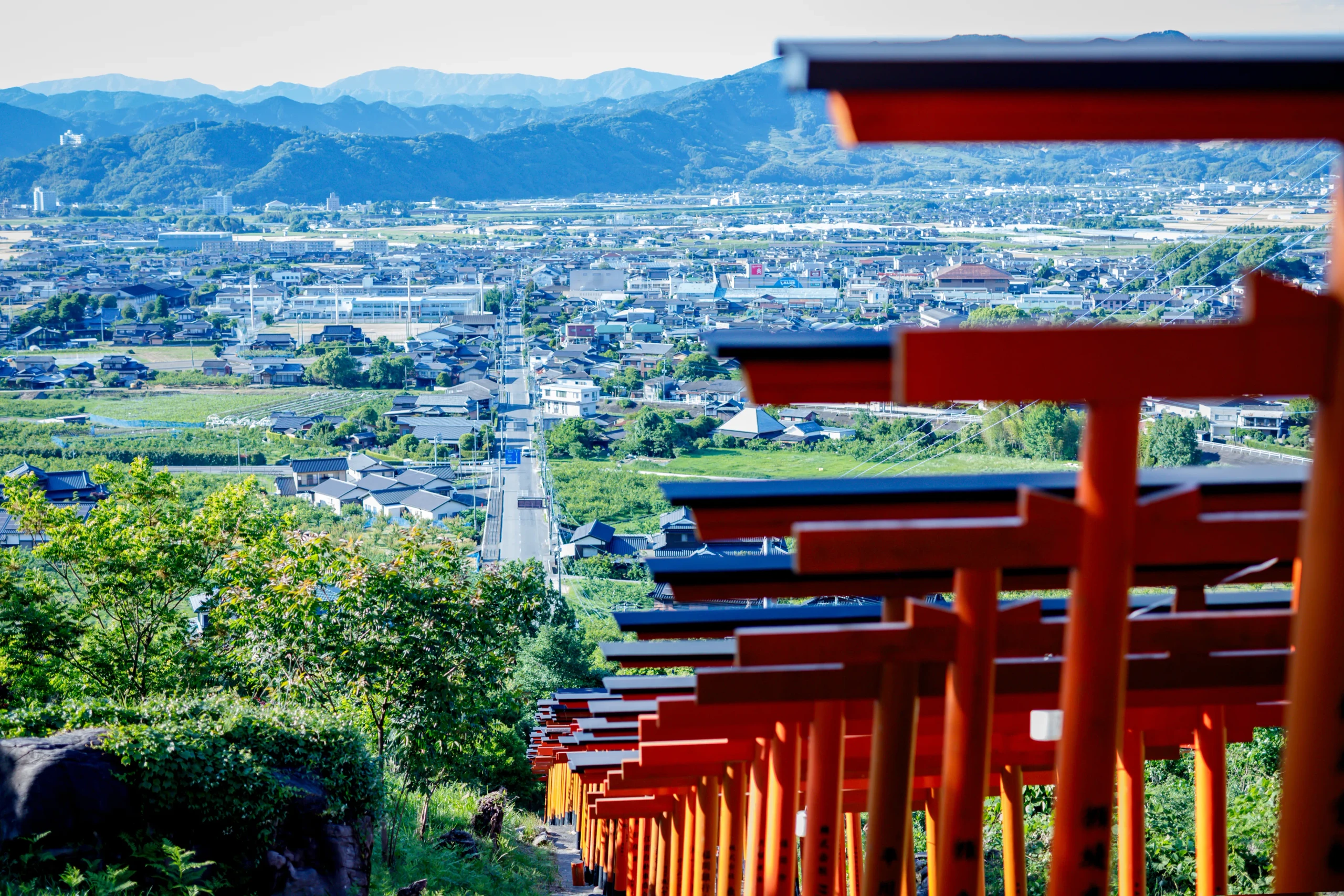
After lunch, take the train from Chikugo-Yoshii Station to “Ukiha Station” and head to “Ukiha Inari Shrine,” one of Ukiha’s most iconic power spots. It’s about a 20-minute walk from Ukiha Station. The shrine was built in 1957 by inviting a divided spirit from Kyoto’s Fushimi Inari Taisha, and it’s cherished for blessings related to business prosperity, academic success, and health and longevity.
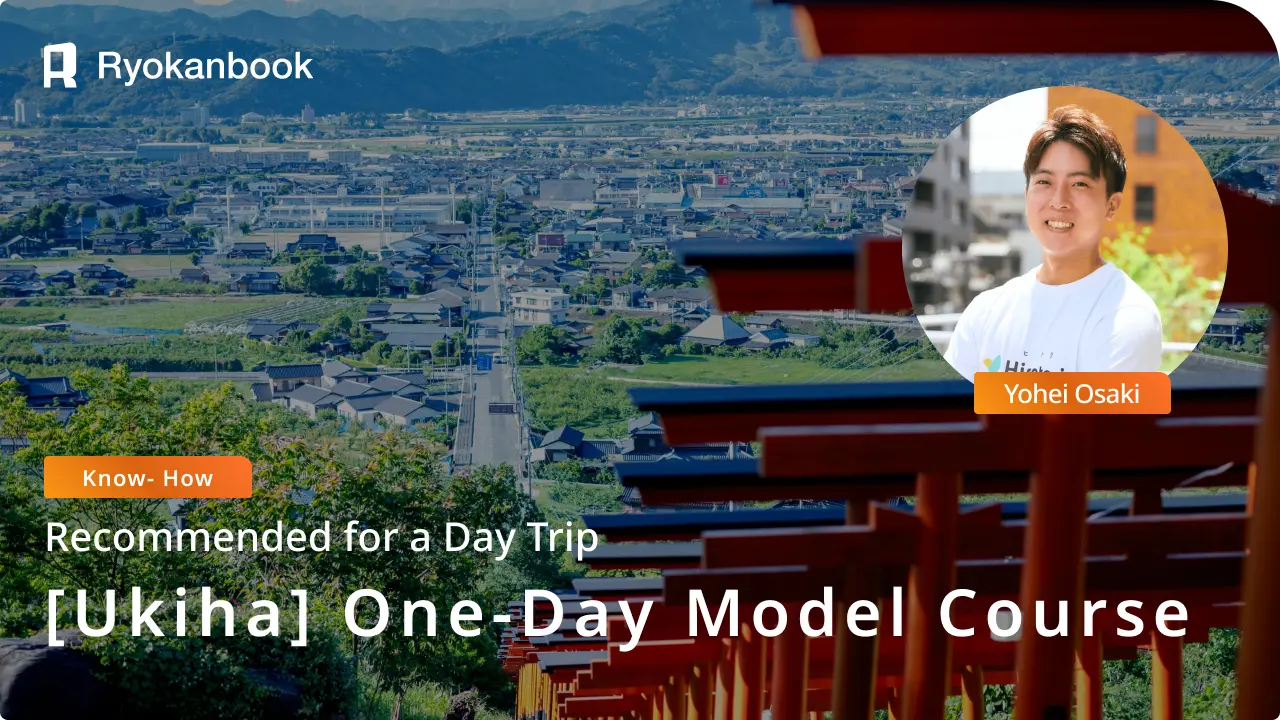
The shrine’s biggest draw is its row of 91 vermillion torii gates running up the mountainside. In recent years it’s become a popular photo spot, gaining attention on social media and drawing visitors from both within and outside the prefecture. As you climb roughly 300 steps, passing through each torii gate one by one, a sweeping panorama of the Chikugo Plain opens up below once you reach the top. On clear days you can see all the way to Harazuru Onsen and the Amagi area, and the contrast of the vermillion gates against the blue sky and green plain is truly breathtaking.
Comfortable sneakers are recommended for the climb. For those less confident in their stamina, there’s also a road you can drive close to the viewpoint. Shrine stamps (goshuin) are available at the shrine office on Sundays, and — somewhat unusually — on weekdays they’re issued at the local supermarket “Sunpit Value.” In spring, the cherry blossoms add another layer of beauty to the scene.
4. Souvenir Hunting in the Fruit Kingdom of Ukiha
[15:30] Michi-no-Eki Ukiha
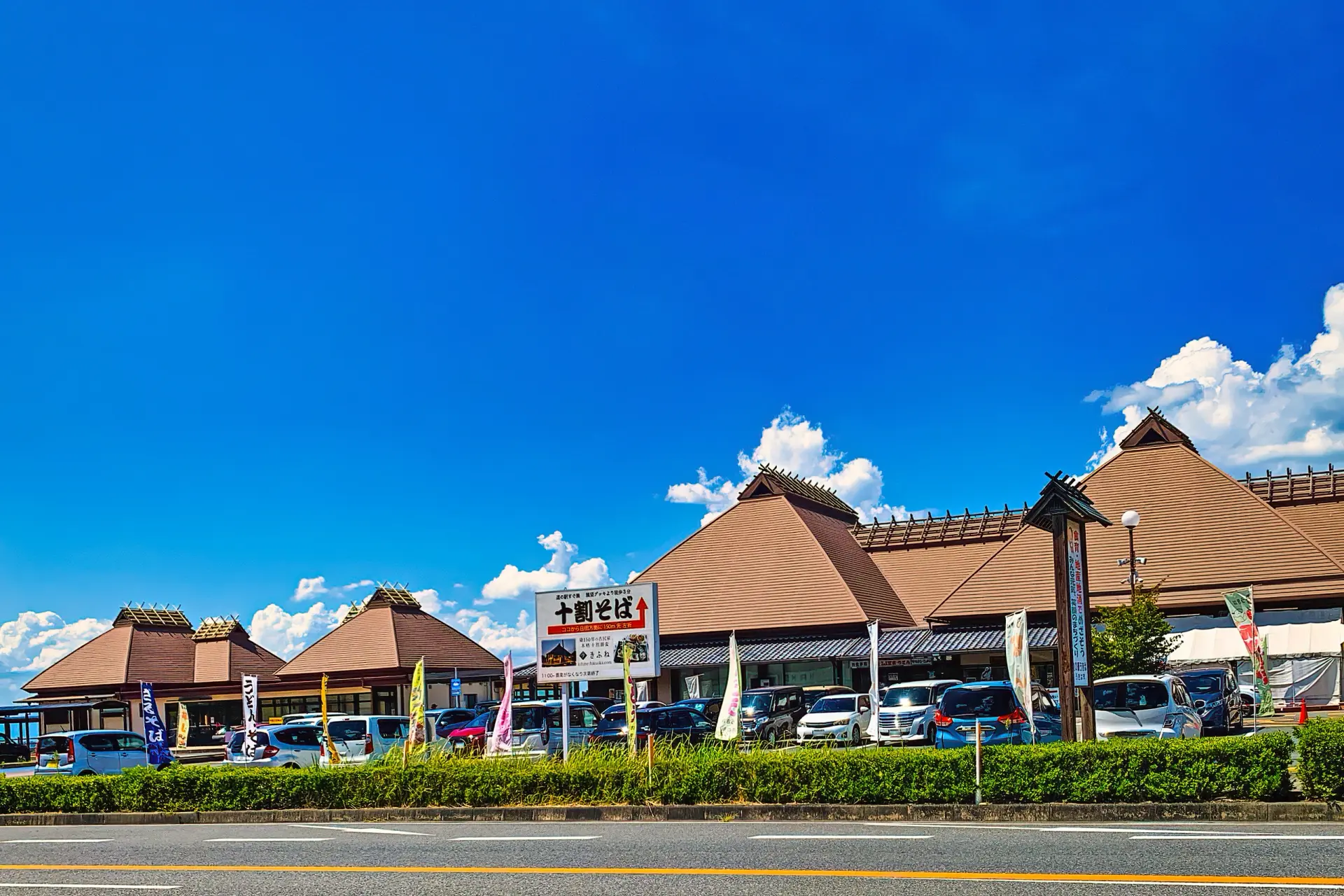
Wrap up your day of sightseeing at “Michi-no-Eki Ukiha,” about a 5-minute drive or taxi ride from Ukiha Station. This roadside station showcases the full charm of Ukiha, celebrated as a kingdom of fruit, and has even ranked first in a travel magazine’s “Kyushu-Yamaguchi Roadside Stations Ranking.”
The building itself is a warm wooden structure modeled on “kudo-zukuri,” a traditional local architectural style also designated as a nationally Important Cultural Property. Built atop a small hill overlooking the Chikugo Plain, its north-facing observation deck offers sweeping views all the way to distant mountains on a clear day.
Inside, you’ll find shelves piled high with seasonal fruit — strawberries, peaches, grapes, pears, persimmons — delivered fresh from local farms each morning. For souvenirs, don’t miss “Ukihan Curry,” an original local product generously made with peaches and Pione grapes, available nowhere else. The on-site restaurant “Nakayoshi Koyoshi” also serves lunch featuring Ukiha-grown ingredients. The adjacent tourist information center “Ukihako” has concierge staff on hand, so it’s worth stopping by on your way out to chat about your trip.
Summary
This one-day Ukiha model course starts at Chikugo-Yoshii Station and packs in the region’s quiet, deep charm — from the historic white-walled townscape to art, a breathtaking shrine, and cuisine unique to a fruit kingdom.
In the morning, stroll the white-walled streets and soak up Ukiha’s culture at MINOU BOOKS and Shigatsu no Sakana, then take a break at Kawasemi Danish. In the afternoon, head to Ukiha Station and enjoy the sweeping views at Ukiha Inari Shrine, lined with 91 torii gates. Finish the day at Michi-no-Eki Ukiha, picking out seasonal fruit and souvenirs to bring home.
Experience a quiet richness born of water and greenery — a different flavor from the neon lights of Hakata — all in a single day, and enjoy a fulfilling day trip with no car required.