



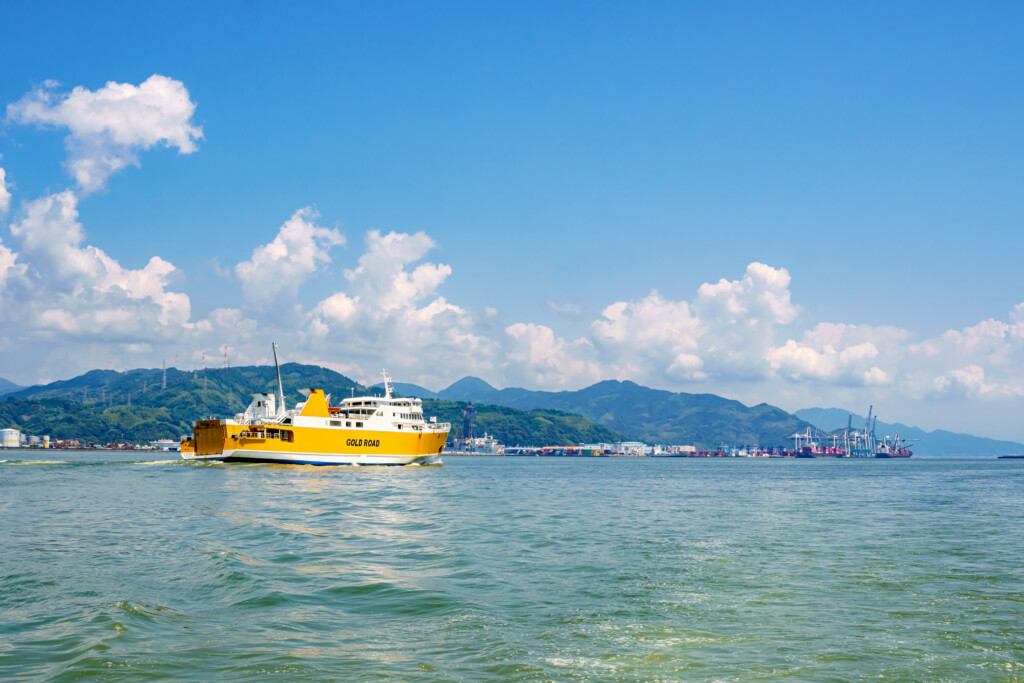
Just two stops and about seven minutes from Shizuoka Station. Mochimune is a port town compactly filled with traditional scenery, a fishing port, and a beach. Scattered across this area are renovated traditional Japanese folk houses (kominka) reborn as private inns, collectively known as “Nihon-iro.”
We sat down with Mr. Hayato Oyamada of CSA, who is engaged in revitalizing the town starting from this inn in what was once a quiet port town, to deeply explore how the inn was born, the unique charm of kominka, and his thoughts on community-cohesive town development.
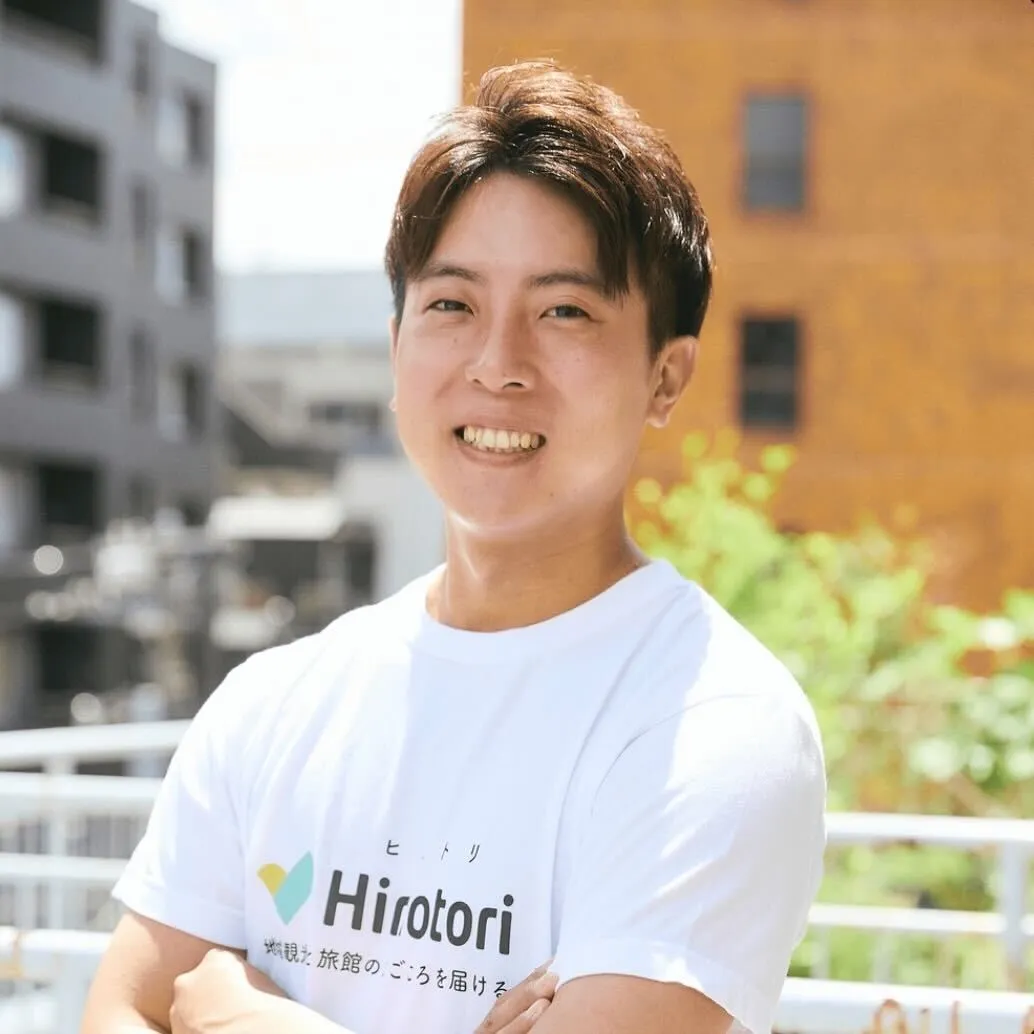
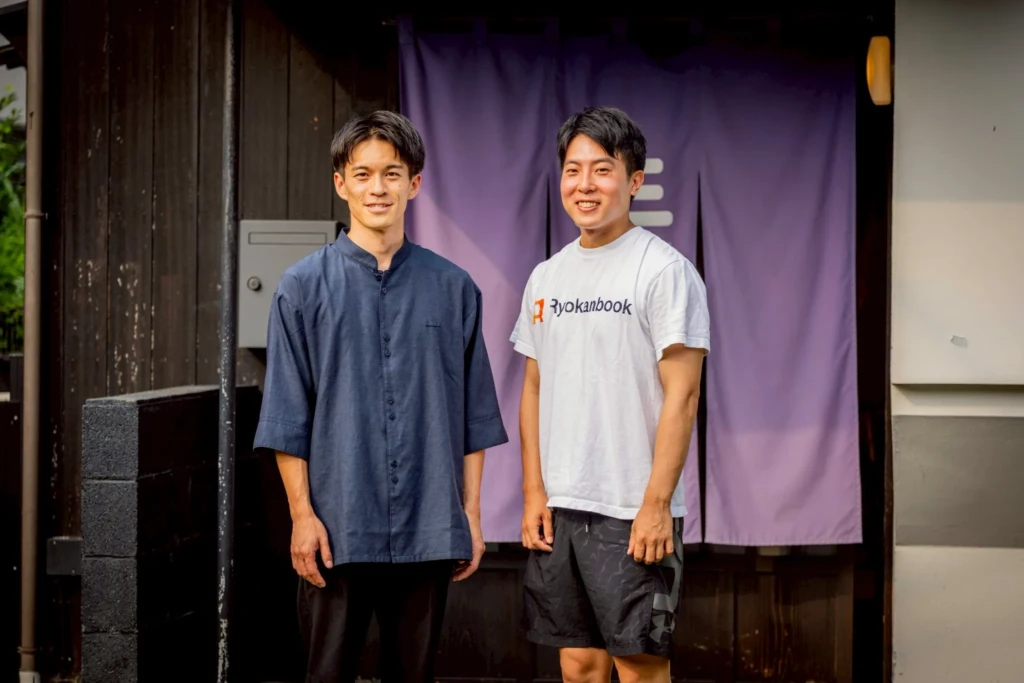
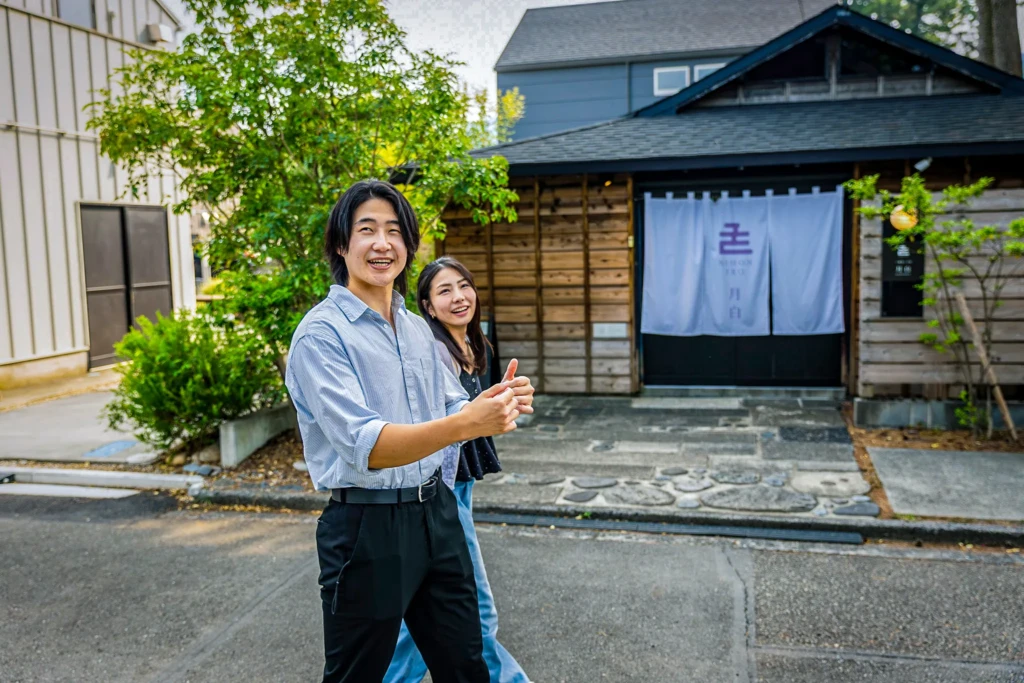
Nihon Iro Manager Shyogo Sugawara (right) and Mr. Osaki (left)
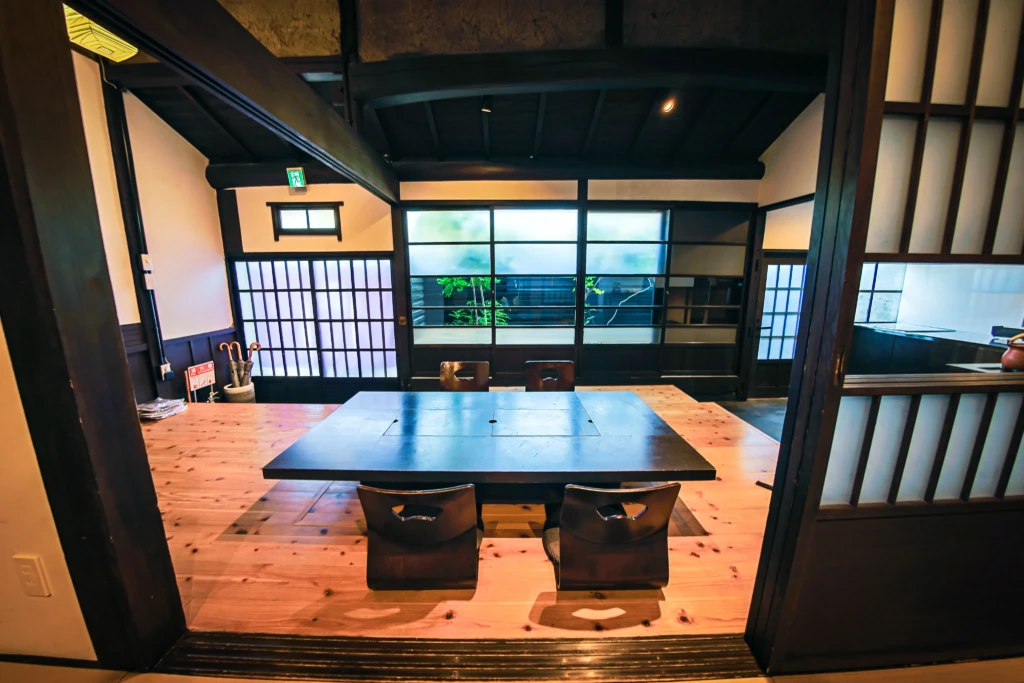
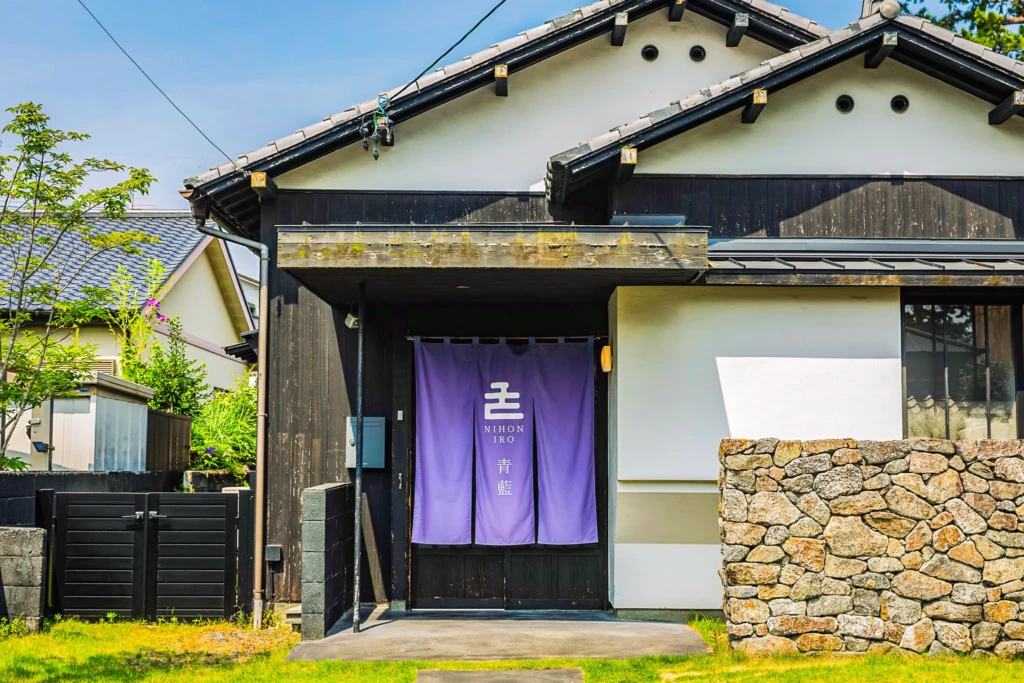
A private inn nestled in the port town of Mochimune, Shizuoka.
Falling in Love with the Potential of the Quiet Port Town of Mochimune
ーーFirst, please tell us about the characteristics of Mochimune and what prompted you to open “Nihon-iro” here.
Mr. Sugawara: Mochimune is originally a small port town that retains its old-fashioned scenery. Its biggest feature is that various elements like the fishing port and the beach are tightly packed into a compact area.
The trigger was our company president moving to Mochimune about five years ago. After living here, he felt the potential of a place that is only two stops away from Shizuoka Station but is completely un-touristy. The origin of “Nihon-iro” was when our president bought a kominka that had no buyers and was on the verge of being demolished, saying, “Let’s make this a private inn first.” From there, we gradually invested in building hot springs, commercial facilities, and restaurants, which led to its current form.
A “Decentralized Private Inn” Where Anyone of Any Generation Can Relax Freely
ーーPlease tell us about the concept and features of “Nihon-iro.”
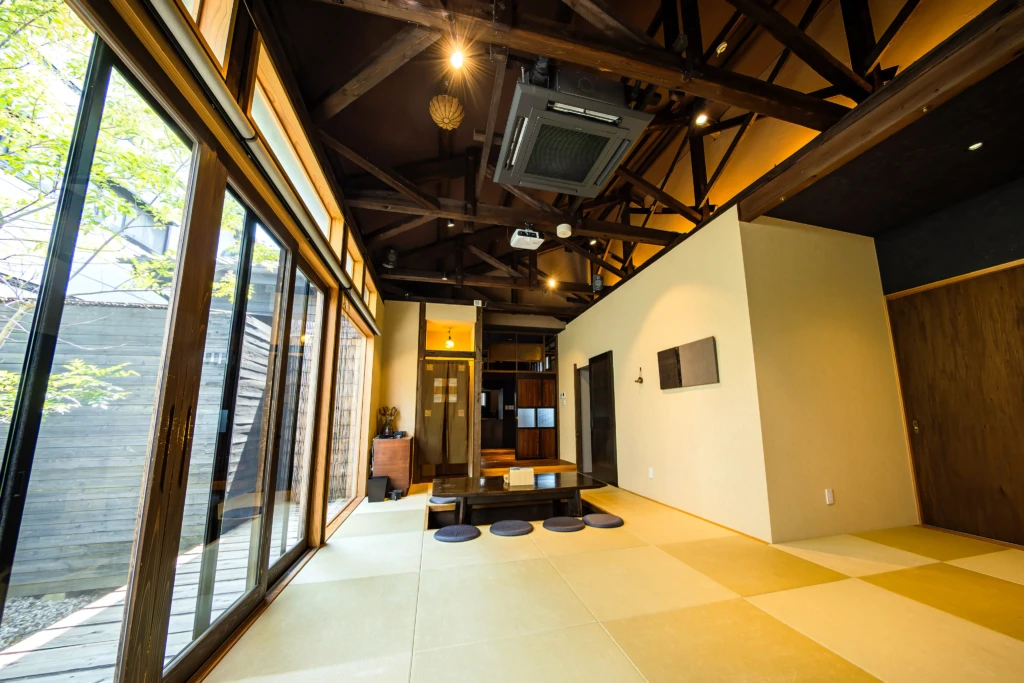
Mr. Sugawara: Decentralized accommodations are increasing now, but they were still rare nationwide back then. The private inn style offers a high degree of freedom, allowing couples or large families of two or three generations to stay together in the same space. A major feature is that anyone, regardless of age, can freely use it to match their own style.
A Special Dinner Around the Irori Hearth and a Warm Breakfast Made by Local Mothers
ーーCould you tell us about the meals? What is the dinner style?
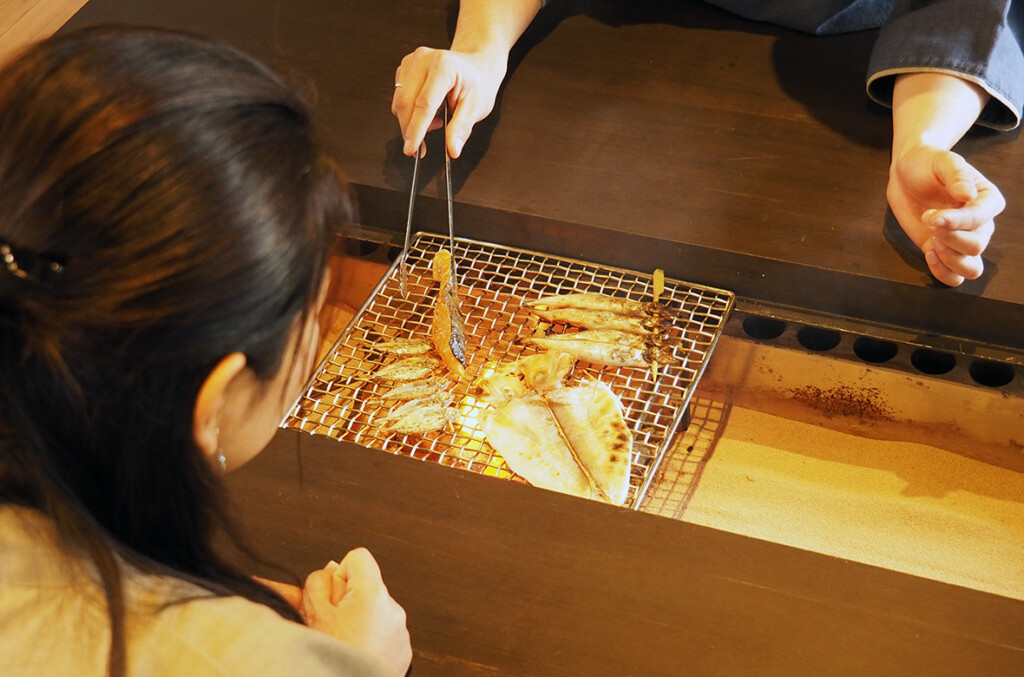
Mr. Sugawara: For dinner, guests grill their own ingredients using the irori (sunken hearth) or shichirin (charcoal grill) in their rooms. We adopted this so guests can experience the extraordinary nature of a kominka. The ingredients include meat, dried fish caught at the nearby port, and vegetables. Basically, everything is sourced from butchers, dried fish shops, and greengrocers in the Mochimune area.
ーーThe breakfast is described as “Breakfast made by local mothers.” What is it like?
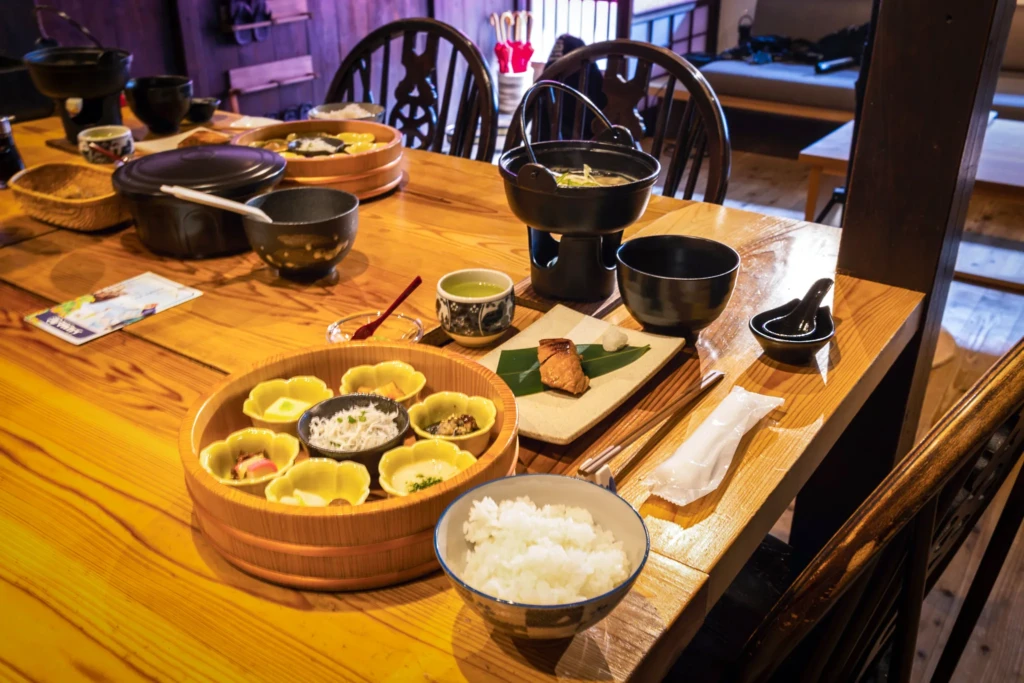
Mr. Sugawara: Local “mothers” deliver and serve a handmade breakfast directly to the guests’ rooms. Usually, there are few chances to interact directly with locals at a regular inn, but here, communication like “Where did you go yesterday?” or “Where are you heading today?” is born. We hope guests enjoy this warm interaction with locals who know Mochimune inside out as one of their special experiences.
Feeling the Changing of the Seasons: The Origin of the Name “Nihon-iro”
ーーWhat is the origin of the name “Nihon-iro”?
Mr. Sugawara: Japan has a beautiful tradition of comparing subtle seasonal changes to colors. Mochimune also has the sea, a fishing port, and old streets, with people’s lives breathing within them. Just as people in the past found various colors like “the color of the autumn sky” or “the color of the summer sky,” we named it “Nihon-iro” (Japanese colors) hoping that each guest will find the “colors” they feel as they are. We want guests to take their time to enjoy nature, the changing seasons, and those subtle differences.
ーーThe space in the rooms is also wonderful, making the most of the good points of a kominka.
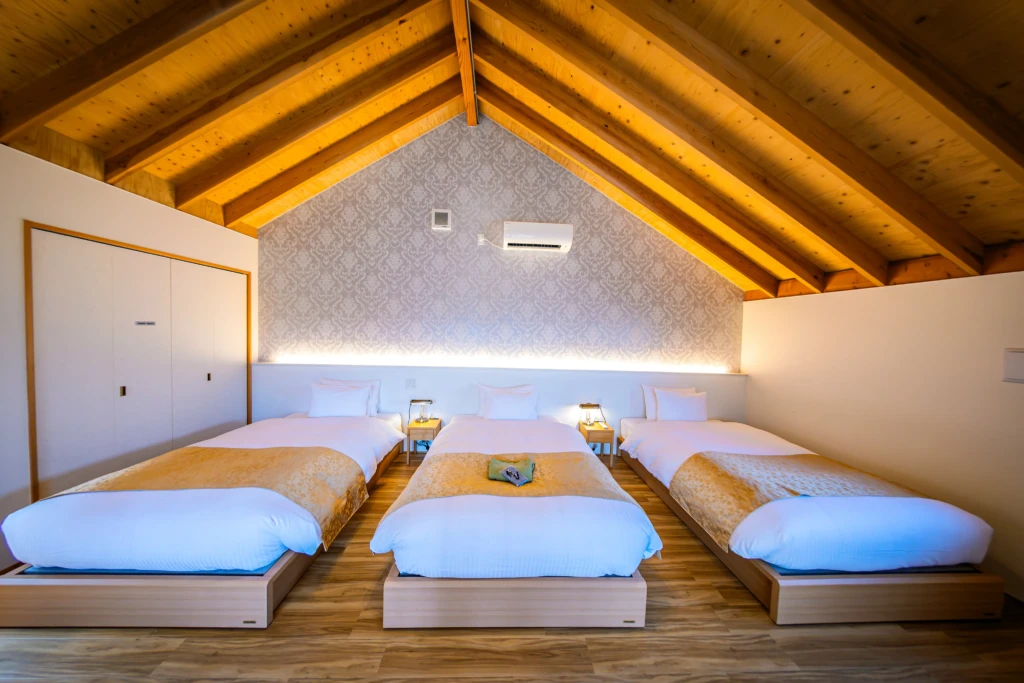
Mr. Sugawara: Thank you. We use the original beams as they are, and reuse pillars that couldn’t be used structurally as art objects, preserving and utilizing the fittings of that time. The room called “Seiran” is pet-friendly and has a spacious garden. Pets can run around freely, and guests can enjoy a BBQ, relaxing in a spacious area.
Connecting Town and People, Broadcasting Mochimune’s Charm as a Whole Region
ーーDo you have a recommended way to spend time in Mochimune?
Mr. Sugawara: Taking it easy and relaxing is the best. Just strolling through the town without looking at a map is very interesting. You might discover, “Why is this building here?” or find cats in the alleys; scenes that look just like a cut from a Japanese anime are everywhere. We also offer Tuk-Tuks for transportation between the inn, the station, and the hot springs, so we definitely want guests to enjoy that too.
ーーHow do you want the town of Mochimune to develop in the future?
Mr. Sugawara: Mochimune has many attractions like inns, hot springs, craft beer, and beaches, but they still exist as “dots” and haven’t been fully promoted as a cohesive unit. In the future, I want us to be a presence that can propose model courses connecting them and attend to guests by saying, “After going here, it’s perfect to go there.”
ーーWhat do you value in your relationship with the local people?
Mr. Sugawara: A single company cannot move a town by itself. Understanding from local residents, cooperation with other businesses, and collaboration with the government are essential. Initially, there was opposition to the changes, but we have built relationships while producing results. Now, even when our Tuk-Tuks are driving around, people warmly watch over us, saying, “Oh, it’s those guys again” (laughs). I think the most important thing is to continue facing the local people honestly, like making sure to greet everyone daily and actively using local ingredients.
“Nihon-iro” stands as if blending into the scenery of the old-fashioned port town. Waiting there was a space where you can taste the extraordinary while feeling the breath of a kominka, and an experience where you can touch the warmth of the locals.
“We want to be an inn that is easy to use for any guest, regardless of age,” says Mr. Oyamada. From his posture of walking together with the region, involving the whole town of Mochimune, a strong desire to deliver irreplaceable time to the people who visit here was conveyed.
Why not step slightly away from the everyday and embark on a journey to find your own “color”? We highly recommend visiting “Nihon-iro” in Mochimune.
NIHON IRO
View Details