



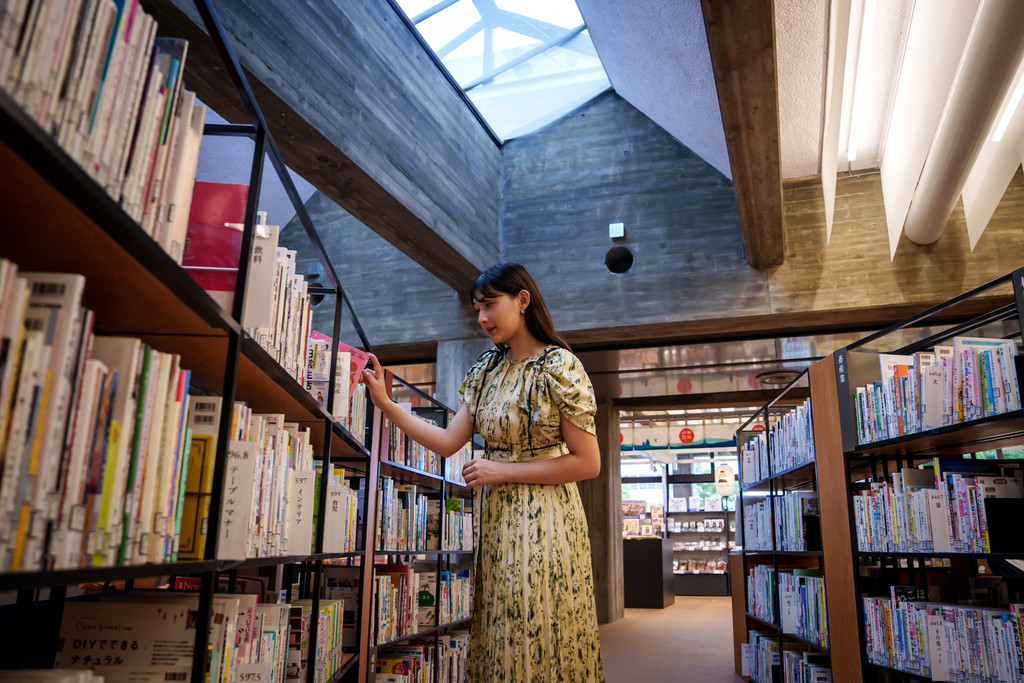
Iga City, Mie Prefecture. In this town known as the homeland of the ninja and the birthplace of Matsuo Basho, a symbol of “adaptive reuse architecture” unique in the world was born: “Hakusen,” Japan’s first hotel integrated with a municipal library.
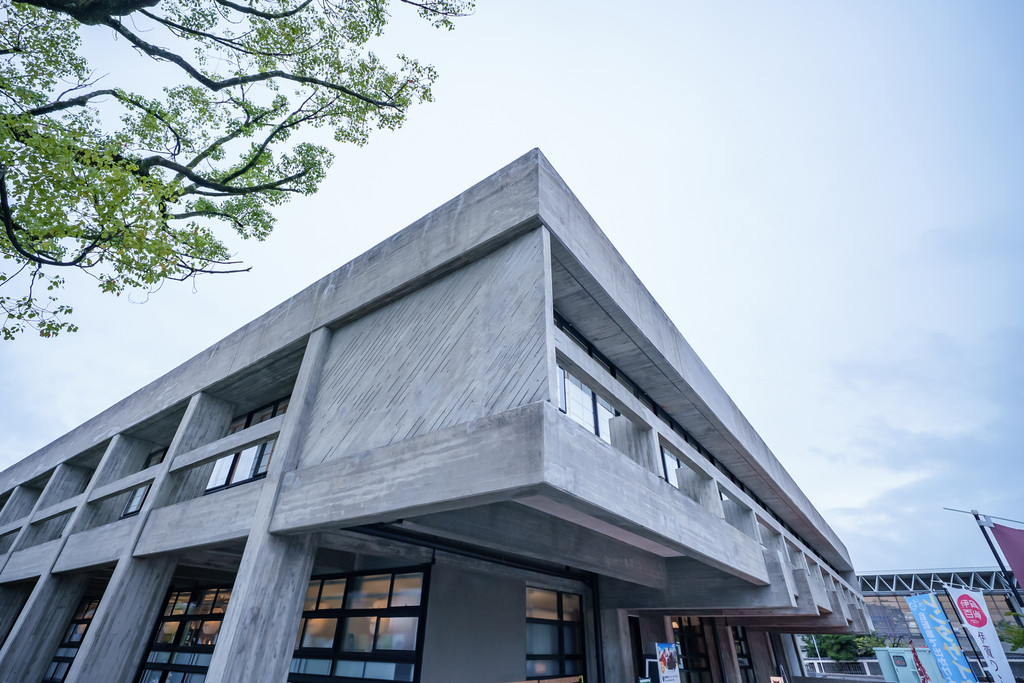
The core of this hotel is the former Iga City Hall, designed by the master of modernist architecture, Junzo Sakakura. Although it once faced the threat of demolition, passionate preservation movements by citizens who loved this building moved the local administration, realizing a revival through a public-private partnership (PPP). Today, it houses the “Iga Municipal Ueno Library” on the 1st floor and a 19-room hotel on the 2nd floor, connecting regional memories to the future.
This time, we spoke with Mr. Hosokawa, the general manager who has been involved in this project since before its opening. We delve into the “architecture for humans” philosophy residing within this masterwork, as well as Mr. Hosokawa’s passion for inviting guests beyond the framework of a hotel into the entire town.

Hakusen, Iga, Mie Prefecture.
An inn in the birthplace of Matsuo Basho where you can savor Iga’s local heritage and history. It is popular as Japan’s first hotel integrated with a municipal library.
Junzo Sakakura’s Philosophy and the Citizen Drama That Saved It from Demolition
— Japan’s first hotel integrated with a municipal library. This is a very challenging attempt, but we feel a deep affection for the architecture in the background of this place being protected by “citizen power.”
Hosokawa: That’s right. Since this was the former city hall, it is a deeply meaningful place where citizens have marked life milestones. Demolition was decided once, but the voices of citizens saying “we must not lose this architecture” and the intensity of the preservation movement moved the administration, turning the helm toward revival. Without that passion, we would not be able to welcome guests like this today.
— How was Junzo Sakakura’s philosophy of “architecture for humans” passed on during the renovation?
Hosokawa: Sakakura’s modernist architecture features flow lines where the outside and inside connect naturally, gently enveloping the movements of the people gathering there. “MARU.architecture,” who handled this renovation design, brilliantly updated it with modern sensibility while respecting the powerful framework designed by Sakakura. When I first saw this building, the reason I felt a thrilling sense of its overwhelming presence and potential was that the comfort “for humans” echoing across generations was breathing in every corner.
The Luxury of Sleeping in the Former Mayor’s Office and the Melody of “Goin’ Home” Echoing in the Hallway
— The idea of turning the “former mayor’s office” into a suite is also very unique.
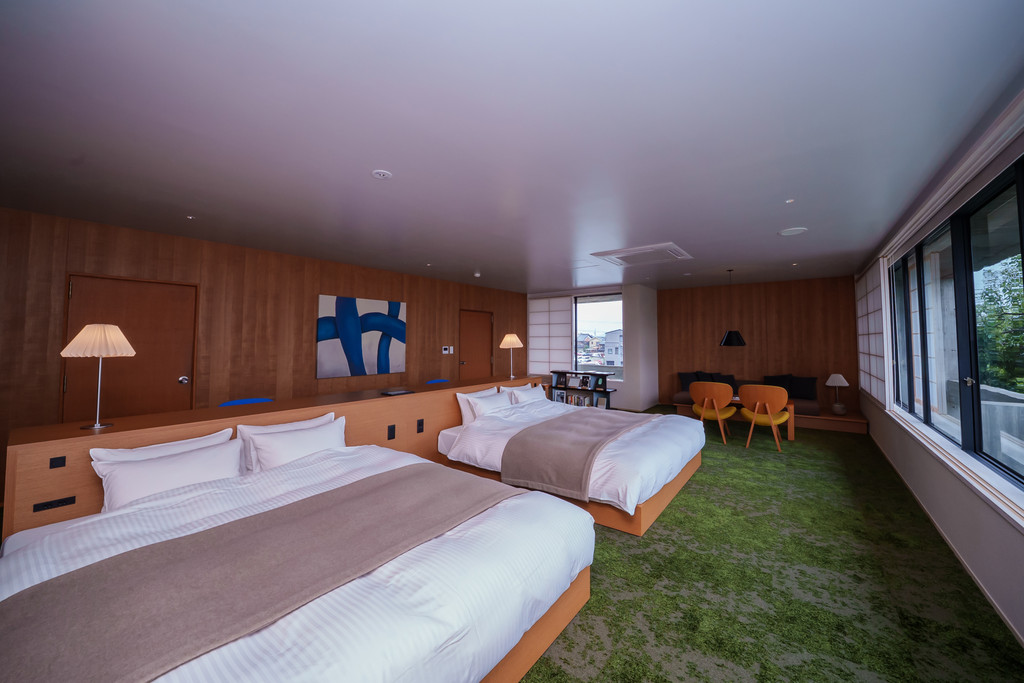
Hosokawa: Yes, we converted the space that was actually the mayor’s office directly into a guest room. Combined with the adjacent room that used to be the secretarial division, it forms a suite, and the sign saying “Mayor’s Office” from back then still remains at the entrance. Passing through the same lines of movement as the mayor of that time and stepping through the frame of the heavy door should be a special moment for guests. In fact, this door frame was completely removed during construction, stored carefully, and then restored to its original position without a millimeter of discrepancy. That is a unique commitment of adaptive reuse architecture to preserve the opening size and texture of those days.
— Dvořák’s “Goin’ Home” playing through the building just now also has a somewhat nostalgic ring.
Hosokawa: This is a tradition continuing from the former city hall era. It plays every day at 6:00 PM, and the hotel actually manages this operation on behalf of the city. The settings are in the mechanical room, and on rare occasions when a different song plays, we hurriedly run to the mechanical room to fix it (laughs). It’s a very analog and human scene, but this is also a unique aspect of a public-private partnership facility.
— Is there a best place for guests to listen to this melody?
Hosokawa: I particularly recommend the 2nd-floor hallway, near where the former concession stand and back entrance used to be. It is said to resonate most beautifully right under Guest Room 18. As 6:00 PM approaches, guests gather in the hallway as if waiting for fireworks. Such a nostalgic moment is also a major attraction of Hakusen.
Dropping Anchor in the “Lake of Words”. The Origin of the Name “Hakusen”
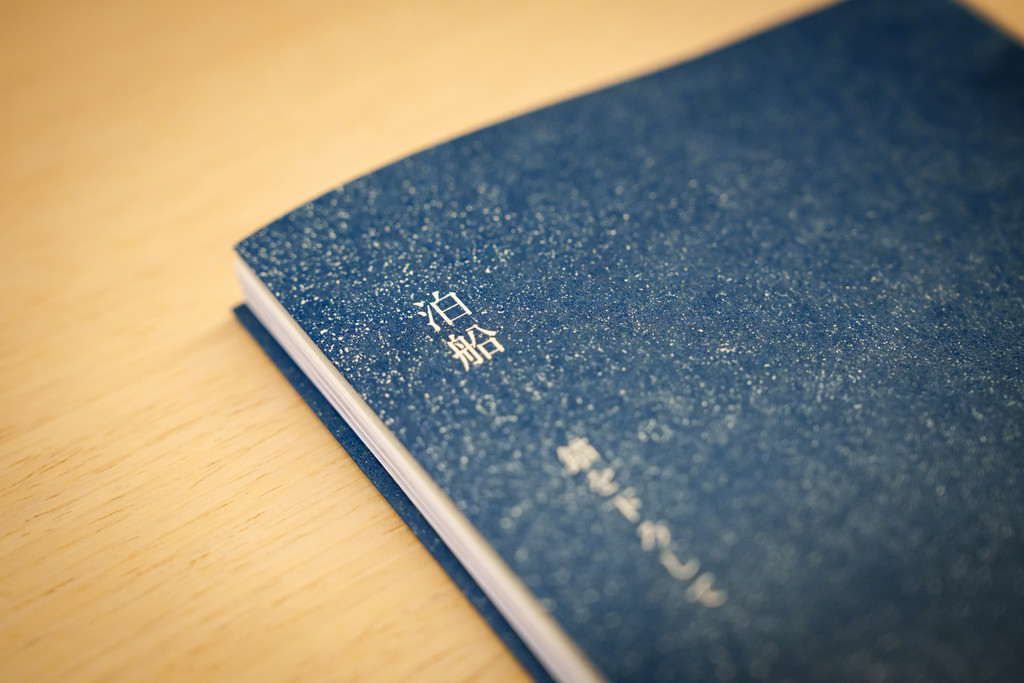
— We heard the name “Hakusen” (meaning “docked ship”) multi-layeredly incorporates Iga’s history and local heritage.
Hosokawa: Iga is the birthplace of Matsuo Basho, and one of the origins is that the characters for “Hakusen” are used in words associated with him. Another reason relates to a geological background: about 4 million years ago, Lake Biwa is said to have been located right here in Iga.
— So the “ancient lake” and “Basho’s words” connect.
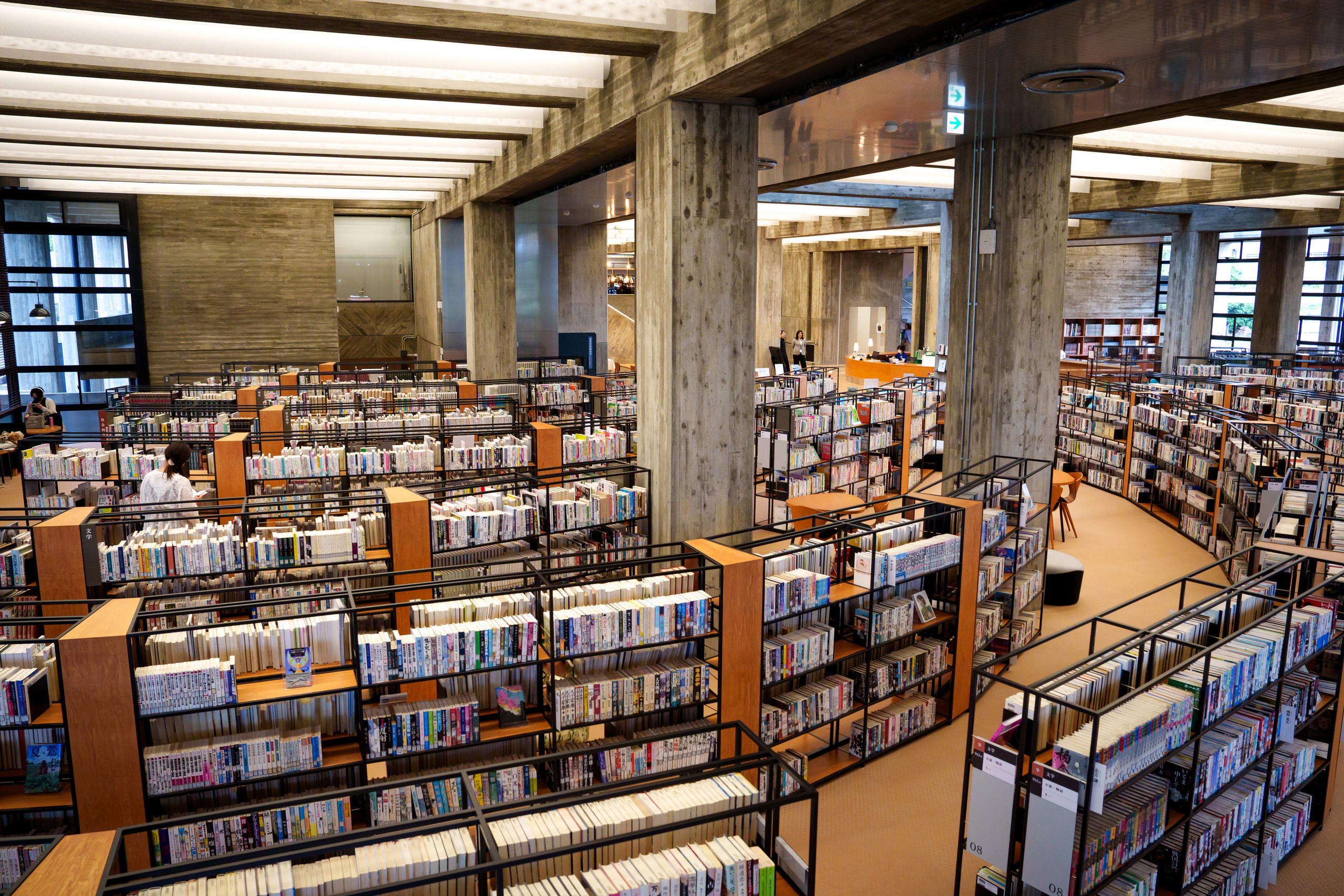
Hosokawa: Indeed. We likened the library downstairs to a “lake filled with words” and positioned this hotel as a ship floating upon it. We envision a stay where travelers drop anchor here and quietly drift upon the sea of words. Symbolic of this is the library reading room, which recreates the former city council chamber. Although the ceiling was once removed due to aging, the design of that time was faithfully reproduced; looking up, you feel as if you are inside the “bottom of a ship.” In the guest rooms, we also provide book selections curated by “Kotoba no Ie” (House of Words), allowing you to immerse yourself in your own story while feeling the connection with the library.
Tours with Gargoyles That Make You Long for Rainy Days
— Please tell us about special content to deepen the stay experience.
Hosokawa: The “In-house Guided Tour (14:00 / 16:00),” in which about 90% of guests participate, is extremely popular. The participation fee is 1,000 yen, but it comes with an original Hakusen badge and water as perks. I think the tour, which explores everything from the building’s exterior to its historical interior design, is irresistible for architecture lovers.
— It’s also interesting that the scenery on rainy days actually pleases guests.
Hosokawa: You can feel the essence of Junzo Sakakura’s design in the “gargoyles (downspouts)” in the courtyard. Normally, downspouts are meant to be hidden, but by intentionally designing them to be visible, an emotion that views rainy days positively is born. The view of water dripping from the gargoyles is truly beautiful, so much so that guests who happen to visit on a rainy day sometimes say, “I was lucky today.” We also plan “Castle Town Walking Tours” with local storytellers, offering experiences to step out of the hotel and touch Iga’s history.
Iga Beef Where You Can “Drink the Fat,” and Taking the First Step into the Town
— Was there anything that surprised you about the “food” experience in Iga, Mr. Hosokawa?
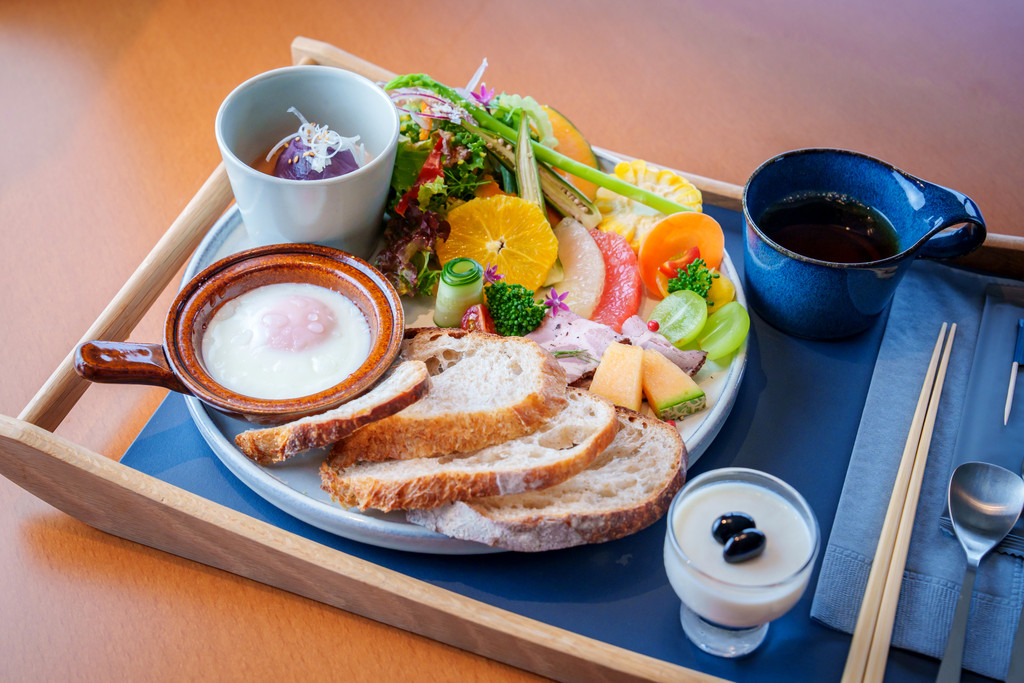
Hosokawa: Since I am someone who came from the outside, the shock when I first ate Iga beef is unforgettable. I’m actually a bit weak with fatty meat, but Iga beef was so fresh that I thought, “I could drink this fat,” and I didn’t get heartburn at all. Iga beef is extremely rare and hardly distributed outside the region, so this freshness is a luxury you can only savor locally. There are also unexpected local specialties like passion fruit, making the depth of its food culture bottomless.
— Not confining such regional charm inside the hotel is the style of “Hakusen,” isn’t it?
Hosokawa: Exactly. We consider this place not merely an accommodation facility, but the “first step” to enjoying the town of Iga. Matching each guest’s taste, we want to suggest, “This item at that shop over there is delicious,” and send them out into the town. Citizens gather at the 1st-floor library, and travelers gather on the 2nd floor. Starting from this intersection, when guests tell us, “One day isn’t enough, I definitely want to come again,” that is our greatest joy.
“I am someone who came from the outside, but perhaps I love the current Iga even more than the local staff do.”
In these final words leaked by Mr. Hosokawa, I felt the core of the project was condensed. Rather than preserving Sakakura’s architecture—engraved with citizens’ memories—as a relic of the past, keeping it moving as a “living ship” where travelers drop anchor. That sincere passion breathes new life into what was once the city hall.
“Hakusen” is a new landmark in Iga where local pride and traveler discoveries intersect. Surrendering yourself to this single ship floating upon the “Lake of Words,” you too will surely be captivated by the depth of this town that cannot be fully told in just one night.
Interviewer: Yohei Osaki