



Located along a gorge a short distance from the city center of Aizu-Wakamatsu, Fukushima Prefecture, lies Ashinomaki Onsen. Among the inns there, “Ookawaso” captivates many travelers, known for its spectacular open-air baths modeled after terraced rice paddies and the live shamisen performances echoing through its lobby. In this article, we interviewed President Watanabe, who took over the management of Ookawaso and continues to take on challenges toward his grand vision of not only reforming the inn but also “changing the way Japanese people play.” We heard his passionate thoughts—from the days he ran around to earn the trust of the frontline staff, to his strong belief in circulating money within the local community, and his new initiatives to convey Aizu’s culture.
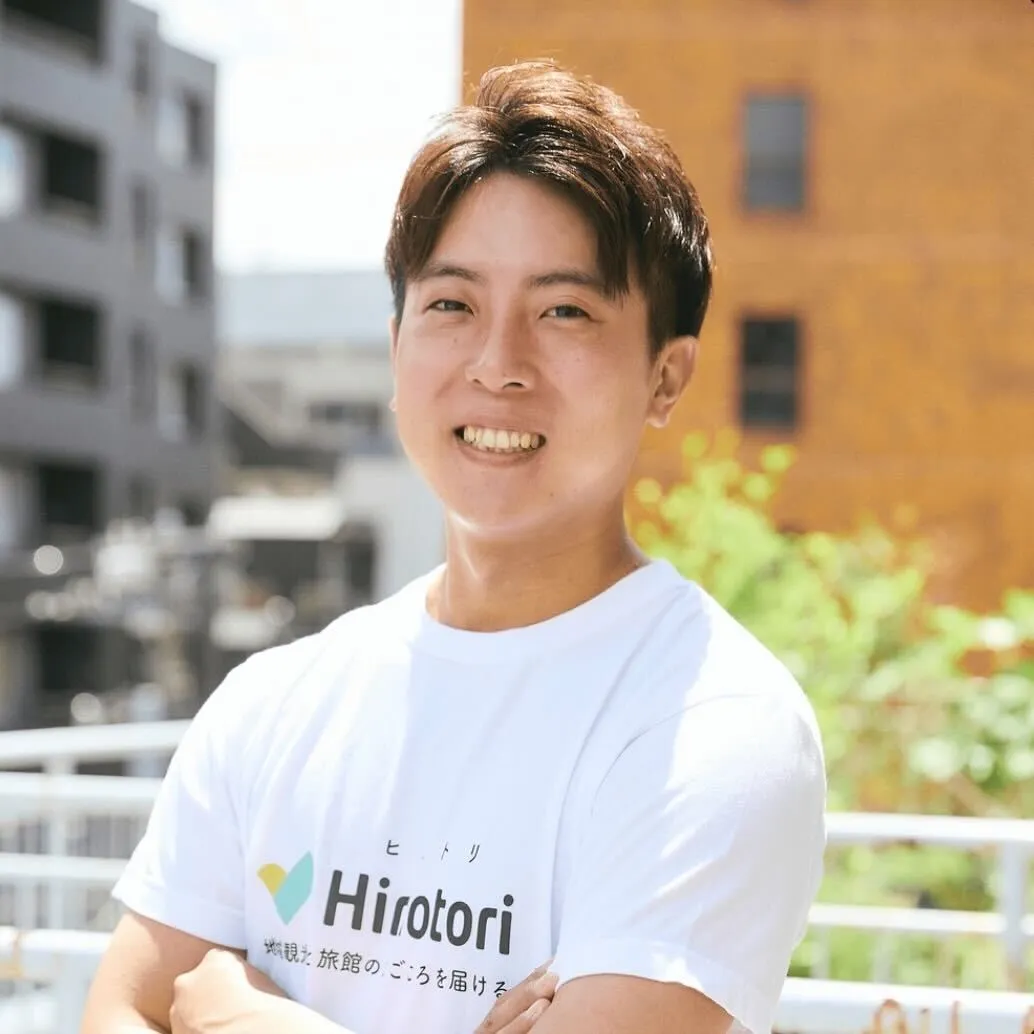
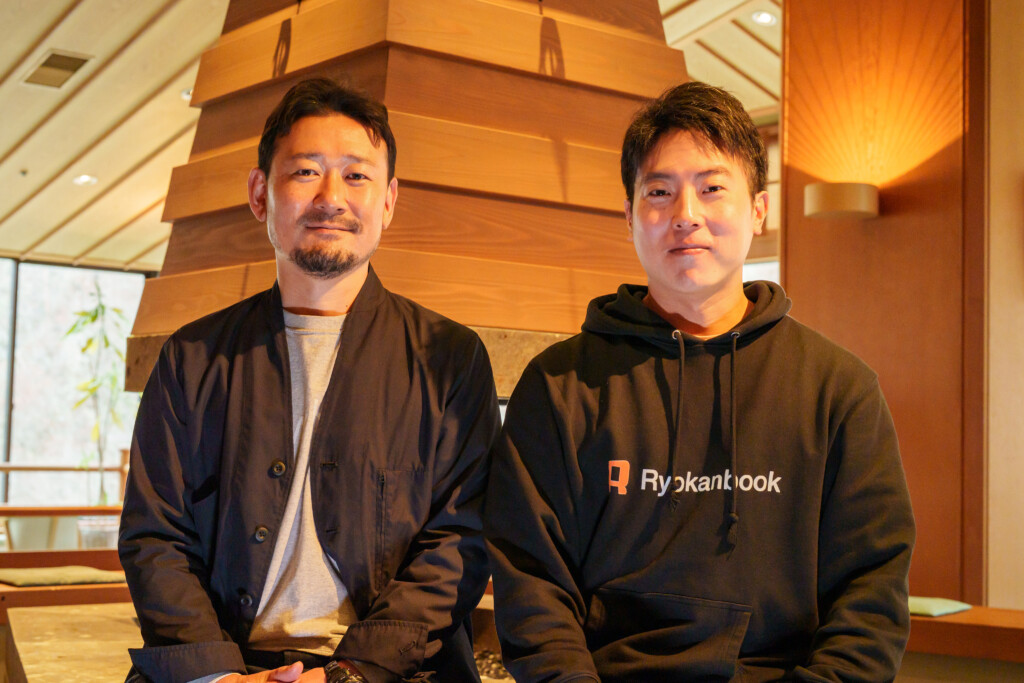
Okawa-so President Watanabe (right) and Oosaki (left).
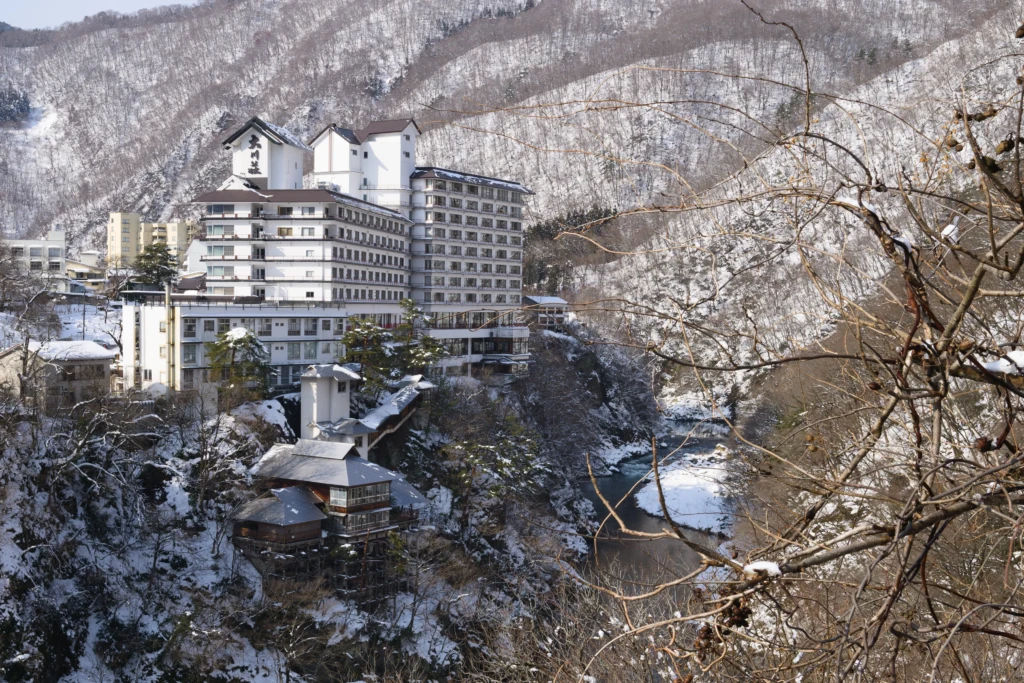
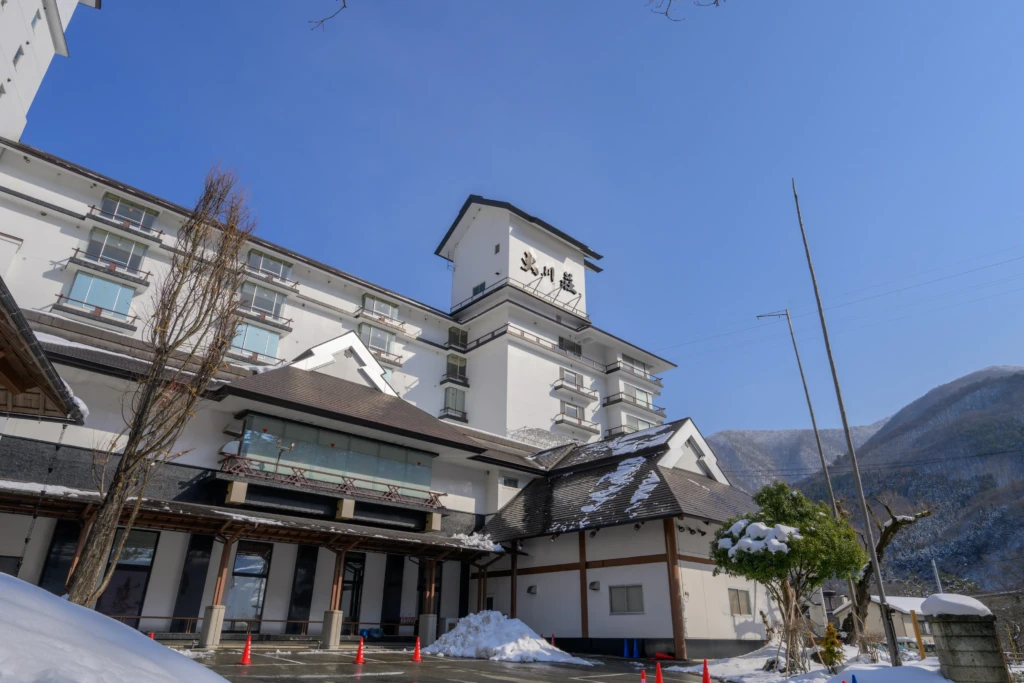
Okawa-so stands gracefully in Aizuwakamatsu, Fukushima Prefecture.
Walking 40,000 Steps a Day on the Frontlines to Earn Employees’ Trust
— President Watanabe, you yourself have had a connection with ryokans (Japanese inns) since you were young, haven’t you?
President Watanabe: Yes. I was born not here in Aizu, but at a ryokan (Yahataya) in Bandai-Atami Onsen in the Nakadori region. The area behind the ryokan’s front desk was our living space, and I grew up carrying meal trays and joining guests’ banquets since I was a child. Back then, even as a child, I used to draw pictures of my ideal ryokan, thinking, “I want to make a ryokan like this.”
— When you later took over the management of Ookawaso, I imagine you must have faced some hardships at first.
President Watanabe: The biggest wall I felt when I arrived was that “the employees wouldn’t follow me.” It’s only natural, considering a second-generation successor, who wasn’t born in this ryokan or even in this region, suddenly came in. That’s exactly why the first thing I did was to “work harder than the employees.” From 6 AM to 11 PM, I carried heavy luggage weighing up to 20kg every day. When I wore a pedometer, I found I was walking 40,000 steps a day. It was so hard that I got muscular and skinny without needing to diet. But by knowing the frontlines best in this way, the employees gradually started to listen to me, and we built a relationship of trust.
“Not Too Close, Not Too Far” Hospitality and Thoughts on His Wife, the Okami.
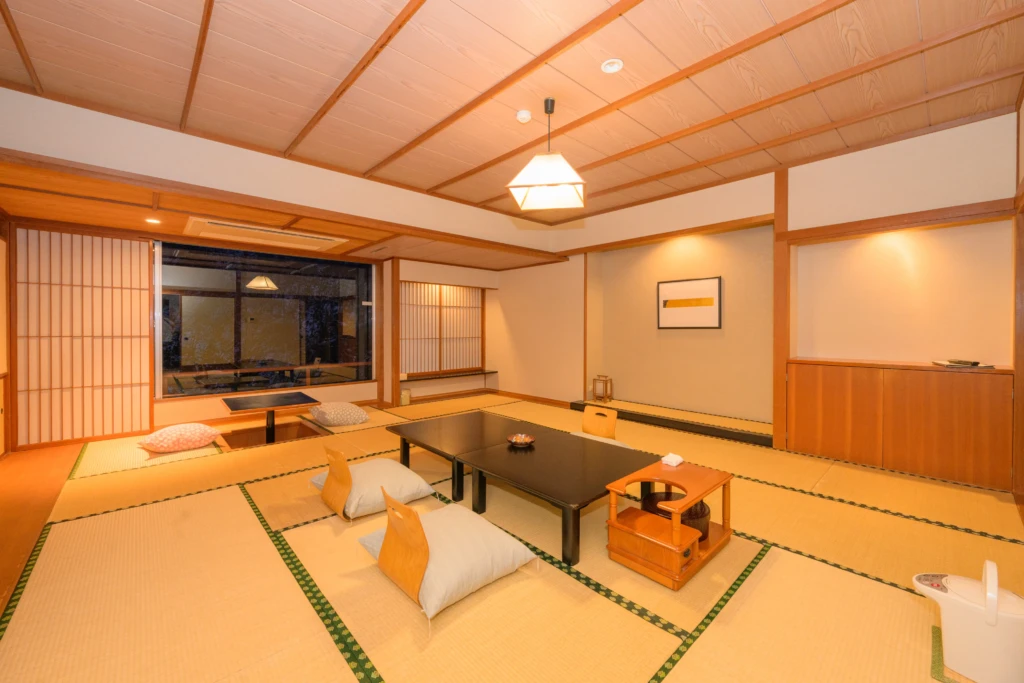
— What does Ookawaso value most when it comes to customer service?
President Watanabe: It is the sense of distance—”not too close, not too far”—that I learned from my parents. Customer service at a ryokan shouldn’t be too clingy, nor should it be too distant. I tell my staff not to just follow a manual, but to entertain guests with a natural feeling, akin to the feeling of “that was fun” in their daily lives.
— Your wife also supports Ookawaso together with you as the Okami.
President Watanabe: Actually, because I grew up in a ryokan and had memories of my childhood where there was absolutely no time spent with family on weekends or New Year’s holidays, I had this thought: “I don’t want my wife to be an Okami.” However, when it came time to get married, I had unconsciously chosen an energetic woman who could naturally handle the role of an Okami. She herself naturally took on the role, and I am very grateful to her.
Tourism is a “Circulation Device.” Enriching the Region with Aizu’s Ingredients and Culture
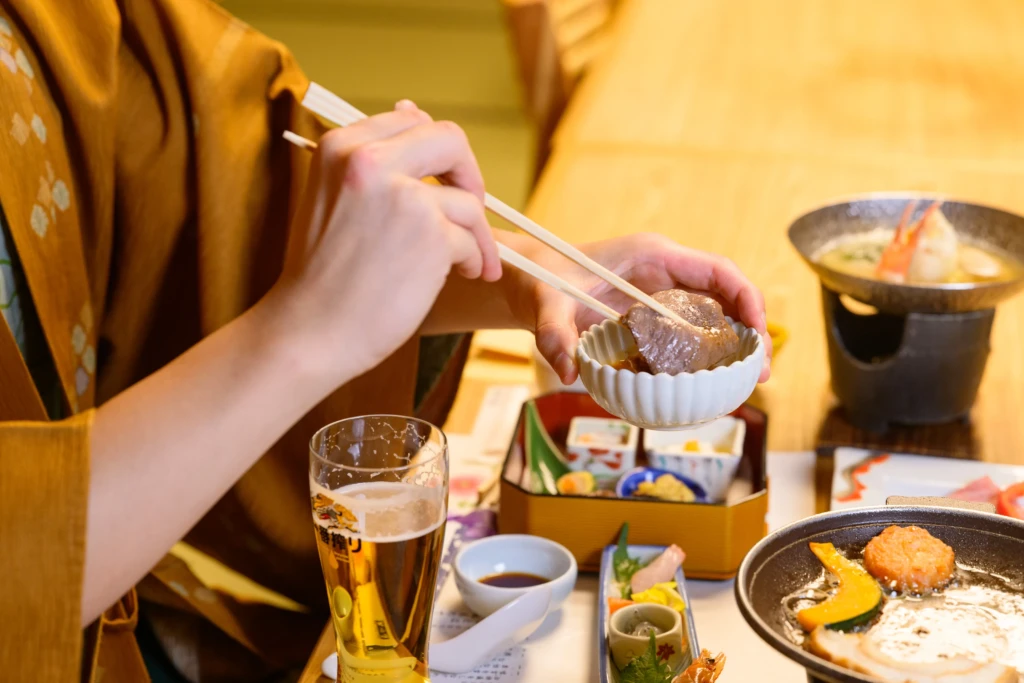
— Please tell us about your dedication to the meals.
President Watanabe: There is no point in coming to Aizu if we serve dishes that can be eaten anywhere else. Therefore, our concept is to have guests thoroughly enjoy Aizu’s ingredients.
— I feel your love for the “region” not only in the meals but also in the interior renovations.
President Watanabe: Tourism has the role of calling customers from outside the region to “earn foreign currency.” However, we shouldn’t just earn money; we ryokans must return the money to local ingredients and industries. I consider tourism to be a regional “circulation device.” By circulating the money dropped by customers so that it doesn’t leave the region, the entire region becomes richer. That is why, while incorporating modern elements into the interior design, we make sure to use an abundance of local wood, stone, and furniture, striving to create a space where you can feel the nature and rustic charm of Aizu.
The Famous Floating Shamisen Stage and Terraced Open-Air Baths
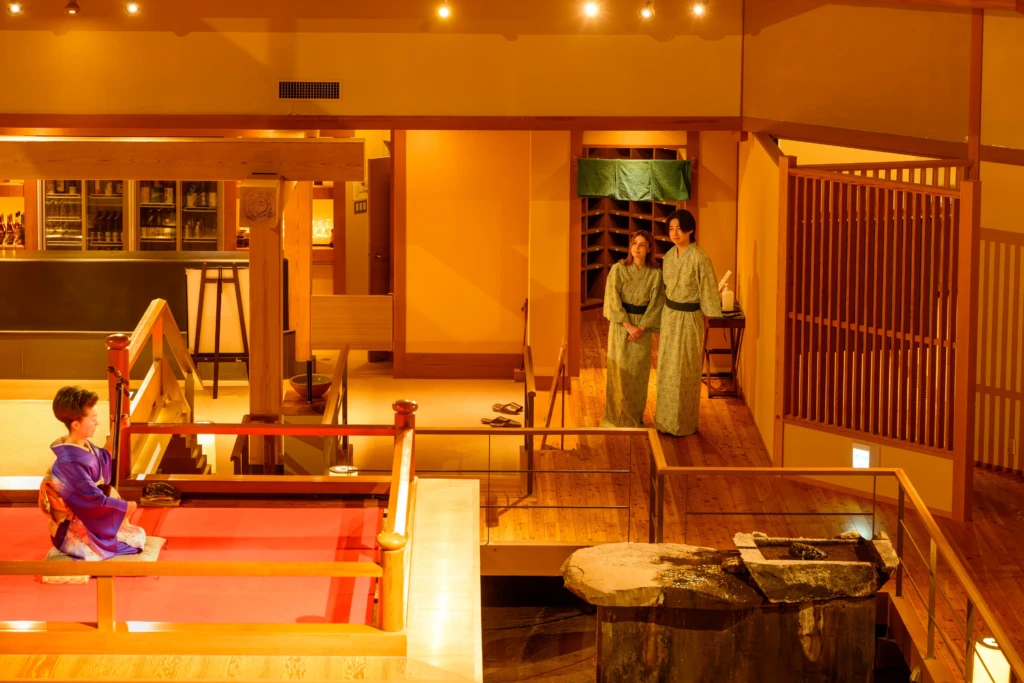
— Speaking of Ookawaso, the live shamisen performance on the floating stage in the lobby is famous.
President Watanabe: That was there before I took over. The concept is to play the shamisen on a stage where water flows in from a waterfall outside. For over 30 years, performances have continued for two hours every day without a break. Emiko-sensei, who is in charge of this, is also very proud to play here. Ryokans also have a role as “places where you can feel Japanese culture.” It is an important welcoming performance to let guests experience their first sense of awe upon checking in.
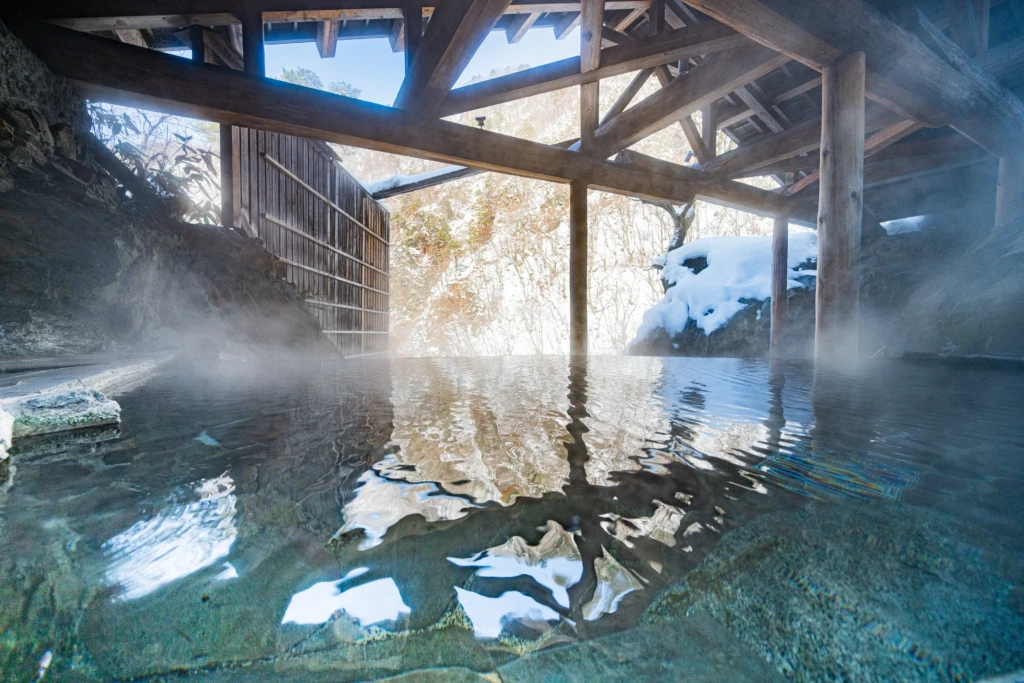
— The spectacular “Terraced Open-Air Baths” are also wonderful.
President Watanabe: Thank you. That was conceived by the previous chairman, who saw the beautiful terraced rice paddies in the Ashinomaki settlement about a 5-minute drive from here and said, “I want to make a bath like this.” The original landscape of the region lives on here, too.
“Changing How Japanese People Play.” Extreme Onsen and Aizu’s Livelihood Experiences
— You also hold up the keyword, “Changing how Japanese people play.”
President Watanabe: When I was a child, the mainstream style for ryokans was for group tour guests to make a racket drinking in the middle of the night and go home with a hangover. But times have changed. As I experienced backpacking myself, I came to think that true travel is not just about drinking and taking a bath, but gaining “learning and awareness” from the local culture and experiences. I want people to take trips that touch the culture of how local people have lived. That desire led me to the phrase, “Changing how Japanese people play.”
— That thought has also led to new projects, hasn’t it?
President Watanabe: Yes. For example, there is an experience tour called “Extreme Onsen” based at a facility called “NoWhere.” We created a visitor center-like role to provide equipment and knowledge so that even young people can safely enjoy the experience of climbing a mountain aiming for a “wild hot spring” gushing out in the middle of nature—an experience that used to be enjoyed only by a few enthusiasts.
— What about the experience programs provided by the company “Aizu Dream Kaihatsu”?
President Watanabe: Aizu has wonderful culture, such as lacquerware and sword smithing, but for the artisans, making these is their “livelihood,” and it was difficult to commercialize them as “experiences” for the general public. So, we collaborated to let travelers step into these livelihoods and actually feel the difficulty and length of time it takes to apply lacquer. It’s a company aimed at unearthing such hidden values and brushing them up as travel products.
Wanting Guests to Feel the “Way of Life” of Aizu’s People, Rather Than Glitz
— Finally, please give a message to customers who will visit Ookawaso and Aizu in the future, especially inbound tourists.
President Watanabe: Aizu is not a glitzy place like Tokyo or famous tourist destinations around the world. It is a rural area facing population decline. However, there are many things to be proud of globally in the “humanity (way of life)” of the people living in this region—what kind of history they have accumulated, what kind of culture they have nurtured, and how they have lived. Although it may not be flashy, I hope that many people, both from Japan and abroad, will feel the depth of the culture and the footsteps of the people of Aizu.
Closing
Spectacular open-air baths and the heart-stirring sounds of the shamisen. The charm of Ookawaso is not limited to what is visible. At its root lay the passion of President Watanabe, who ran around the frontlines covered in sweat, and his deep love for his hometown, seeking to circulate money in the region and leave Aizu’s culture to the next generation. From a trip of “just soaking in a hot spring and going home” to a trip that touches the local way of life and brings home new awareness in the heart. If you visit Ookawaso, you too will surely encounter a “new form of travel.”
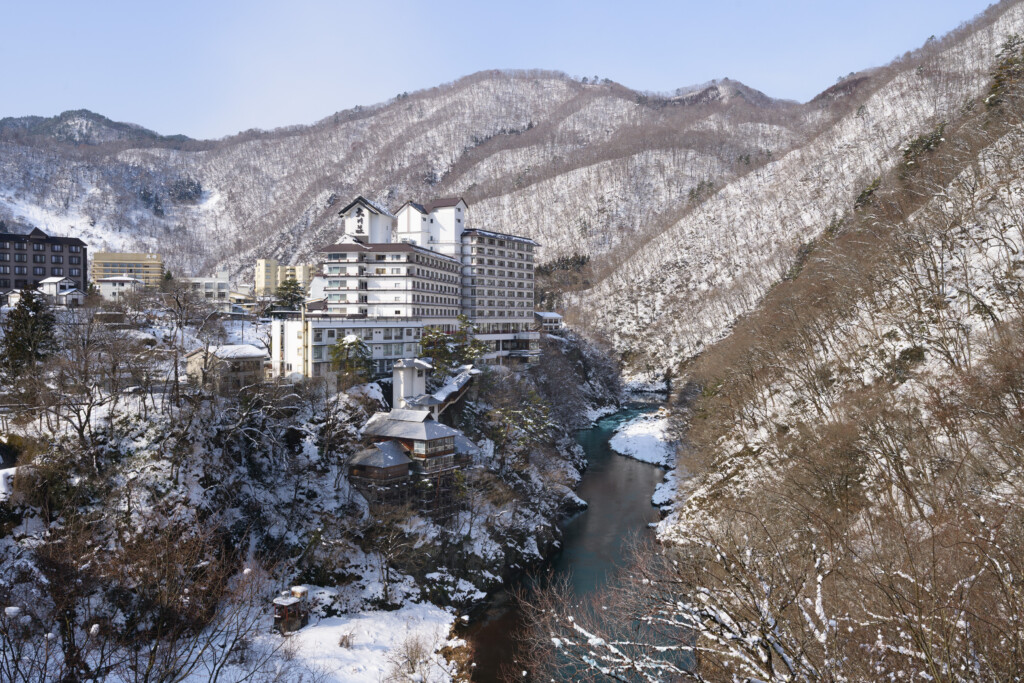
Ookawaso
View Details