


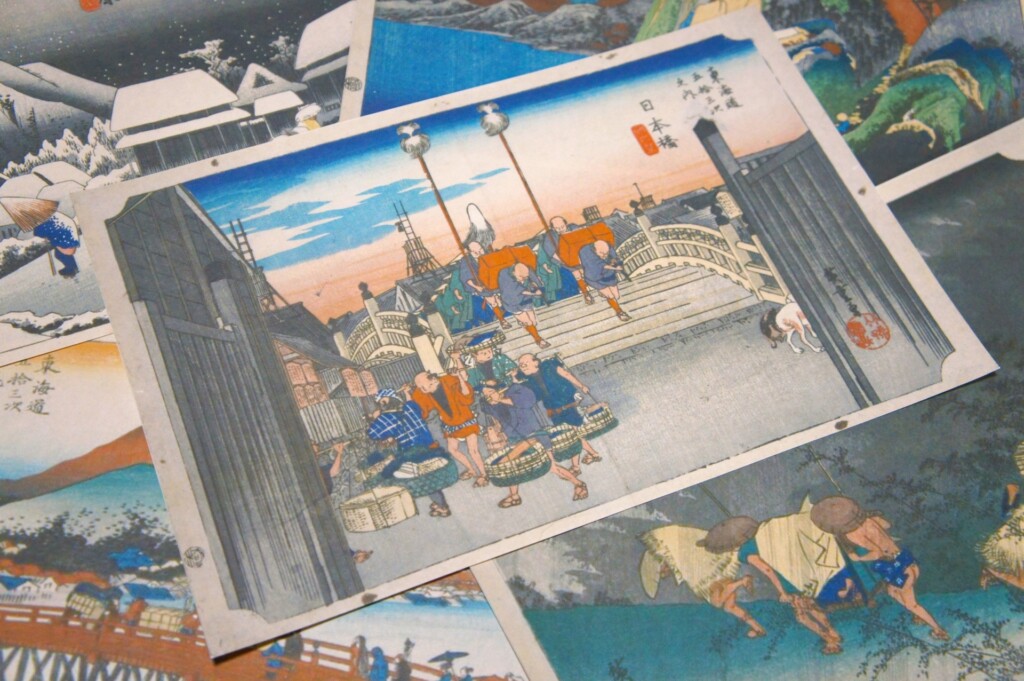
Have you ever seen this woodblock print before?
If you have an interest in Japanese history or ukiyoe art, chances are you have come across it. This image depicts a scene from the 53 Stations of the Tokaido, the famous route traveled by countless people during the Edo period. Around 200 years ago, travelers spent weeks on foot along this road, resting at post towns (shukuba machi) and savoring the unique flavors of each region.
However, the world captured in this artwork is not just a relic of the past.
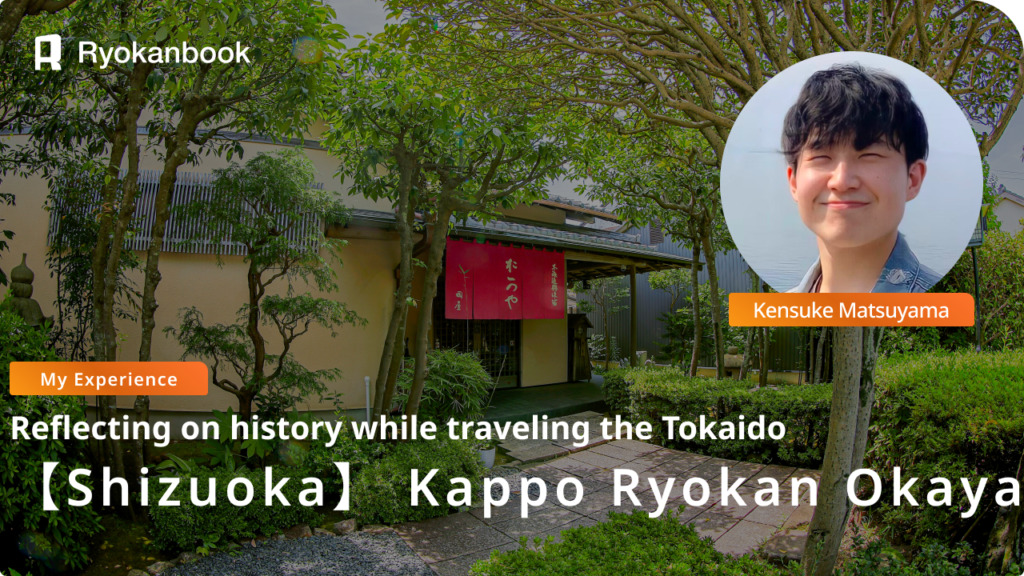
In fact, you can still experience the atmospheric spirit of that journey today in Shizuoka. My recent trip brought me to Okitsu, a historic post town along the Tokaido, and Kappo Ryokan Okaya, an inn that preserves this heritage today.
Strolling through a harbor town overlooking the sea, reflecting on the travelers of the Edo period, and spending the night at a historic inn, this was more than just a place to sleep. It was an authentic journey through the Tokaido itself.

10:00 AM | Walking the Tokaido Toward Okitsu
My journey begins at Shizuoka Station.
Taking the JR Tokaido Main Line for about 15 minutes, the cityscape gradually shifts into a peaceful coastal town outside my window, offering glimpses of Suruga Bay and serene neighborhood streets. Before checking in, I decided to explore the area surrounding Shimizu Port and the local Tokaido historical sites to connect with the roots of this region.
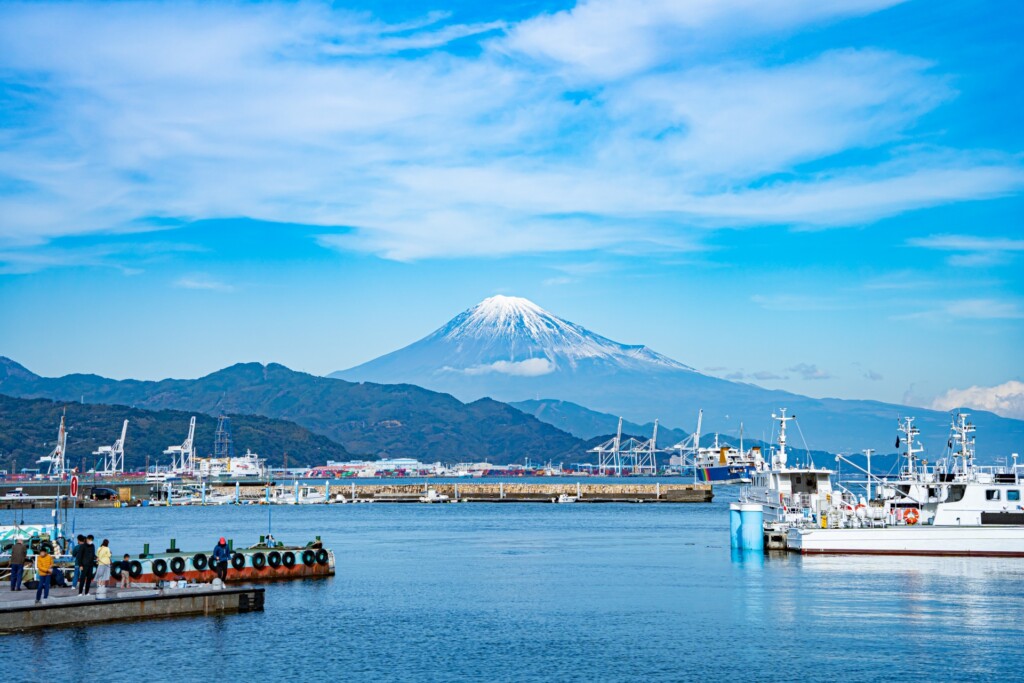
When international visitors think of Japan, modern bullet trains or iconic cities like Tokyo and Kyoto often come to mind. Centuries prior, however, it was the Tokaido that served as the lifeline of Japanese travel. Connecting Edo (modern day Tokyo) and Kyoto, this road featured 53 post towns where travelers journeyed on foot for days or weeks at a time.
Okitsu was one of those crucial stops. Standing here with Suruga Bay before me, a short walk brings you face to face with streetscapes that still echo the history of the old Tokaido. It is not an overly commercialized tourist hub. Instead, time moves at a gentler pace here, making it easy to imagine original wayfarers admiring these very same views as they walked.
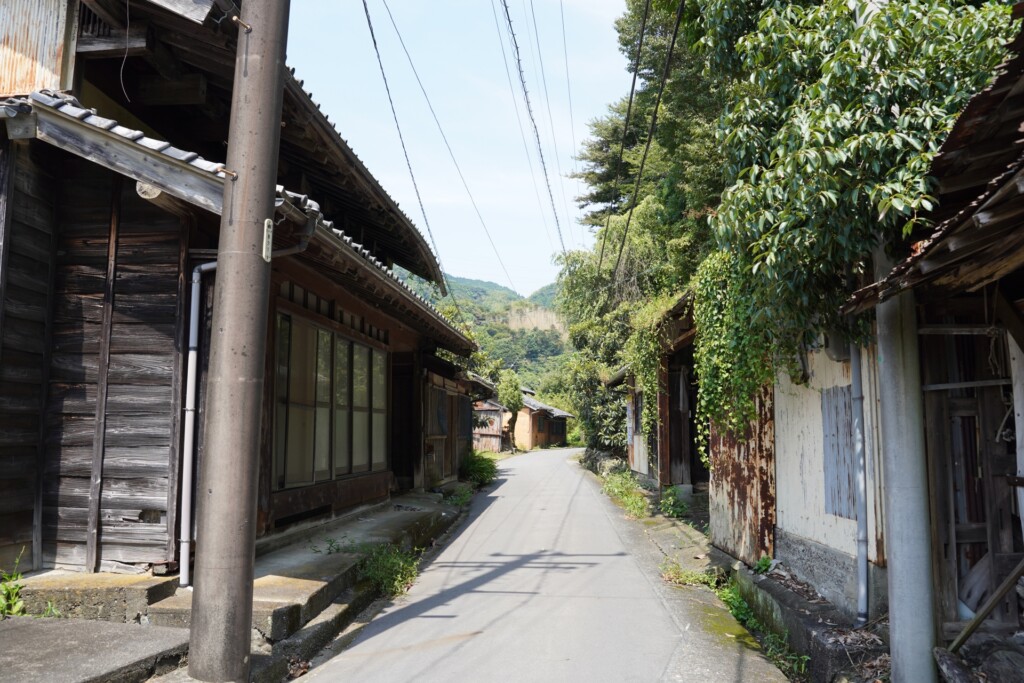
After soaking in the history of the route, I take a 10 minute walk to Okaya. Arriving at the inn on foot directly from the old post town transforms the stay into a cohesive story: a genuine day on the Tokaido.
2:00 PM | Checking in at Okaya
After enjoying the views at Shimizu Port and walking through Okitsu, I arrived at Kappo Ryokan Okaya. Located just a 10 minute walk from the coastline, the approach through the historic streets sets a serene tone.
Perhaps because I had spent the morning learning about the travelers who rested here during the Edo period, approaching Okaya gave me a wonderful sense of anticipation.
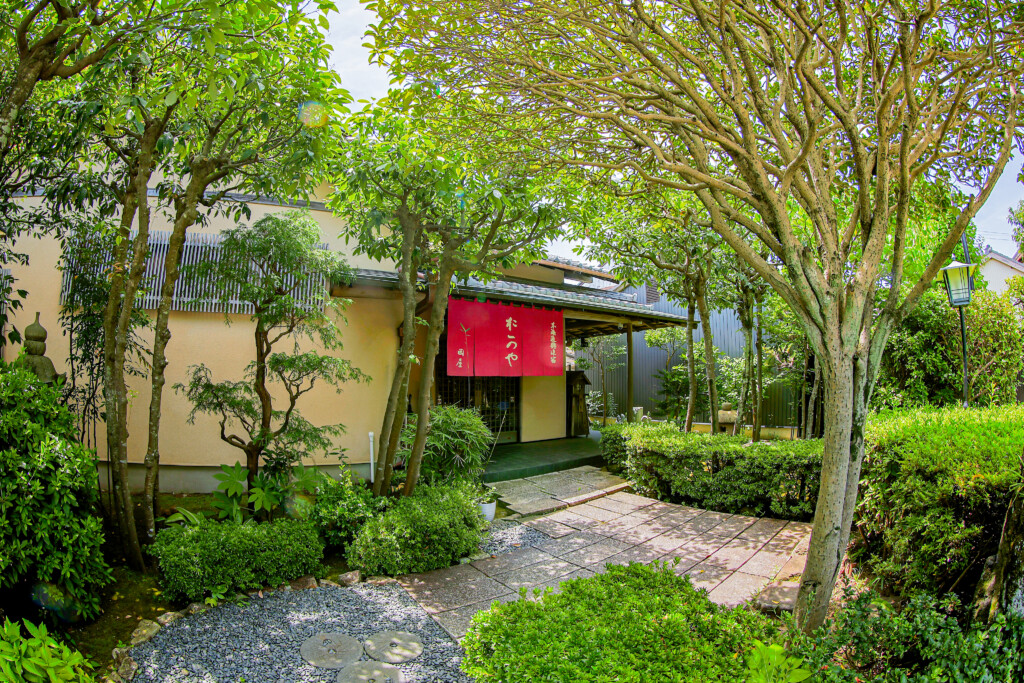
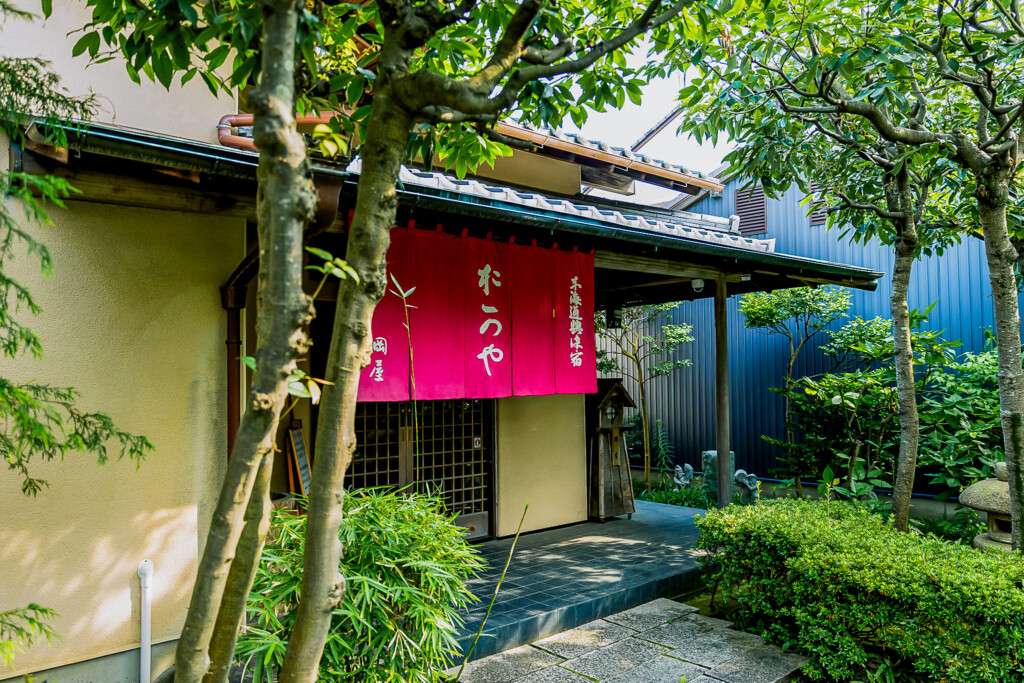
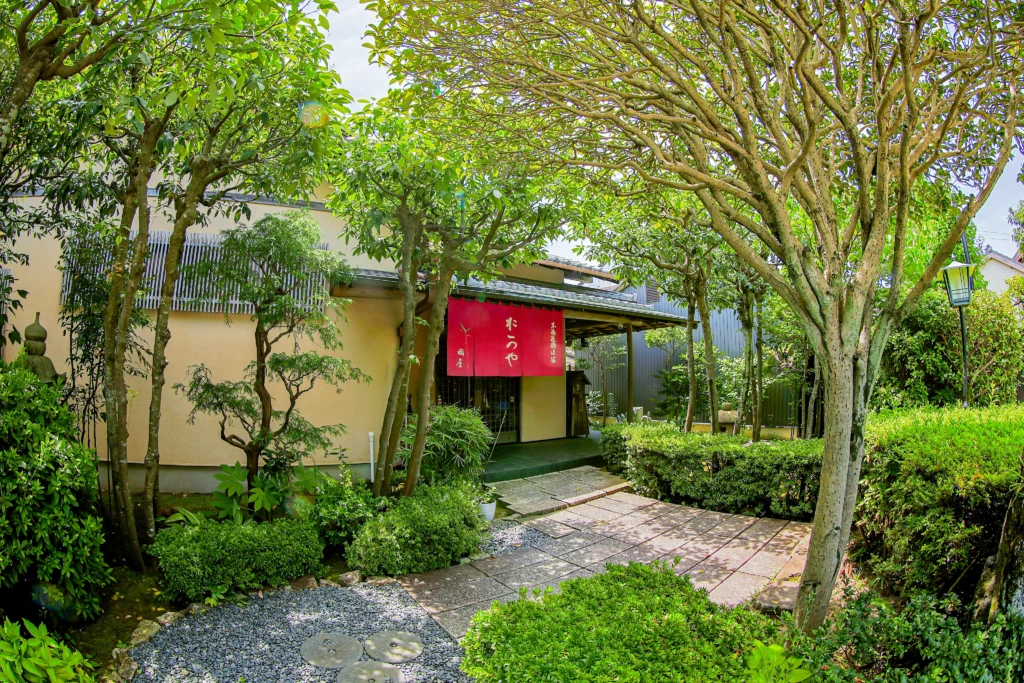
The first thing that catches your eye is the meticulously maintained garden and the traditional noren curtain swaying gently in the breeze. Set back behind a spacious parking area, the building carries a quiet elegance, feeling less like a standard inn and more like an exclusive, historic kappo (traditional culinary) establishment.
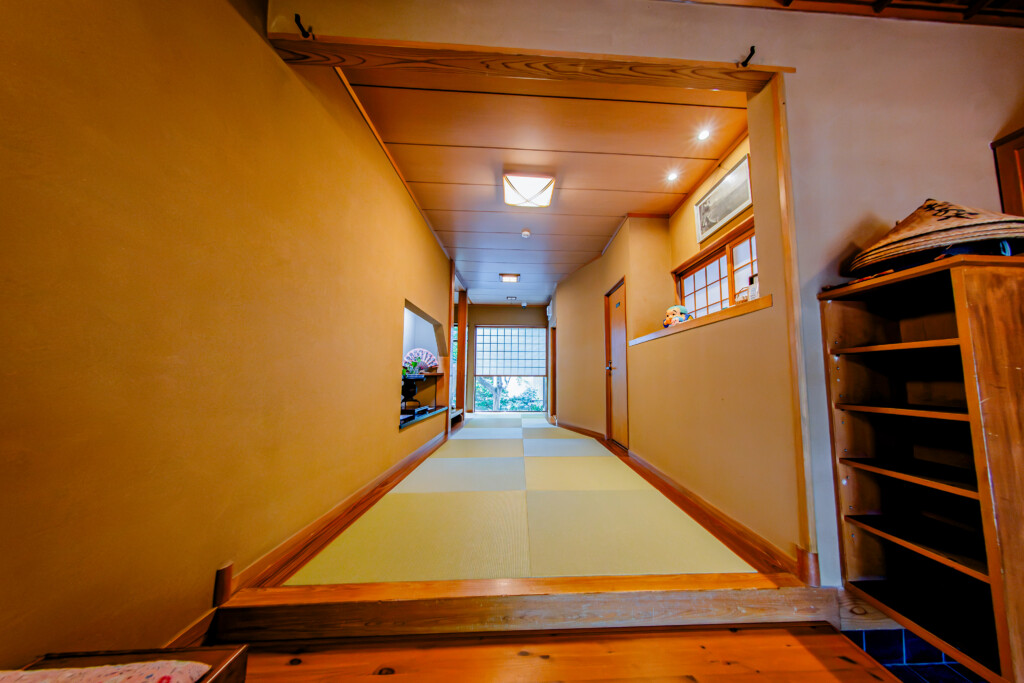
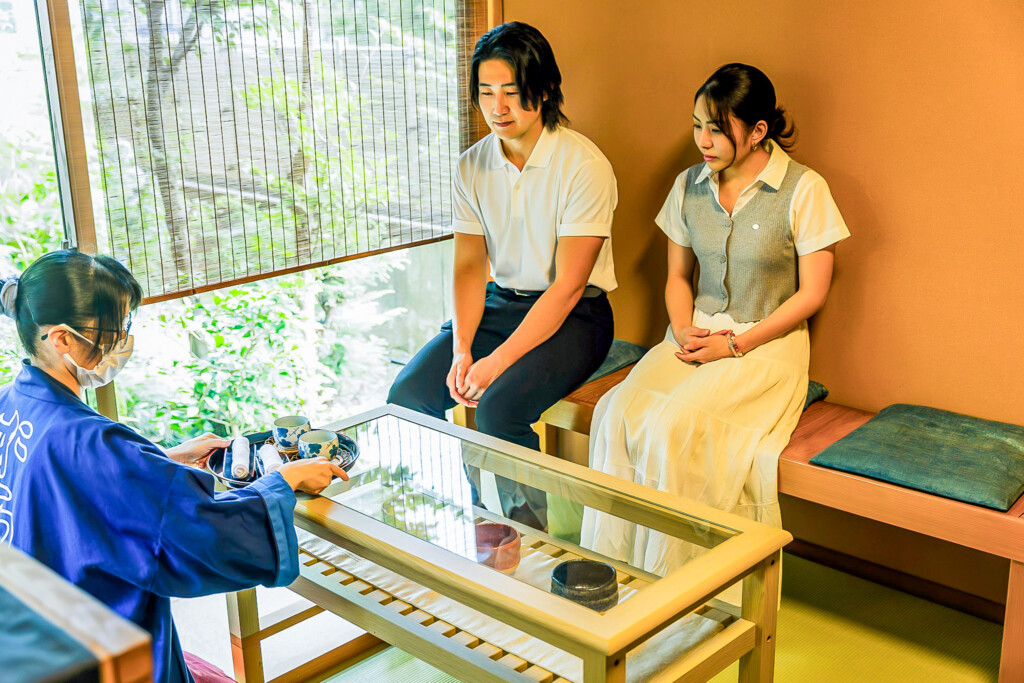
Upon entering, I am greeted by the welcoming smiles of the staff and invited to remove my shoes. To my pleasant surprise, the entire inn is fitted with tatami flooring throughout. While most traditional inns provide slippers, Okaya invites guests to walk barefoot across the soft, woven mats. The inn redesigned its interiors to full tatami so that travelers could rest their tired feet and directly experience the natural comfort of traditional Japanese living. The yielding texture underfoot makes even walking through the hallways a soothing ritual.
I am shown to a reception room where I enjoy a welcome drink during check-in: a glass of chilled Shizuoka green tea with a delicate sweetness. While rich at first sip, the tea is purposefully crafted so that as the single ice cube slowly melts, it settles into a perfectly balanced flavor profile. This thoughtful touch immediately melts away the fatigue of summer travel, encouraging you to slow down and unwind.
Guest Rooms | Japanese Design Rooted in History
Stepping into the guest room brings an immediate sense of calm. The gentle scent of natural tatami, soft light filtering through shoji paper screens, and a minimalist aesthetic define the space. Rather than relying on flashy luxury, the room celebrates the timeless tranquility of a classic Japanese inn, maintained with impeccable cleanliness and modern comfort.
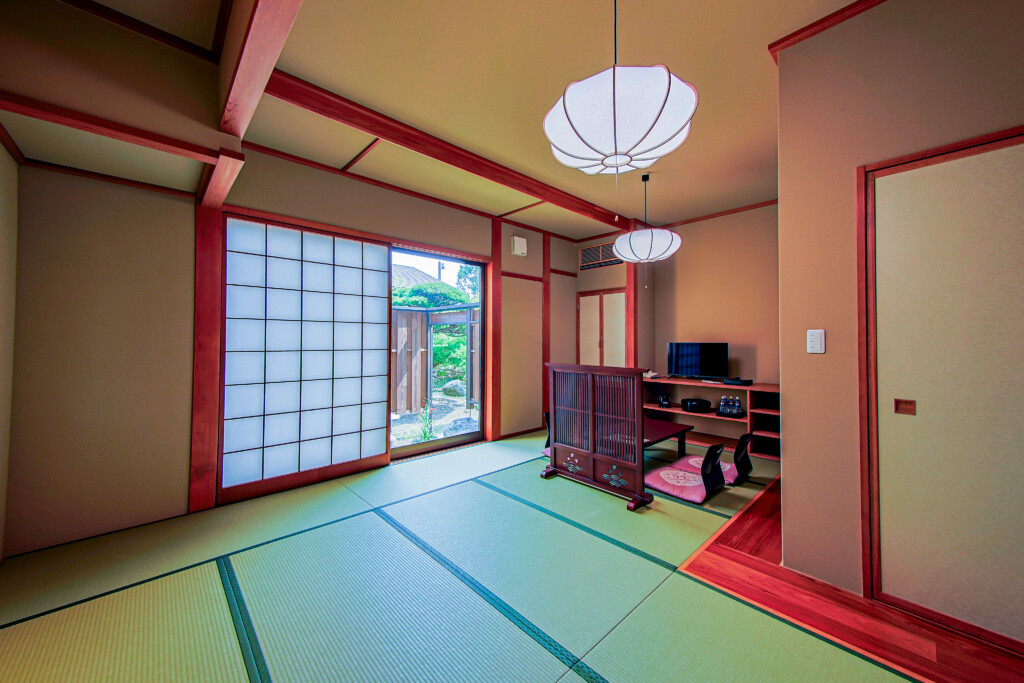
A unique touch here is the room design, which pays homage to the Tokaido. Sliding fusuma doors are decorated with artistic motifs of Mount Fuji and scenes from the 53 Stations of the Tokaido, giving each room its own distinct character. It keeps your connection to the history of Okitsu alive even while relaxing indoors.
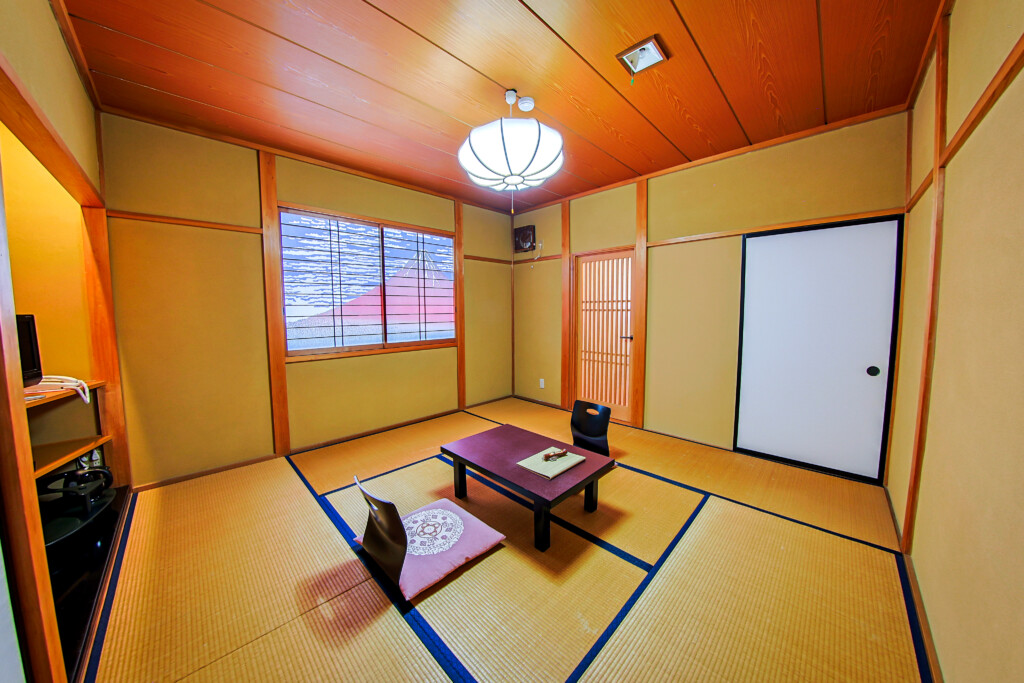
Having spent the morning exploring the historic port, resting in a space decorated with these traditional motifs felt deeply fitting, allowing the regional story to continue seamlessly from the town to the room.
Dining | The Heart of a Kappo Ryokan
While many travelers choose a ryokan primarily for its hot springs, Okaya is a destination where the cuisine takes center stage. Originating as a dedicated kappo restaurant, the kitchen applies masterful culinary techniques to every course, making dinner a true highlight of the trip.
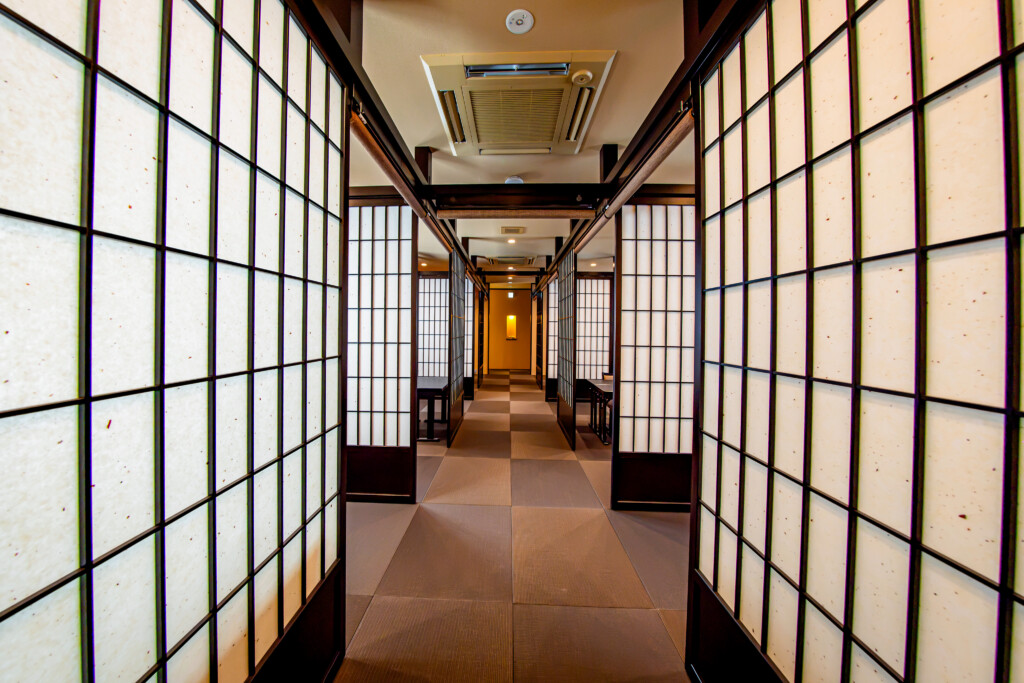
Dinner is served in a spacious dining hall softly partitioned by traditional sliding screens. The gentle spacing between tables creates an intimate, refined atmosphere where you can savor each course at an unhurried pace.
Evening Menu Showcase
- Appetizer: Simmered rolled yuba, Zibao shrimp, raw squid Matsumae pickles, seared bonito
- Shizumae Sashimi: Fresh local catch from the Shizuoka coast
- Sukiyaki: Premium Kuroge Wagyu sirloin
- Soup Course: Shrimp and real potato bowl
- Grilled Dish: Tilefish with crispy pine cone scale technique (Matsukasa yaki), served with Kintoki sweet potato and brush ginger
- Rice Course: Clam rice, pickles, and miso soup
- Dessert: Sweet Warabi Mochi
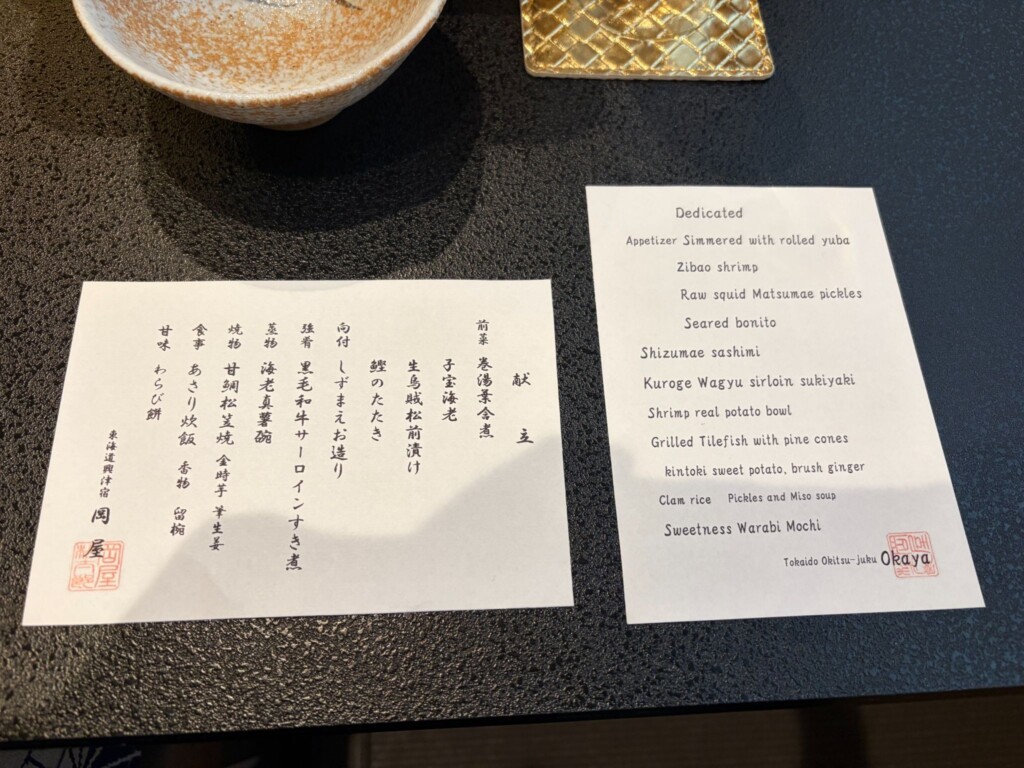
A few dishes particularly stood out during the meal.
The sashimi was exceptional. The fish carried none of the unwanted heaviness sometimes found in seafood, offering a clean, silky texture rich in natural umami. It offered a direct taste of Suruga Bay’s fresh maritime bounty right from the opening course.
The Kuroge Wagyu Sirloin Sukiyaki was equally memorable. Thinly sliced with delicate marbling, the beef released a rich aroma as it cooked, melting smoothly on the palate without feeling overly heavy.
The Tilefish Matsukasa yaki was a masterclass in traditional technique. By crisping the fish scales until they stand up like pine cones, the dish creates a light, crunchy texture that contrasts beautifully with the tender white fish beneath. Accompanied by the gentle sweetness of Kintoki sweet potato, it showcased the refined subtlety of classic Japanese cuisine.
To finish, the Clam Rice arrived with a rich, inviting steam as the lid was lifted. Generously packed with clams, every grain of rice had absorbed the savory broth, making it nearly impossible to stop eating.
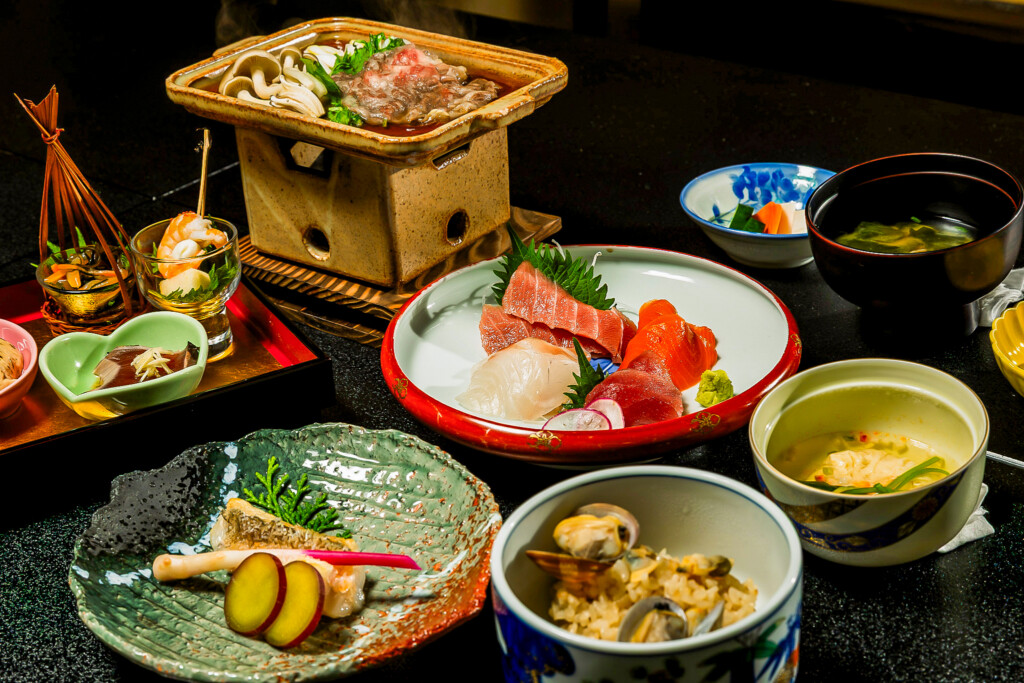
Beyond the taste, the presentation and seasonal tableware elevated the meal into a complete sensory experience. Okaya’s culinary philosophy is not about vanity ingredients; it is about honoring local Shizuoka produce at its seasonal peak through precise, thoughtful craft.
The Bath | A Quiet End to the Day
When touring hot springs across Japan, it is easy to focus solely on famous spring minerals or dramatic outdoor views. Resting in the baths at Okaya, however, reminds you that a truly great bath is about context and atmosphere.
While compact, the bathing area is spotlessly clean and serene. White tiled tubs reflect the soft, natural light entering the space, creating a calm environment that invites you to linger.
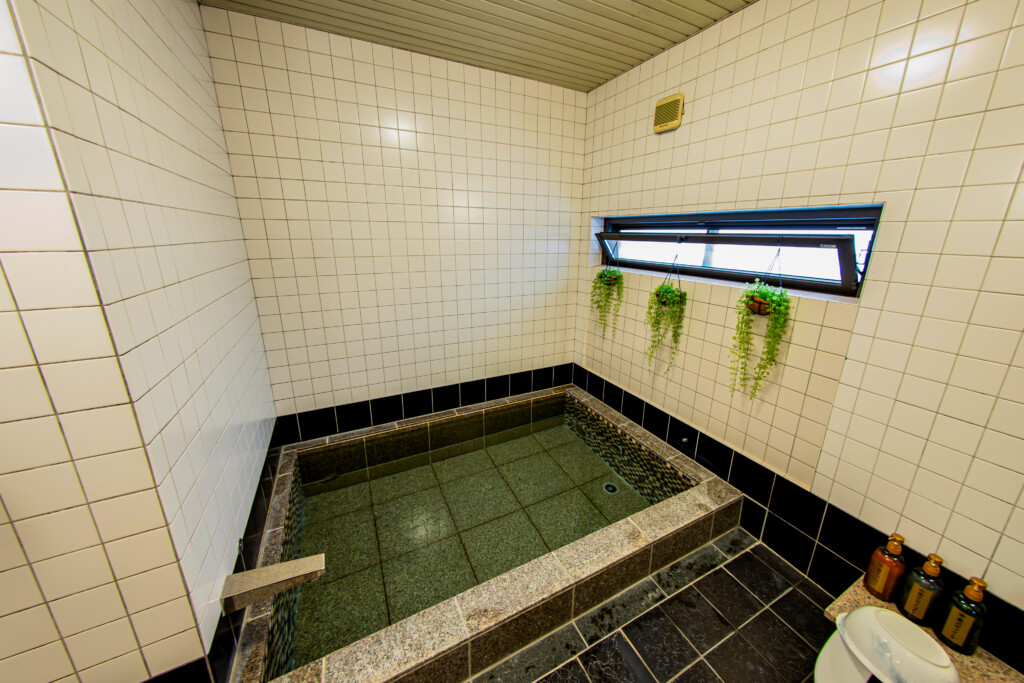
After a day spent walking the historic Tokaido and savoring a meticulous meal, a quiet, simple bath is precisely what is needed. It gently lowers the energy of the day and eases both mind and body into deep rest. Rather than stealing the spotlight, the bath seamlessly complements the overall rhythm of the stay.
Courtyard Views | The Joy of Slowing Down
Beyond the dining and accommodations, Okaya offers quiet spaces designed for peaceful contemplation.
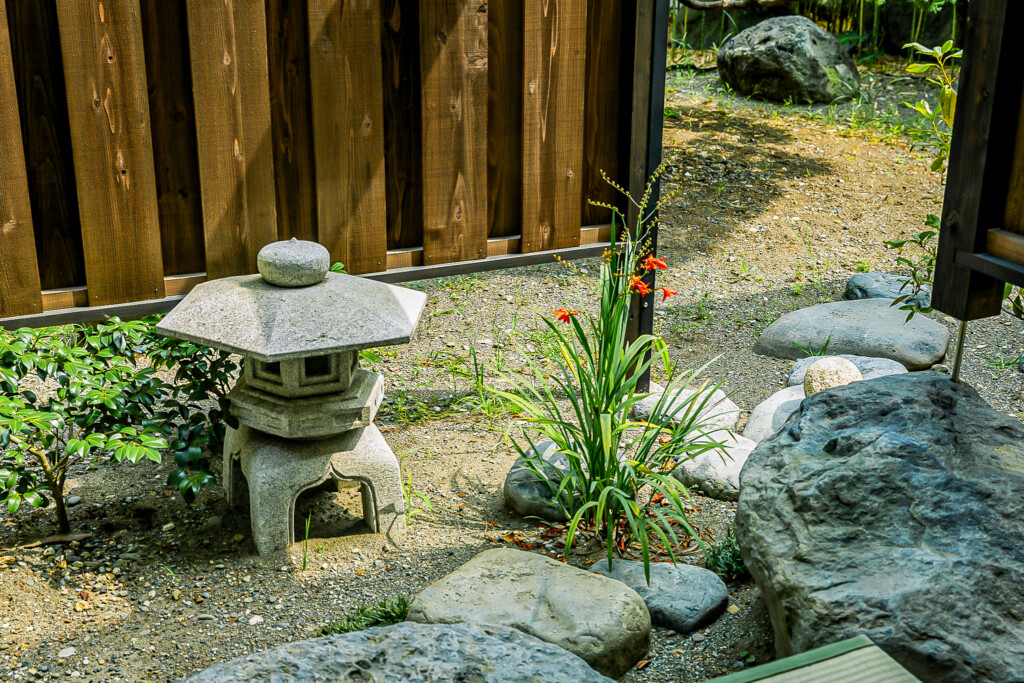
At the heart of the inn lies a traditional Japanese garden, visible right as you enter and framed by the surrounding guest corridors. Lovingly maintained trees and stone arrangements create a serene backdrop that naturally draws your gaze whenever you walk by.
The clarity of the garden pond is remarkable. Clear water allows you to watch vibrant koi, including striking golden varieties, gliding effortlessly through the water.
Nearby, a dedicated seating area offers a place to relax while looking out over the greenery. Enjoying a cold local craft beer here proved to be one of the most rewarding moments of the trip. I sampled the “Inka Tei IPA,” which offered a crisp, refreshing finish after a day spent outdoors.
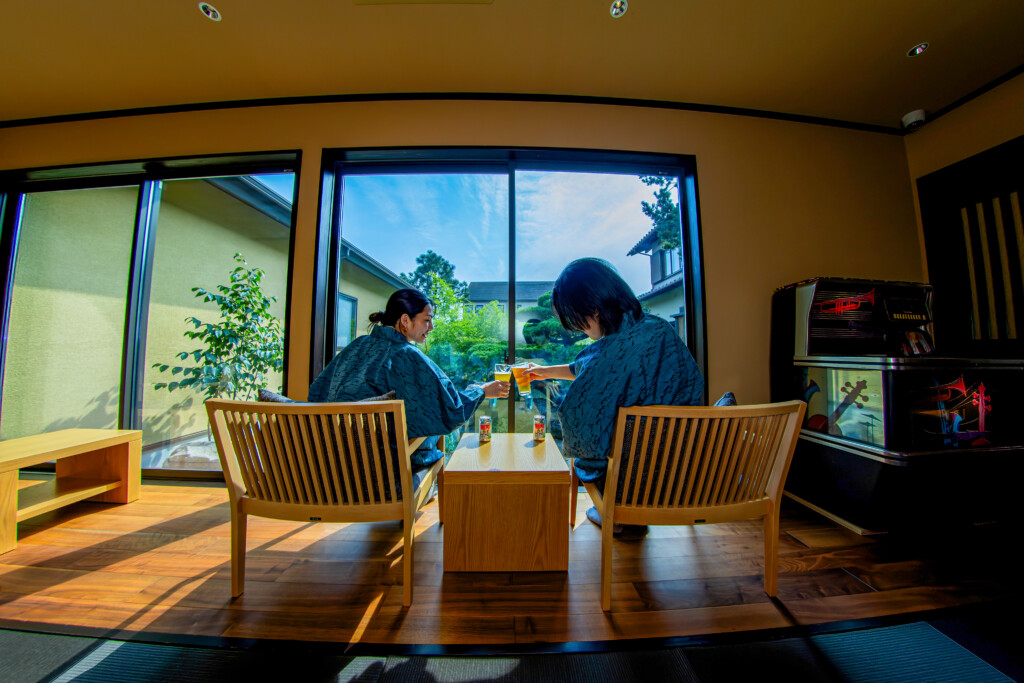
When traveling, it is easy to rush from one landmark to the next. Okaya gently reminds guests of the value of quiet time, where simply sipping a cold drink while admiring a peaceful garden becomes the highlight of the trip.
8:00 AM | A Shizuoka Inspired Morning
Waking up early, I headed to breakfast with high expectations following the previous night’s dinner.
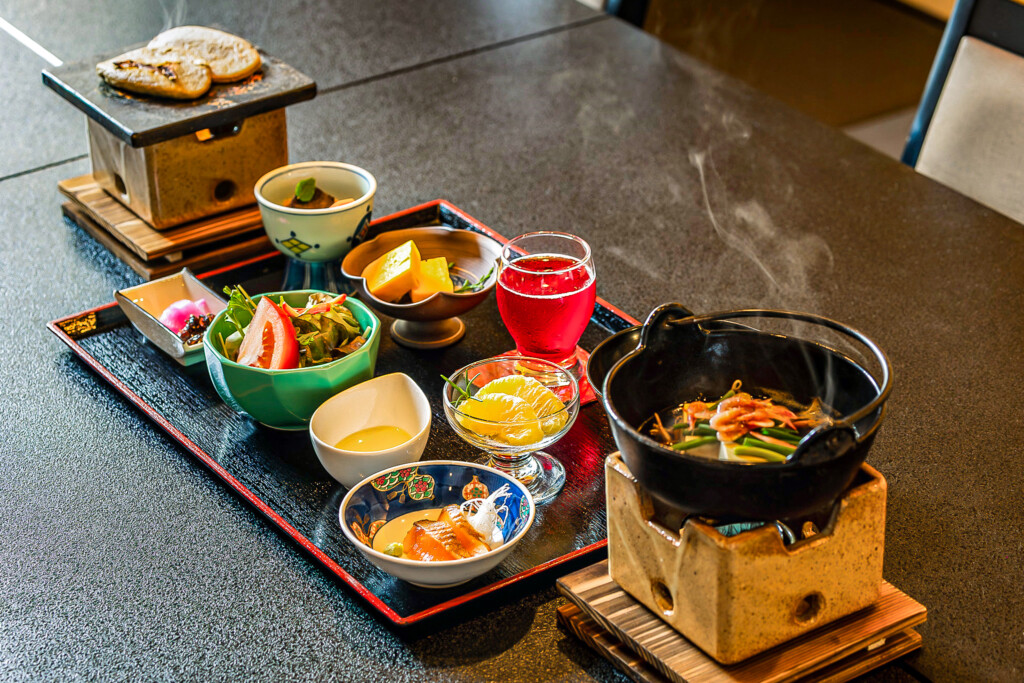
The meal began with a refreshing plum and shiso drink, providing a crisp, subtle tartness to wake up the palate. What followed was a classic Japanese breakfast featuring grilled fish, rice, and miso soup, thoughtfully elevated with distinct local touches.
The spread included seared salmon sashimi, fresh tofu topped with local sakura shrimp, and local Shizuoka fish cakes that guests grill right at the table. Every element reflected a desire to share the authentic flavors of the region up until the very last meal.
10:00 AM | Farewell to Okaya
After breakfast, I packed my bags and checked out to head back toward Shizuoka Station.
Walking the historic post town, enjoying seasonal local cuisine, and relaxing by the garden made for a deeply satisfying two day trip. Though free of flashy tourist traps, the experience offered a meaningful connection to local history, culture, and hospitality.
Riding the train back to Shizuoka Station, my mind returned to the woodblock print of the Tokaido I had viewed at the start of the trip.
That artwork was never just a landscape painting. It captured the essence of travel itself: resting at a post town, enjoying local food, meeting people, spending a quiet night, and setting off again the next morning.
This stay embodied that same spirit. If you ever visit Shizuoka, consider taking a slight detour off the main path. Japan’s most memorable moments often live within historic towns and the quiet hours spent at a traditional inn.
Kappo Ryokan Okaya
View Details