


Sui
Ultimate Relaxation Born from Forest and Natural Water

A castle where history and nature harmonize.
Nearby Ryokans
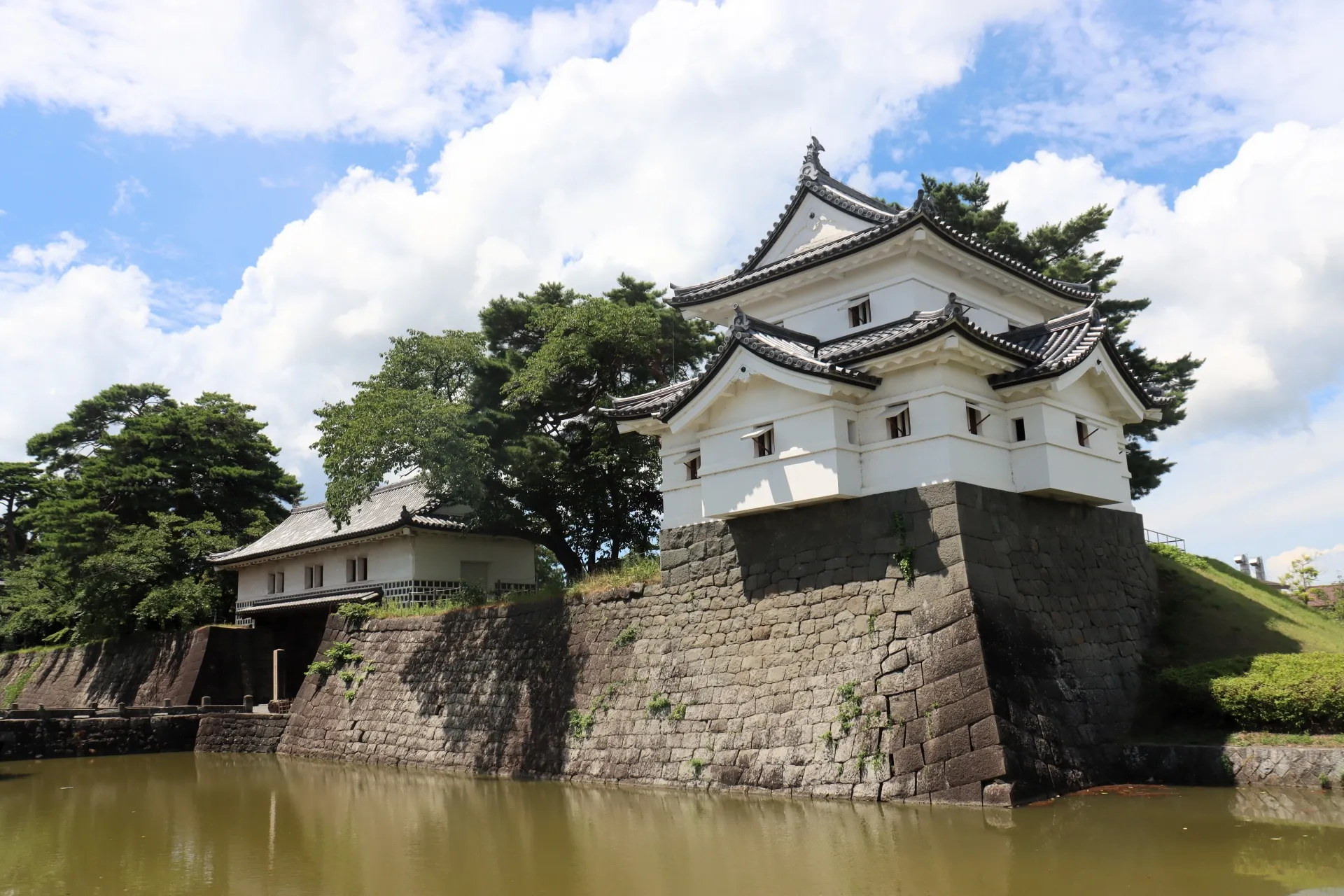
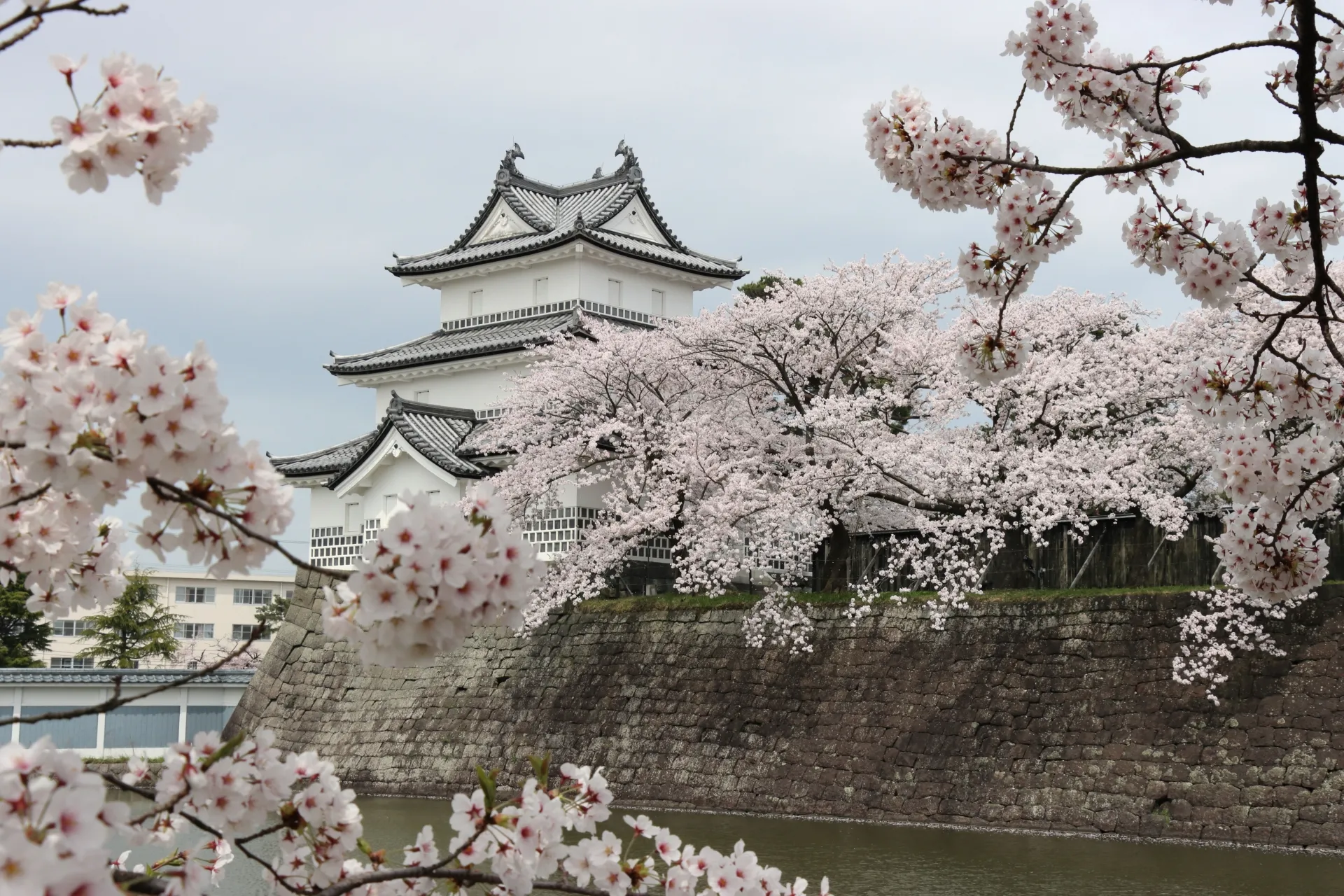
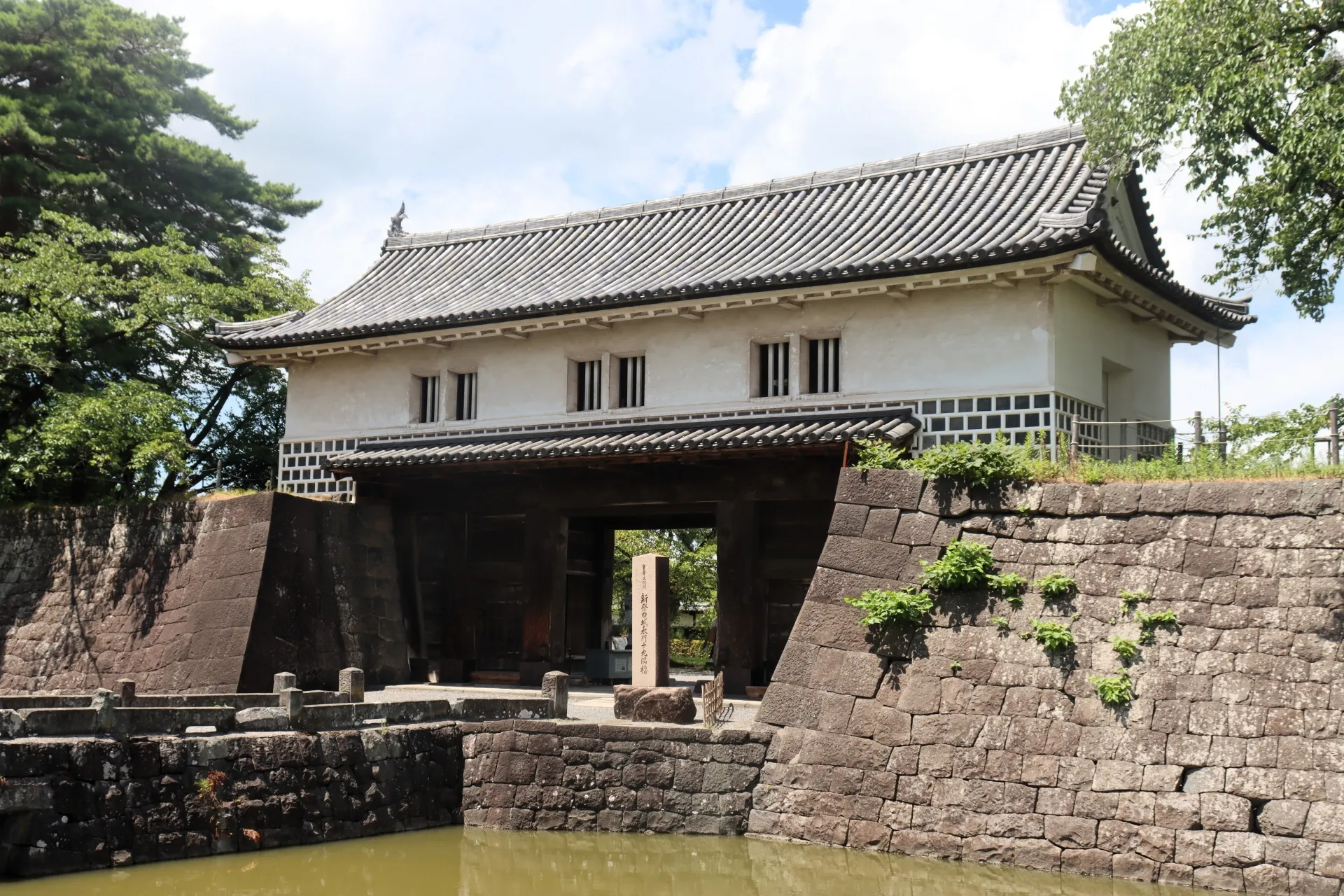
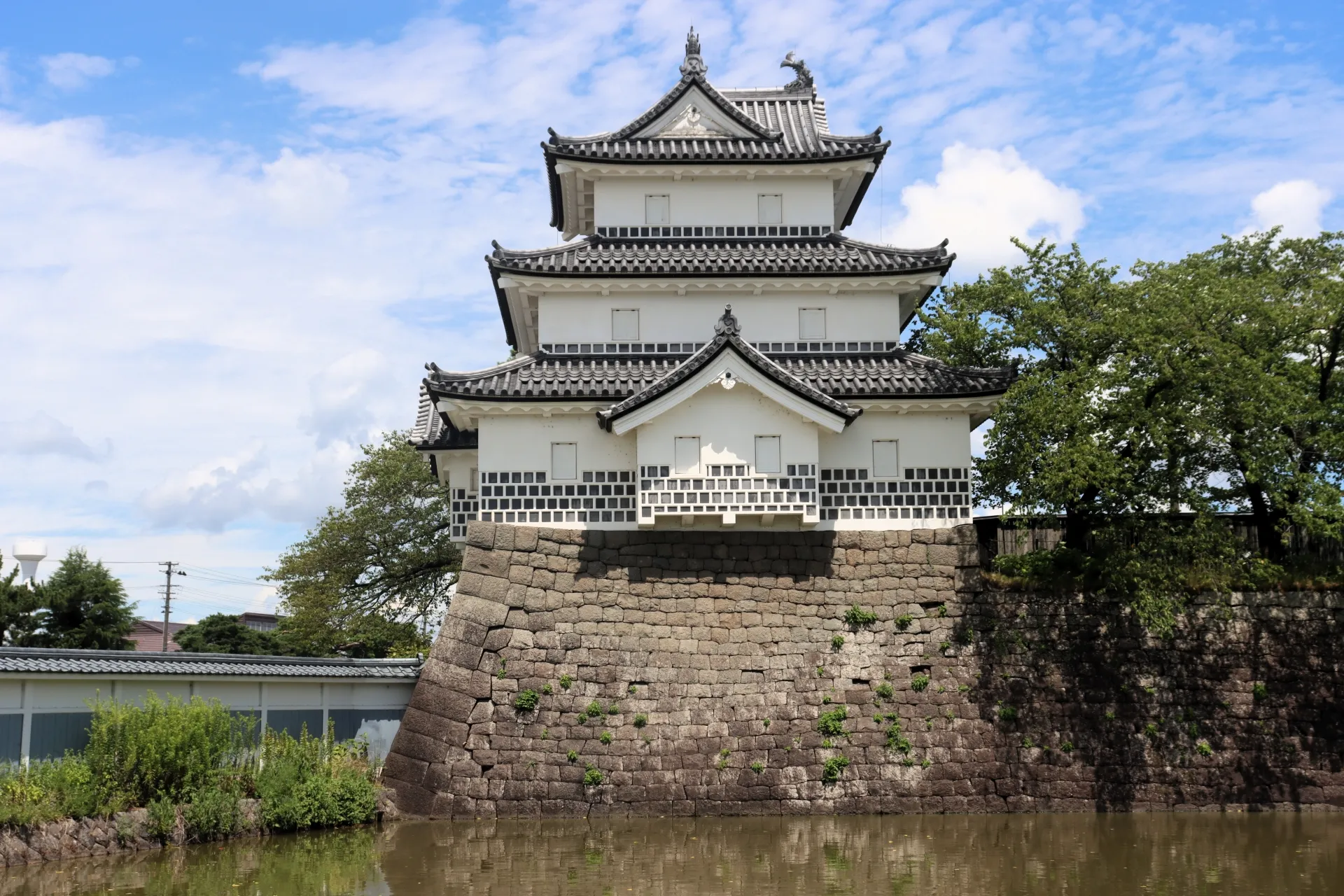
Shibata Castle is a flatland castle located in Shibata City, Niigata Prefecture, and it served as the administrative center of the Shibata Domain during the Edo period. Also known as Ayame Castle, it is valued today as a rare historic site where several castle structures still remain. Utilizing the Kajigawa River as its outer moat, the castle layout included the Honmaru and Ninomaru areas, and it is the only castle site in the prefecture where Edo-period castle architecture still exists. It has also been selected as one of the “Japan’s Top 100 Castles.”
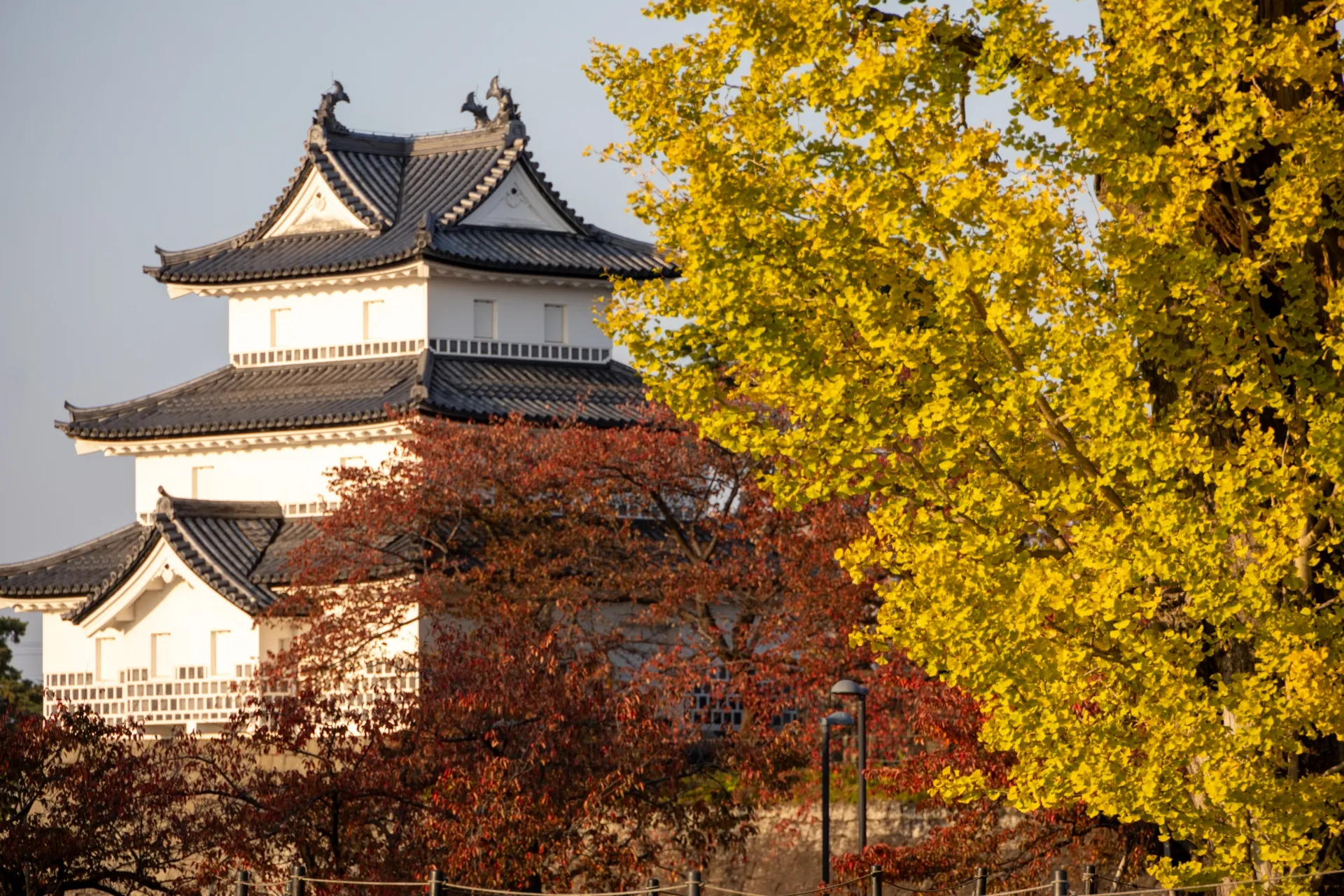
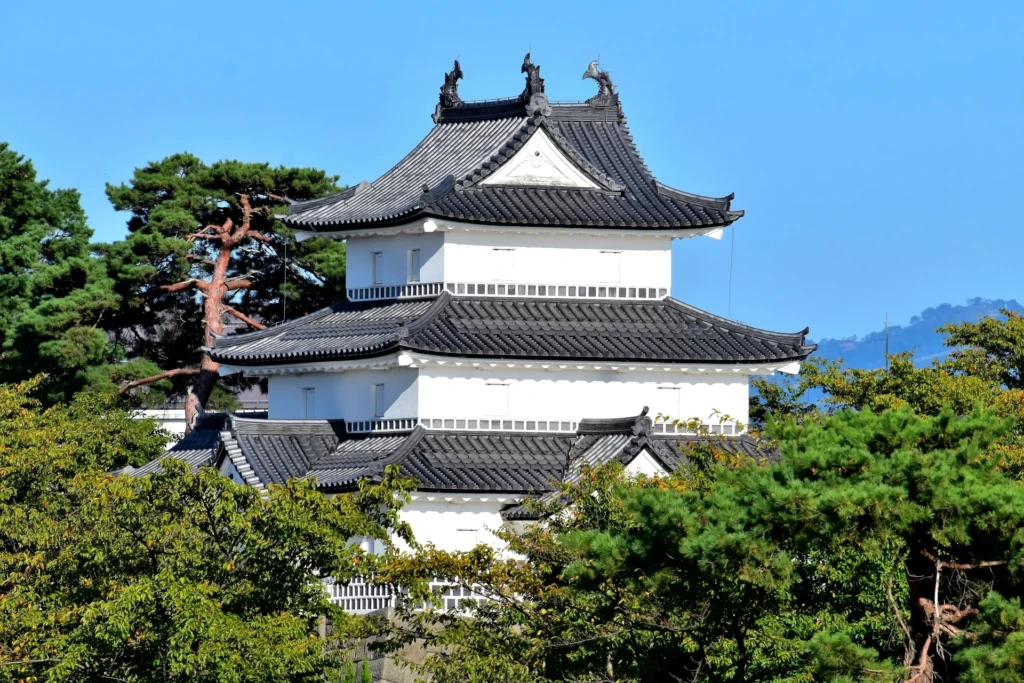
The three-story turret located at the northwest corner of the Honmaru is called the Sankai Yagura and functioned as the castle’s actual tenshu (main keep). This turret is highly distinctive: the roof forms a T-shape, and atop the ridge sit three golden shachihoko ornaments. Normally, castles feature only two, making this a unique sight found only at Shibata Castle. The exterior walls are finished with white and black namako-kabe (sea-cucumber plasterwork), a feature used to help withstand Echigo’s heavy snowfall. The Honmaru Front Gate and the Ninomaru Corner Turret also survive in their original forms and are designated as Important Cultural Properties of Japan.
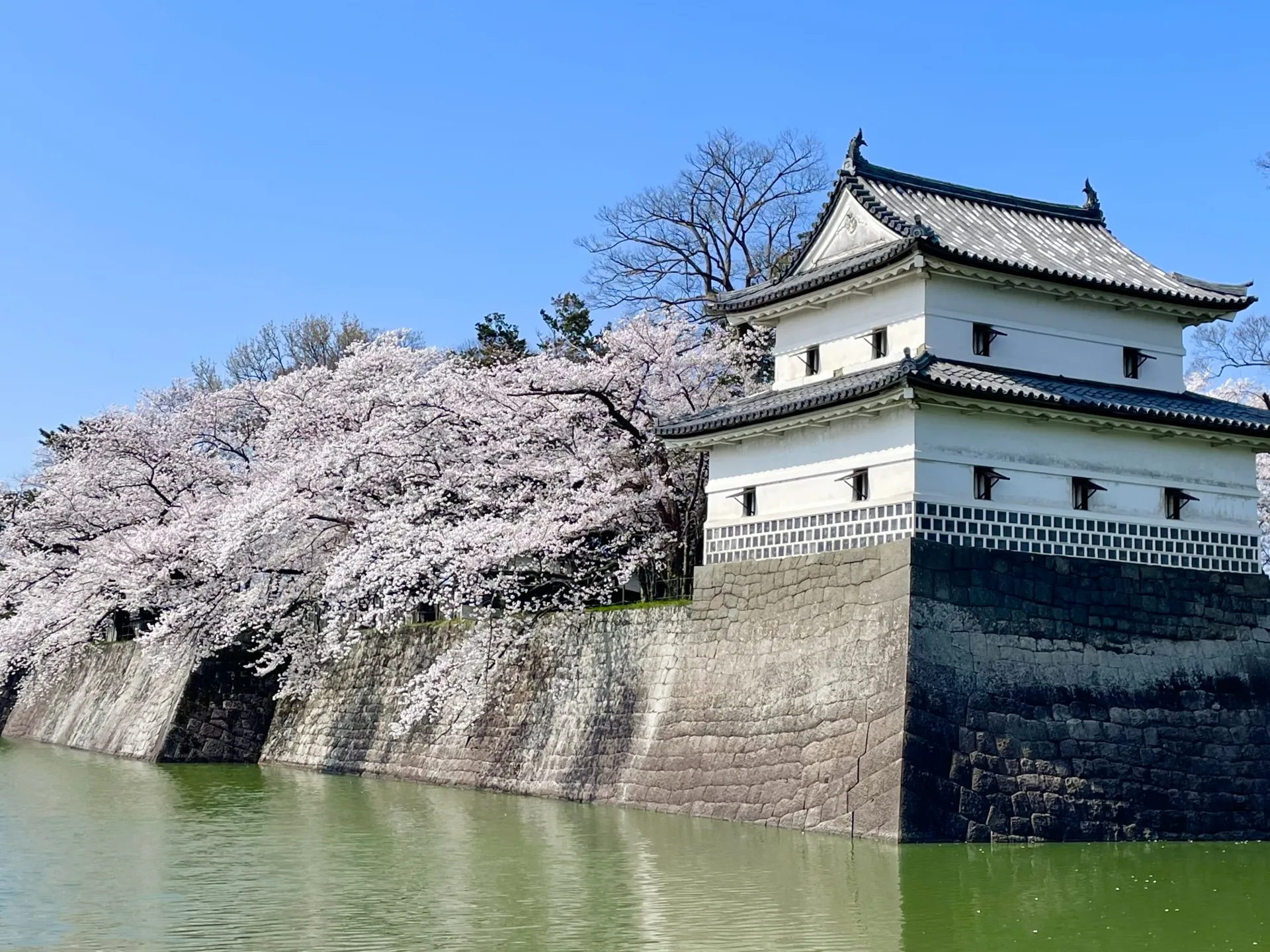
Shibata Castle is a flatland castle located in Shibata City, Niigata Prefecture, and it served as the administrative center of the Shibata Domain during the Edo period. Also known as Ayame Castle, it is valued today as a rare historic site where several castle structures still remain. Utilizing the Kajigawa River as its outer moat, the castle layout included the Honmaru and Ninomaru areas, and it is the only castle site in the prefecture where Edo-period castle architecture still exists. It has also been selected as one of the “Japan’s Top 100 Castles.”
The three-story turret located at the northwest corner of the Honmaru is called the Sankai Yagura and functioned as the castle’s actual tenshu (main keep). This turret is highly distinctive: the roof forms a T-shape, and atop the ridge sit three golden shachihoko ornaments. Normally, castles feature only two, making this a unique sight found only at Shibata Castle. The exterior walls are finished with white and black namako-kabe (sea-cucumber plasterwork), a feature used to help withstand Echigo’s heavy snowfall. The Honmaru Front Gate and the Ninomaru Corner Turret also survive in their original forms and are designated as Important Cultural Properties of Japan.
 OsakiYohei
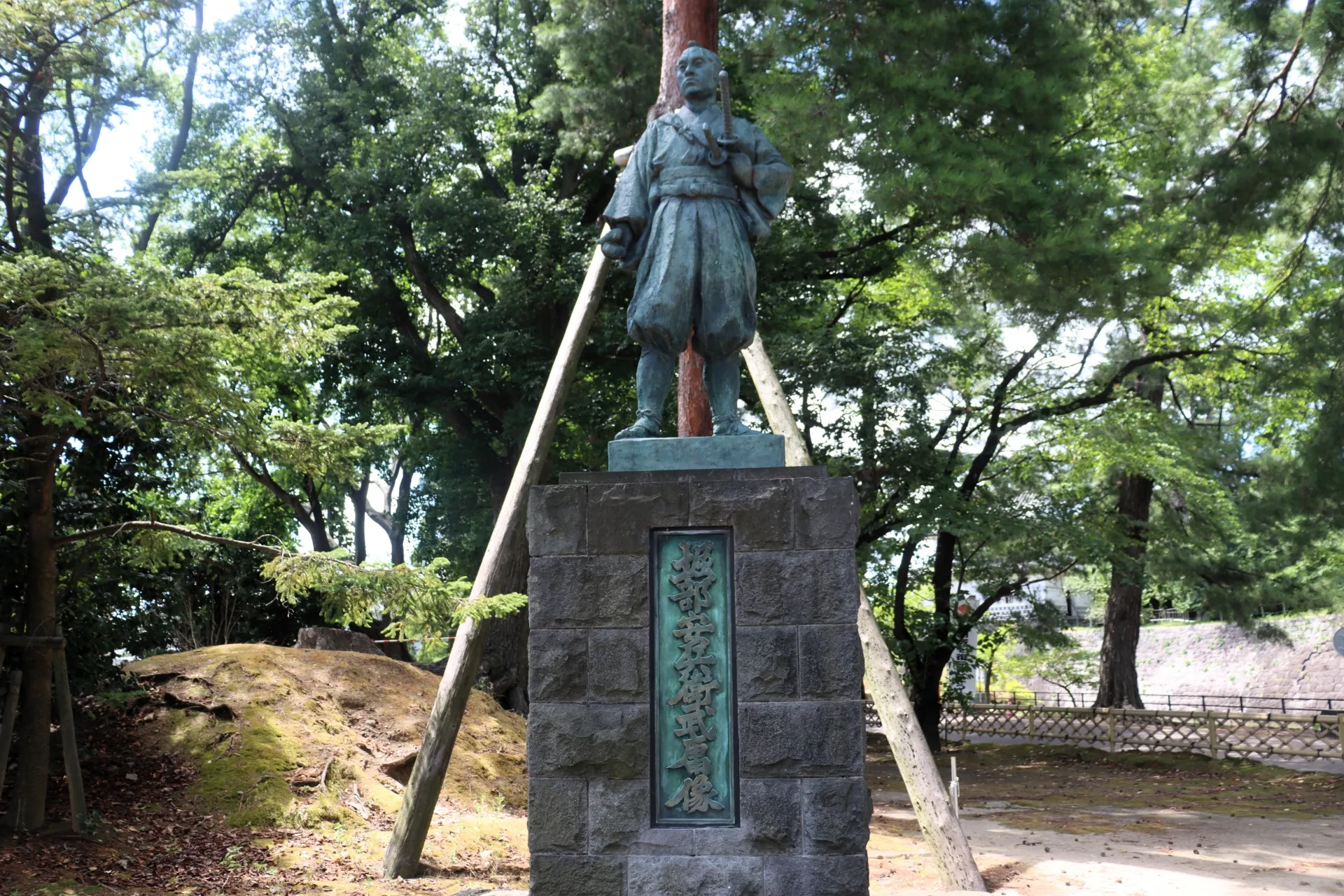
Statue of the legendary samurai Horibe Yasubei
The exterior features a beautiful contrast of black and white. You can also enjoy cherry blossoms in the spring and vibrant autumn leaves in the fall.
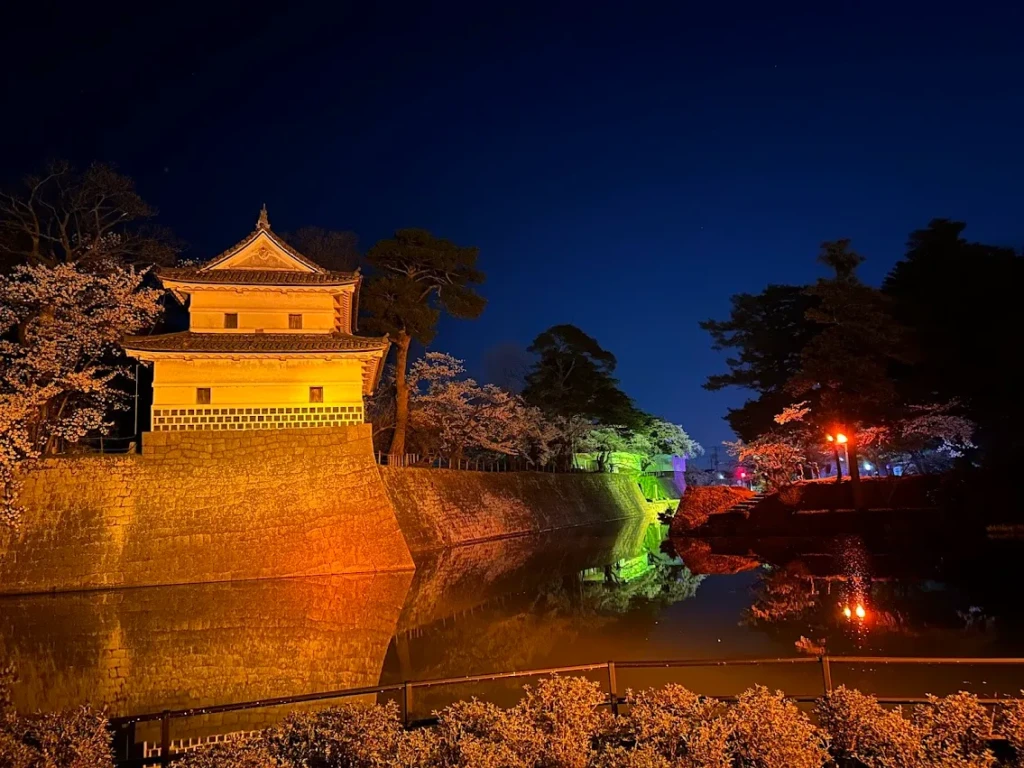
Shibata Castle has been developed into a castle park, allowing visitors to stroll leisurely across its grassy lawns and along the pathways beside the moat. In spring, about 290 cherry trees—including Somei Yoshino and Yaezakura (260 Somei, 30 Yaezakura)—bloom throughout the grounds, and lanterns are lit for enjoying the cherry blossoms at night. In autumn, the foliage turns vibrant colors, and in winter, the castle transforms into a serene snowy landscape, offering different atmospheres throughout the year. During cherry blossom season, nighttime illumination with lanterns is also held, creating a special scene where the reflections of the sakura and the castle shimmer on the moat.
Photos taken with the Honmaru Front Gate, the Ninomaru Corner Turret, and the Sankai Yagura as backdrops are particularly striking. Shots that incorporate the castle gate reflected in the moat, or compositions featuring spring cherry blossoms and autumn leaves, are highly recommended. The combination of night sakura and the illuminated white castle walls creates a dreamlike view, attracting many photographers and visitors.
The castle grounds are well-maintained as a public park, with paved areas and stone steps that make it easy to walk even with young children. A gentle slope leads up to the remains of the Honmaru, where you can enjoy a panoramic view of the castle town and the stone walls of the Ninomaru. Walking close to the stone walls and earthen embankments allows you to feel as though you are reliving a castle siege from centuries past.
Spot Name:Shibata Castle
Opening Hours:
・April–October: 9:00–17:00
・November: 9:00–16:30
・December–late March: Closed for winter
The castle may reopen in late March depending on snow conditions.
Fees:Free
Adress:Otemachi 6-chome, Shibata City, Niigata Prefecture, Japan
Access:
・Train: About 20 minutes on foot from JR Uetsu Main Line / Hakushin Line “Shibata Station.”
・Car: About 10 minutes from the Nihonkai-Tohoku Expressway Seiro-Shibata IC via National Route 7.
Rental bicycles are available in front of the station (April–November), which are convenient for sightseeing.
Parking:
・Inside the castle park: 10 regular cars, 5 large buses
・Large Parking Lot (3 min walk): 163 spaces (free)
Notes:
During the winter closure period (December–late March), entry into the castle grounds is not permitted.
The Sankai Yagura is located within the Self-Defense Force premises and is off-limits.
Drinking alcohol and barbecues are not allowed inside the castle grounds.
Photography is permitted, but drone flights are restricted.
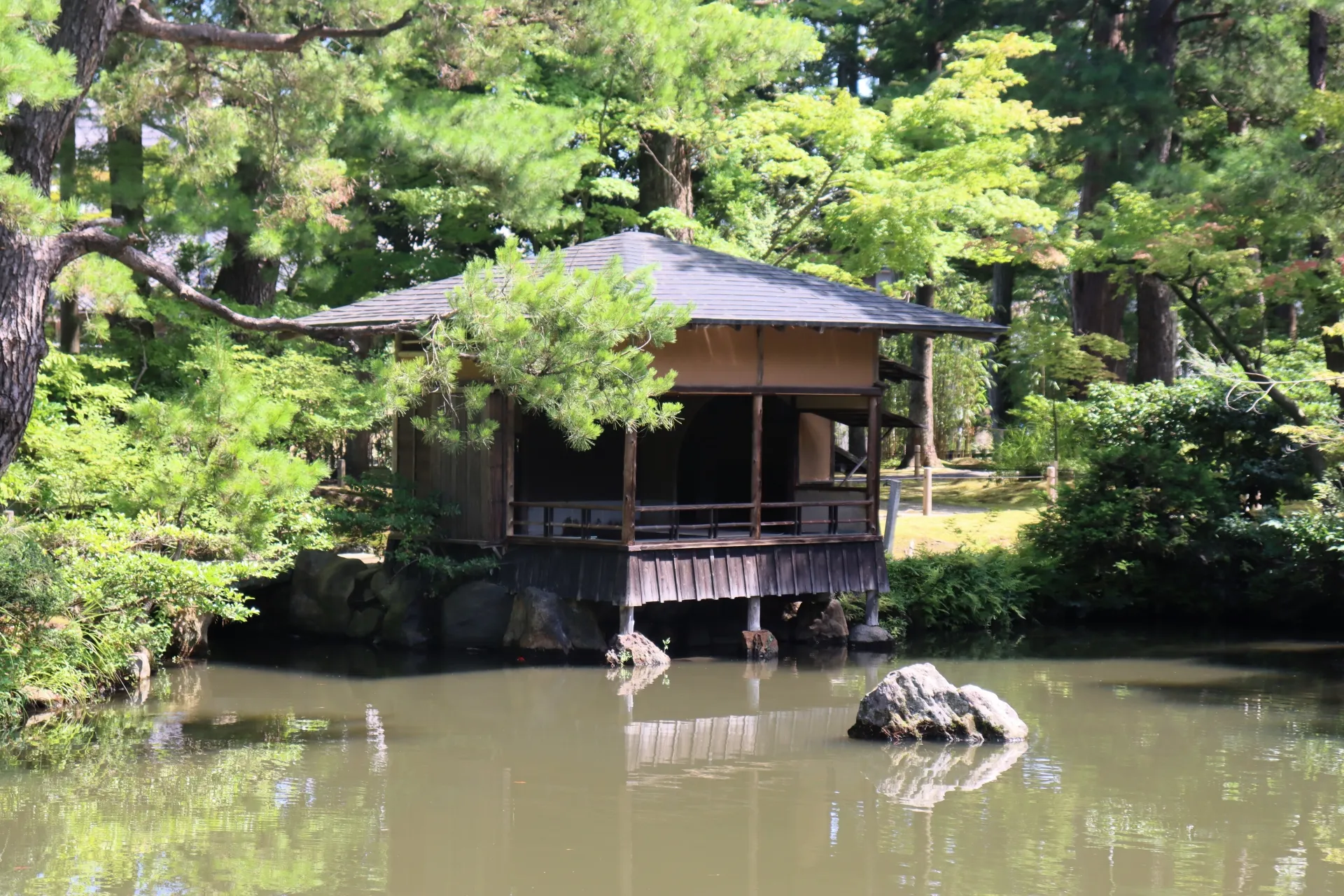



Shibata Castle in autumn